
The 2026 Flagship Endurance War: Silicon Carbon vs. Lithium Ion – Which Smartphone Truly Rules the Day?
The year 2026 has ushered in a transformative era for mobile technology. While we have spent years obsessing over camera megapixels and peak brightness, the conversation has shifted toward the two most critical pillars of the user experience: battery endurance and thermal management. In the ultimate 2026 battery test, a grueling marathon was conducted to see which of the world’s leading flagships—the Samsung S26 Ultra, iPhone 17 Pro Max, Google Pixel 10 Pro XL, OnePlus 15, Oppo Find X9 Pro, and Xiaomi 17 Ultra—could survive a full day of intensive use.
To ensure a fair baseline, the test also included last year’s Samsung Galaxy S25 Ultra, serving as a control to determine if the 2026 generation truly represents a leap forward or merely incremental refinement. What follows is a deep dive into a landscape where the “Alphas” of the battery world are beginning to pull away from the established “Betas,” and where thermal efficiency is proving just as important as raw milliampere-hour (mAh) capacity.
The Great Battery Divide: Alphas vs. Betas
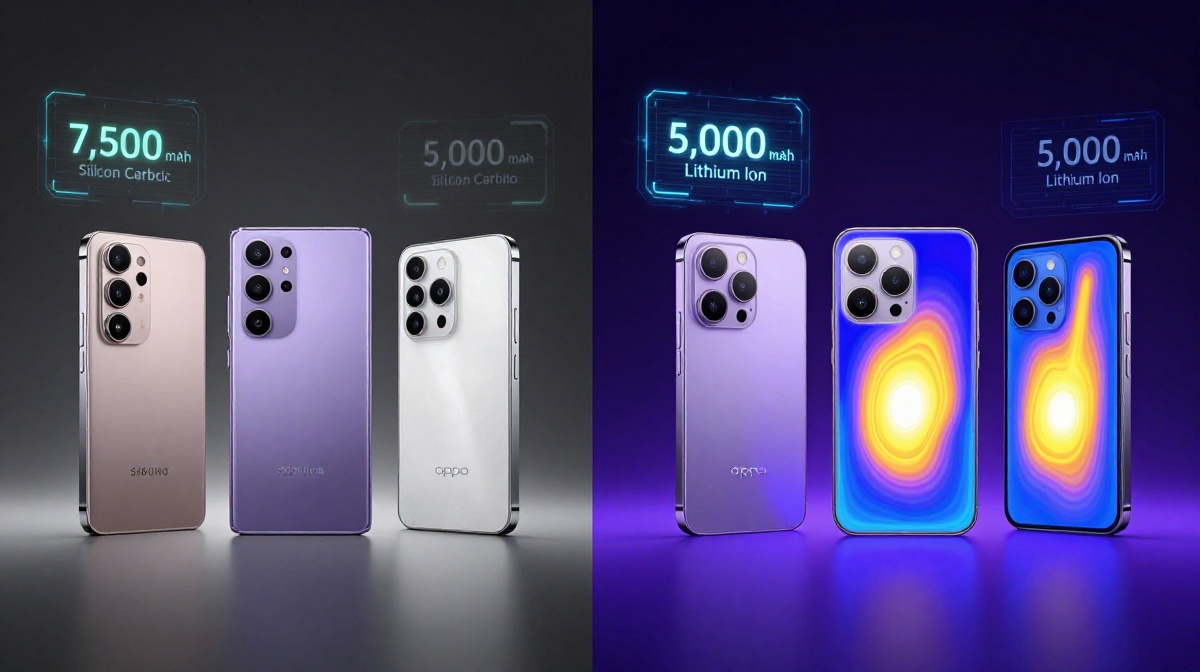
In the current market, two very distinct philosophies have emerged regarding battery capacity. On one side, we have what the industry is calling the “Betas”—powerhouses like Samsung, Apple, and Google that have largely stuck to traditional battery sizes. The Samsung S26 Ultra remains at a 5,000 mAh capacity—a figure it has held for six years—while the iPhone 17 Pro Max sits at 4,823 mAh and the Google Pixel 10 Pro XL at 5,200 mAh.
On the other side are the “Alphas,” primarily Chinese manufacturers who have embraced Silicon Carbon technology to achieve staggering energy density. This group includes the Xiaomi 17 Ultra (6,800 mAh), OnePlus 15 (7,300 mAh), and the monstrous Oppo Find X9 Pro with its 7,500 mAh cell. On paper, the Alphas should easily “cream” their rivals, but as our analysis shows, software optimization and thermal efficiency play a massive role in real-world results.
Thermal Engineering: The Return to Aluminum
One of the most surprising trends of 2026 is the strategic shift in chassis materials. Both the Samsung Galaxy S26 Ultra and the iPhone 17 Pro Max have moved away from titanium, returning to heat-conductive aluminum. Using a $35,000 thermal camera, the impact of this decision was immediate. Under normal loads, these two devices remained significantly cooler than their competitors, with their hottest zones barely touching 27°C.
In contrast, the Google Pixel 10 Pro XL and the Oppo Find X9 Pro struggled with heat even under moderate use, with areas climbing above 32°C. Why does this matter? As any regular reader of www.thegadgetnet.com knows, heat is the enemy of longevity. The warmer a phone runs, the faster its performance will tank (throttling), the quicker the battery will deplete, and the more the battery will degrade over its lifespan.
Performance Benchmarks: Snapdragon Still Reigns
The performance test, conducted via Geekbench, highlighted a massive disparity in how these flagships handle sustained workloads. The Snapdragon 8 Elite Gen 5 continues to lead the Android world, particularly in single-core scores, which are the best indicator of daily “snappiness”.
The results for the Google Pixel 10 Pro XL were particularly “deflating”. Not only was it the slowest to load apps like Wuthering Waves, but its benchmark scores were the lowest of the entire group—even losing to last year’s S25 Ultra and potentially an S24. Meanwhile, the Oppo Find X9 Pro, despite its massive battery, showed some weakness in performance due to its MediaTek chip, which reached a scorching 42°C during testing, leading to significant thermal throttling.
Inside the “Gadget Net” Perspective
At www.thegadgetnet.com, we believe that a smartphone is more than the sum of its specs. Our mission is to provide you with the context behind the numbers. While a 7,500 mAh battery sounds unbeatable, the logistical and regulatory hurdles of shipping such large cells globally mean that some manufacturers have to “neuter” their devices for international markets. We are dedicated to uncovering these hidden details, ensuring that when you invest in a flagship, you know exactly what is happening under the hood. Whether it’s the shift in frame materials or the intricacies of silicon carbon batteries, The Gadget Net is your primary source for 2026 tech intelligence.
The Secret of Silicon Carbon and Global Restrictions
A major revelation from this year’s testing is the reason behind the disparity in battery sizes. Silicon carbon tech is more energy-dense than traditional lithium-ion, allowing for larger capacities in the same physical footprint. However, Apple, Samsung, and Google often avoid these ultra-high capacities due to tight global shipping regulations. Any single battery cell that is too large becomes expensive or even prohibited to ship in certain regions.
This explains why the Xiaomi 17 Ultra underperformed relative to its 6,800 mAh rating; Xiaomi had to add software restrictions to the cell to comply with international shipping laws, resulting in a usable capacity closer to 5,400–5,800 mAh. OnePlus and Oppo have bypassed this by using two smaller silicon carbon batteries instead of one large cell, allowing them to stay under capacity limits for individual cells while delivering a massive total capacity.
The Final Rankings: Endurance Results
After a grueling 14-hour test, the final standings for 2026 are as follows:
- Oppo Find X9 Pro: The undisputed winner, lasting 14 hours and 16 minutes. Despite its thermal struggles, its sheer battery volume and “super power saving mode” carried it to a landslide victory.
- OnePlus 15: A close second, finishing just shy of 13 hours. Its dual-cell silicon carbon strategy proves that you can have high capacity without international shipping restrictions.
- Samsung Galaxy S26 Ultra: Taking third place at 12 hours, this was the surprise of the test. Despite no increase in battery size, its more efficient chip and improved aluminum cooling allowed it to beat its predecessor by a significant margin.
- iPhone 17 Pro Max: Lasted slightly longer than the Xiaomi, a remarkable feat considering it has the smallest battery in the test. Note that the US variant (eSIM only) is expected to have 6% more juice than the UK version tested.
- Xiaomi 17 Ultra: Finished fifth, with its usable battery capacity hindered by global shipping restrictions.
- Samsung Galaxy S25 Ultra: The 2025 champion still holds its own, but was finally outpaced by the 2026 efficiency gains.
- Google Pixel 10 Pro XL: The “beta” of the bunch. With the worst battery performance, highest heat, and slowest processing, it remains a difficult recommendation for power users despite its beloved software skin.
Conclusion
The 2026 flagship landscape is one of extremes. If you value raw endurance above all else, the Chinese “Alphas” like Oppo and OnePlus are currently untouchable. However, if you want a balance of thermal stability, consistent performance, and “good enough” battery life, the Samsung S26 Ultra and iPhone 17 Pro Max have proven that smarter engineering can often compensate for smaller batteries.
As we continue to track these developments on www.thegadgetnet.com, one thing is clear: the era of simply “adding more milliampere-hours” is over. The future of the smartphone is cool, efficient, and increasingly complex.

