
The Era of Software Magic vs. Hardware Reality
The smartphone world is changing fast. For years, we expected every new phone to have a much better camera, a way faster screen, and a battery that lasted for days. But as we look at the Google Pixel 11 series, it is clear that the “hardware honeymoon” might be over. Because of a global “AI memory crisis,” making phone parts has become very expensive.
Instead of giving us massive hardware upgrades, Google is leaning into software. They are using artificial intelligence (AI) to do things we never thought a phone could do. In this deep dive, we will look at the Pixel 11, the 11 Pro, the 11 Pro XL, and the 11 Pro Fold. Is the “magic software wand” enough to justify a higher price tag? Let’s find out.
At The Gadget Net, we are dedicated to helping you navigate these tech shifts. We know that choosing a phone is a big decision, and our goal is to provide honest, clear information so you can spend your money wisely. Whether you are a tech pro or just want a phone that works, we’ve got your back.
The Base Pixel 11: Small Steps Forward
The standard Pixel 11 is the entry point for most people. While it looks similar to last year, there are four main changes you should know about.
- Faster Charging: It now supports 25W wireless charging. Since Pixels are some of the only Android phones with magnets for accessories, this is a great update.
- Better Camera Sensor: The main camera sensor is 56% larger than before. While that sounds huge, it really just brings the Pixel up to the same level as its competitors.
- Tensor G6 Chip: This is Google’s newest brain for the phone. It makes opening apps feel snappier, but it doesn’t offer much of an improvement for gaming graphics.
- Sleeker Design: The famous “camera bar” on the back is now made of glass and sticks out 40% less than it used to. If you put a case on it, the bump almost disappears.
However, not everything is an upgrade. The battery life is roughly the same as last year, and the other camera sensors haven’t changed at all. Plus, the price has jumped by $100, starting at $899.
The Pro Models: Brighter Screens and a New “Highlight”
The Google Pixel 11 series Pro models (the Pro and Pro XL) are where things get interesting—and a bit confusing. Google has focused on “subtle” hardware tweaks here.
The screens are now incredibly bright, reaching up to 3,600 nits. This means you can see your screen clearly even in the brightest sunlight. They also have a new telephoto camera with a 30% larger sensor for better zoomed-in shots.
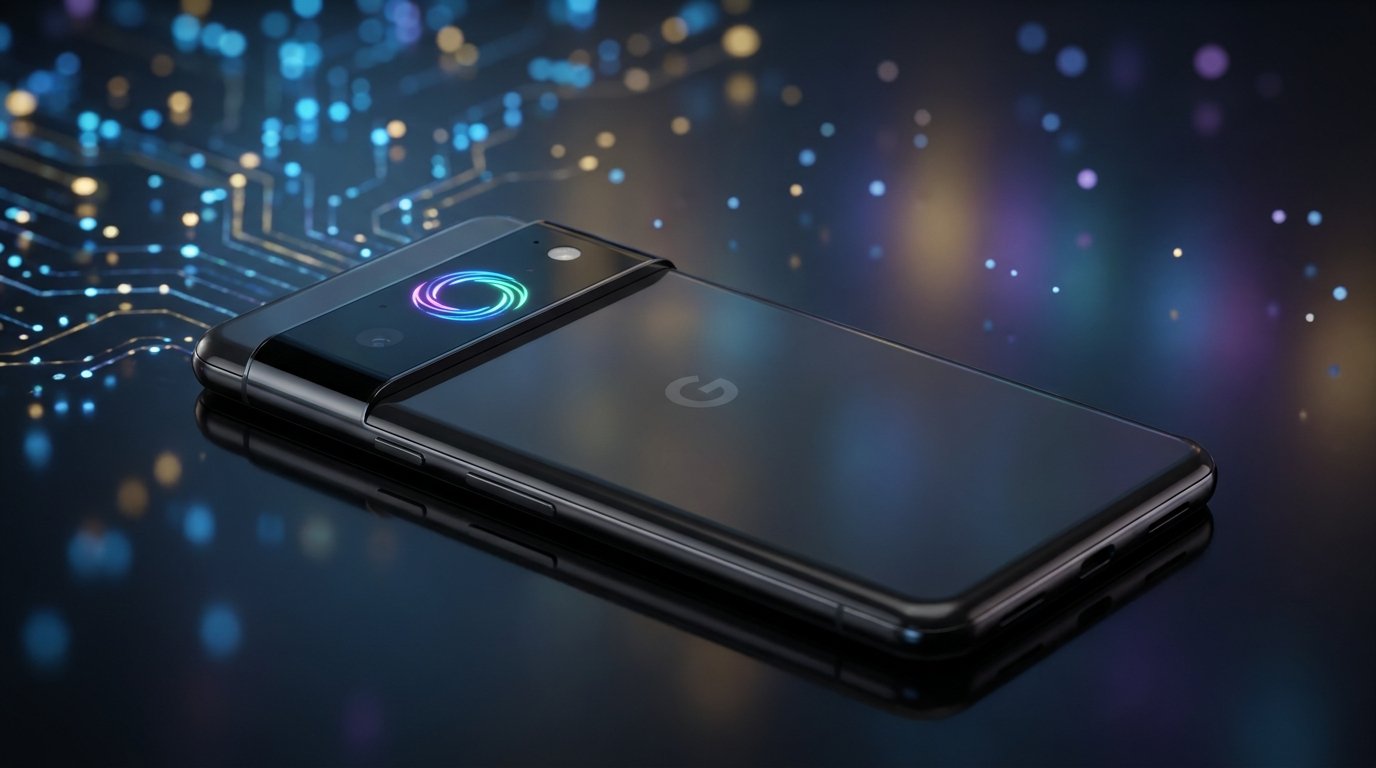
The most talked-about new feature is the Highlight. This is a ring of eight bright LEDs on the back of the phone. It does a few things:
- It glows in different colors to tell you which of your favorite friends is calling while the phone is face-down.
- It shows special animations when you talk to Gemini (Google’s AI). It has different patterns for listening, thinking, and responding.
But here is the catch: to put those lights in, Google removed the body temperature sensor. Also, while the phones are more expensive ($1,099 for the Pro and $1,299 for the XL), they actually start with less RAM than last year—12GB instead of 16GB.
The Pixel 11 Pro Fold: Thinner and Lighter
The new Fold is 1mm thinner and about 10% lighter. Google used a new “composite” material for the back that is very hard to crack. However, this material is likely a type of plastic or polymer, which means it might be easier to scratch than the glass used on older models.
Like the other phones in the Google Pixel 11 series, the Fold got a $100 price increase but didn’t get any extra storage for that higher price.
Comparison Table: Pixel 11 Series at a Glance
| Feature | Pixel 11 | Pixel 11 Pro | Pixel 11 Pro XL | Pixel 11 Pro Fold |
|---|---|---|---|---|
| Starting Price | $899 | $1,099 | $1,299 | TBD (+$100 increase) |
| Main Camera | 56% Larger Sensor | Refresh of old sensor | Refresh of old sensor | 56% Larger Sensor |
| Screen Brightness | Standard | 3,600 nits | 3,600 nits | 3,600 nits |
| New Hardware | 25W Wireless Charging | Highlight LED Ring | Highlight LED Ring | Highlight LED Ring |
| Chipset | Tensor G6 | Tensor G6 | Tensor G6 | Tensor G6 |
| Starting RAM | Standard | 12GB | 12GB | TBD |
The Real Star: AI Software
The reason to buy the Google Pixel 11 series isn’t the hardware; it’s the AI. Google is using software to fix hardware problems.
Rambler: The Smartest Dictation Ever
Rambler is a new tool built into the keyboard. It doesn’t just write what you say; it understands your thoughts. If you are talking and change your mind halfway through a sentence, Rambler figures it out and fixes the text automatically. It can even add the right emojis based on your mood.
Live Dubbing
If you find a video on YouTube in a language you don’t speak (like German), the phone can detect it and dub it into your language in real-time. The AI voices even sound like the original people speaking. It only supports four languages for now and won’t be in Europe right at launch, but it is a glimpse into the future.
Night Sight and Magic Capture
Google’s AI is now so good at photography that “Night Sight” only needs one-third of the light it used to. Night photos now look as fast and clear as daytime ones. There is also Magic Capture, which records a short video and uses AI to find the best moments where everyone is looking at the camera and looking their best. It even uses “face unblurring” to make sure the shots are perfect.
Pros and Cons of the Pixel 11 Series
Pros:
- Incredible AI: Rambler and Live Dubbing are game-changers for communication.
- Best-in-Class Software: You get the cleanest version of Android and early access to new features.
- Camera Magic: Even with older sensors, the software makes videos and night photos look stunning.
- Brightest Screens: The 3,600-nit display is one of the best on the market.
Cons:
- Higher Prices: Every model is $100 more expensive than last year.
- Hardware Cuts: Some models have less RAM, and the temperature sensor is gone.
- Stagnant Graphics: The new chip doesn’t help much with high-end gaming.
- Cloud Reliance: Many of the best features require an internet connection to work.
The Verdict: Should You Upgrade?
The Google Pixel 11 series is a strange release. On one hand, the software is “spectacular” and “jaw-dropping”. On the other hand, the hardware feels like it is “running on fumes”.
If you already have a Pixel 10, you might want to skip this year. Last year’s phone is now about a third cheaper, and because the hardware hasn’t changed much, it will still feel very modern for years to come. However, if you love being on the cutting edge of AI and want the smartest phone in the world, the Pixel 11 Pro is hard to beat.
As we always say at The Gadget Net, the best phone is the one that fits your life. If you do a lot of dictation or watch foreign content, these AI features will change your life. But if you just want a powerful gaming machine, you might want to look at the Samsung S26 Ultra instead.
Frequently Asked Questions (FAQ)
1. Is the Google Pixel 11 series good for gaming? While the Tensor G6 chip is faster for daily tasks, it has no quoted improvements for graphics. It may be outperformed by some mid-range phones when it comes to heavy gaming.
2. What is the Highlight feature? It is a ring of 8 LEDs on the back of the Pro models. It lights up for notifications from favorite contacts and shows animations when the Gemini AI is thinking or responding.
3. Does the Pixel 11 series have a temperature sensor? No. Google removed the body temperature sensor to make room for the Highlight LED ring.
4. Why are the prices higher this year? There is a global “AI memory crisis” making phone components more expensive. Google raised prices by $100 to cover these costs.
5. Will the new AI features work in Europe? Some features, like Live Dubbing and Gemini Intelligence, will not be available in Europe right at launch, though they are expected to arrive later.

