
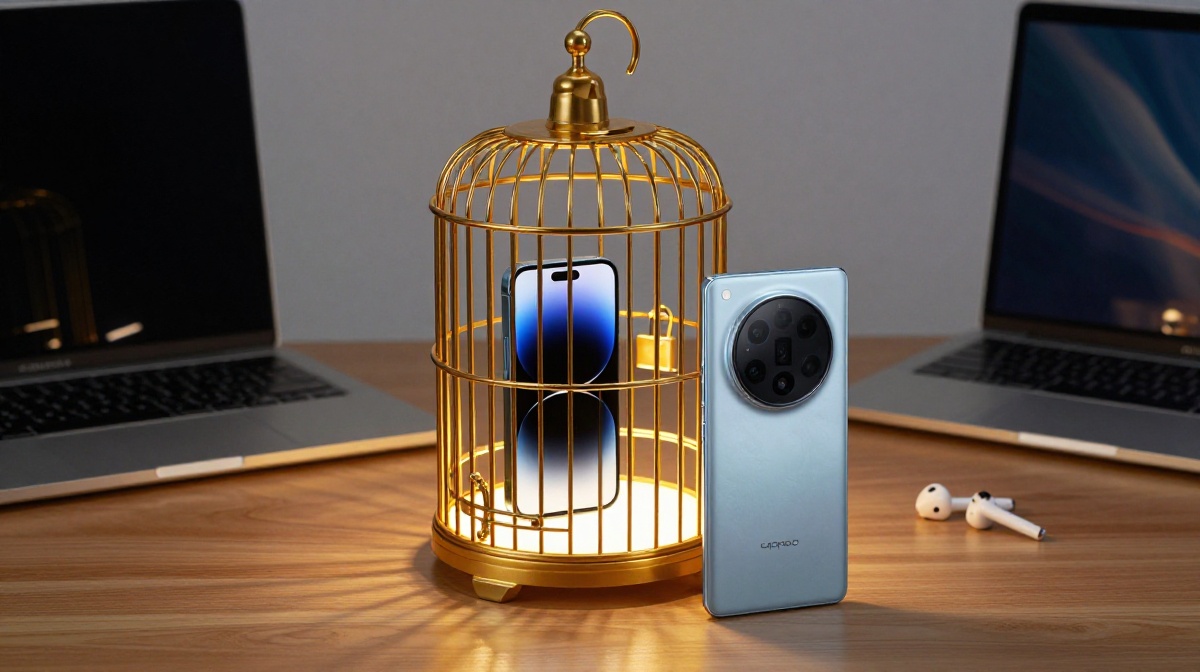
The Golden Cage: Why Trading My iPhone for the World’s Best Hardware Was a 16-Year Mistake
In the world of consumer technology, we often worship at the altar of the “Spec Sheet.” We chase the highest megapixel counts, the fastest charging speeds, and the brightest displays. Last month, during a family holiday, a tech experiment began that seemed to prove the spec sheet was king. By carrying an Oppo FindX9 Ultra alongside an iPhone, the sheer disparity in hardware capabilities triggered what can only be described as a “technological midlife crisis”.
The goal was simple: escape the Apple ecosystem once and for all. However, seven days into the permanent switch, the experiment backfired in ways that highlight the hidden cost of “synergy” versus “specs”.
The Lure of Superior Hardware
The initial catalyst for leaving Apple was the realization that the iPhone’s camera system is designed to be, quite frankly, boring. Apple sells over 200 million devices a year; to do that, they must adhere to a “Goldilocks” philosophy—never too much, never too little, but always dependable for a mainstream audience.
In contrast, the Oppo FindX9 Ultra offered the “exceptional”. With a higher number of cameras, significantly larger sensors, and wider apertures, it allowed for photography that felt like a “game” rather than a chore. The 10-times optical zoom and a dedicated 6x macro preset produced shots that would simply never happen on an iPhone. For a content creator, this wasn’t just a hobbyist’s upgrade; it felt like a professional work perk.
The hardware lead extended to power and intelligence. The Oppo featured a battery nearly 50% larger than the iPhone and a level of AI integration that made Siri look ancient. Using Google Gemini for dictation and reminders revealed a “mountainous” gap in speech-to-text quality. Where Siri would “butcher” reminders or struggle with simple queries like buying an eSIM, the Android’s “lurking presence of a higher intelligence” understood the nuances of human rambling.
The Pain of the “Great Migration”
Deciding to switch is easy; executing it is a digital autopsy. The process involved painfully peeling away 16 years of photos from iCloud, reauthenticating bank cards for Google Pay, and recreating accounts that had been “foolishly” tied to “Sign in with Apple”.
This friction is the first layer of the Apple “lock-in”. It isn’t just about the apps; it’s about the invisible threads that tie your digital identity to one provider. Even in regions like the UK, where WhatsApp replaces the iMessage dependency, the hardware-level ties are deeper than they appear.
The Breakdown of Synergy
The “backfire” began when the honeymoon phase with the Oppo’s camera ended and the reality of daily utility set in. The first casualty was the AirPods. While they still function as basic Bluetooth buds, switching to Android means losing over 10 key features. This includes the “auto-pause” when an earbud is removed, audio sharing between two pairs of pods, and the ability to use the AirPods as a portable lavalier mic for video—a feature that makes a massive difference in audio clarity for creators.
The “Continuity” features that Mac users take for granted also vanished. The ability to instantly paste text from a phone to a laptop, or to activate a mobile hotspot with a single tap from the Mac, was replaced by a manual, multi-step process.
Even AirDrop, perhaps Apple’s most underrated feature, proved irreplaceable. While Google’s Quick Share has made strides in reverse-engineering compatibility with Macs, it remains significantly slower and less reliable than “Apple-to-Apple” transfers. Alternative third-party solutions were found to be buggier, slower, or “filled with ads,” leading to a workflow that felt like it had “quadrupled” the time spent waiting for files.
The “App Gap” and Polish
One of the most surprising revelations of the switch was the lack of polish in Android applications. On an iPhone, apps are clearly a developer’s first priority; on Android, they often feel like an afterthought.
Specific examples of this “unpolished” experience include:
- UI Formatting: Uber categories that fit perfectly on an iPhone display require extra scrolling on Android.
- Resolution Issues: The Boots app logo appeared high-res on iPhone but low-res on Android.
- Stability: The British Airways app on Android required a fresh login every single time it was opened, whereas the iPhone version remembered the user.
- Navigation: Even Google’s own YouTube Studio app was better formatted for reading titles on the iPhone than on the Oppo.
These are “minor irritations” that, when compounded, make the entire OS feel less premium.
The Fatal Flaw: The Smartwatch Standoff
The most “critical blocker” in the entire experiment wasn’t the phone itself, but the wrist. The Apple Watch is so tightly integrated into the ecosystem that it is “dead on arrival” when paired with an Android phone.
Seeking a replacement revealed a landscape of compromise:
- Garmin: Featured a “laggy and unpolished” user interface.
- Google Pixel Watch: During testing, it produced wildly inaccurate data, claiming a 2,000-calorie burn in just two hours.
- Oppo Watch: Virtually unsupported in the UK, with no reviews on major platforms like Amazon, leading to fears about third-party app compatibility.
- Whoop Band: While detailed, it lacked the basic perks of a smartwatch, such as checking the time or setting quick reminders.
The final attempt, the Samsung Galaxy Watch, suffered from severe syncing issues when used with a non-Samsung Android phone. While the Apple Watch’s calorie tracking and health data synced “almost instantly” with third-party apps, the Samsung/Oppo combo required manual refreshing and often displayed conflicting data between the widget and the app.
For someone relying on accurate data for fitness maintenance, this lack of reliability was a dealbreaker.
Conclusion: Synergy is the Ultimate Spec
The experiment proved a difficult truth: while individual Apple devices might not be “best-in-class” in every category, the synergy they form together is.
Trading an iPhone for an Oppo FindX9 Ultra provides a better camera and a smarter AI, but it destroys the seamless charging setup, the effortless file sharing, and the reliable health tracking that defines the modern tech experience. The “Goldilocks zone”—that middle ground of “never too much, never too little”—is what allows Apple to maintain its mainstream dominance.
Ultimately, the switch to Android resulted in too many compromises. While the hardware of the Oppo was a “tipping point” for excitement, the “impactful” loss of ecosystem fluidity served as a reminder that a phone is only as good as the devices it talks to.
For the team at TheGadgetNet.com, the lesson is clear: Before you “escape” the ecosystem for a better camera, make sure you’re ready to lose the watch, the earbuds, and the peace of mind that comes with things that “just work”.

