
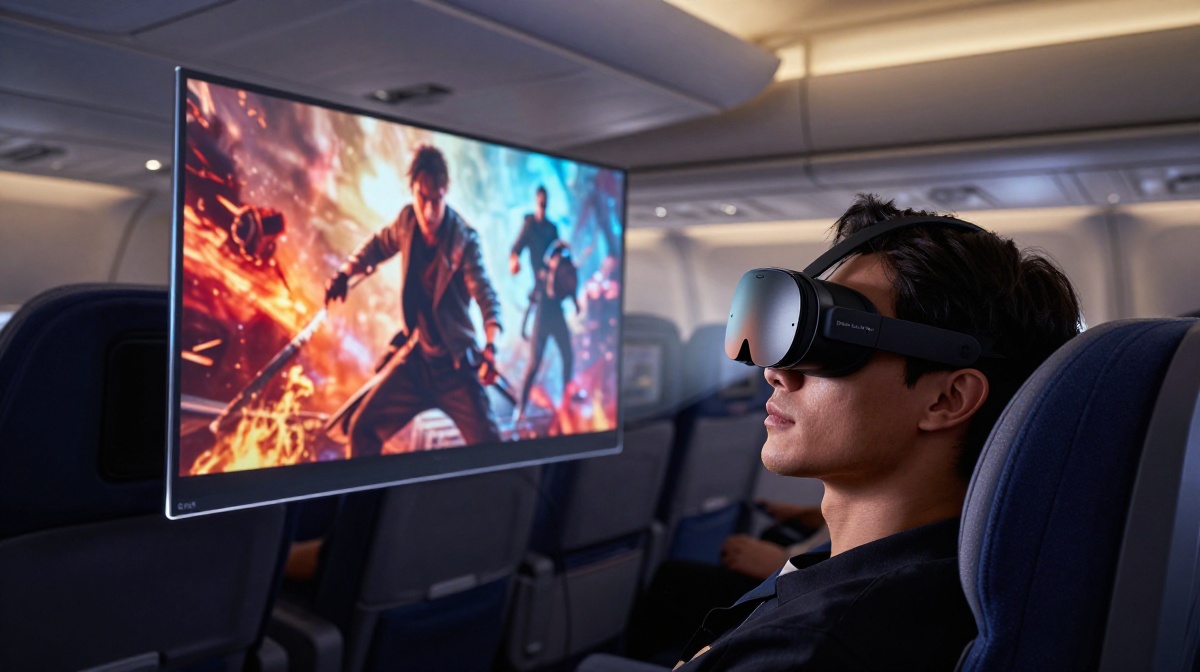
Imagine sitting on a cramped, five-hour flight. Instead of squinting at a tiny seatback screen, you slip on a pair of sleek sunglasses. Suddenly, a 201-inch movie theater screen floats in the air right in front of you. This isn’t a scene from a sci-fi movie—it is the reality of affordable AR glasses in 2026.
For years, augmented reality (AR) was either a “Metaverse myth” or an expensive toy for tech millionaires. But things have changed. In 2026, the tech has crossed a line. We have moved from bulky headsets to “eyes-up” computing that fits in your pocket.
At TheGadgetNet, we have spent months testing the latest wearable displays to see if they are ready for the average person. Whether you are a gamer, a frequent traveler, or someone who just wants a private screen at the coffee shop, this guide will help you decide if the latest affordable AR glasses are worth your hard-earned cash.
What Are Affordable AR Glasses in 2026?
In the current market, “affordable” means glasses that cost between $240 and $600. While high-end “spatial computing” devices like the Apple Vision Pro still cost thousands, budget-friendly options like the RayNeo Air series or XREAL One focus on one main job: giving you a massive, private, high-quality screen you can wear on your face.
These devices usually use something called “Birdbath optics”. This is a fancy prism system that bounces light from tiny screens into your eyes, making it look like a giant TV is hovering in the room. Unlike full VR headsets, these don’t block out the world. You can still see your surroundings, which makes them perfect for public use.
The Top Contenders: A 2026 Comparison
To understand if these glasses are worth it, we need to look at the “big players” in the budget space. Here at TheGadgetNet, we focus on real-world performance, not just what it says on the box.
1. RayNeo Air 4 Pro: The Budget King
Starting at around $300, the RayNeo Air 4 Pro is often called the “best entry point” for newcomers. It offers:
- HDR10 Support: One of the first budget pairs to handle high-dynamic-range content for better colors.
- 201-inch Virtual Screen: It feels like sitting in the middle of a theater.
- 120Hz Refresh Rate: Essential for smooth gaming on a Steam Deck or Nintendo Switch 2.
2. XREAL One: The Daylight Master
Priced at $569, these are on the higher end of “affordable,” but they solve a major problem: brightness.
- 5,000 Nits Brightness: This makes them one of the few pairs you can actually use outside in the sun.
- Spatial Tracking: Unlike cheaper models, these have a built-in chip that lets the screen stay still when you move your head.
3. Rokid Max 2: The Entertainment Specialist
At $429, the Rokid Max 2 is built for people who just want to watch movies.
- Lighter Weight: At 75 grams, they are lighter than many sunglasses.
- 215-inch Screen: The largest virtual display in its class.
Comparison Table: Affordable AR Glasses at a Glance
| Feature | RayNeo Air 4 Pro | XREAL One | Rokid Max 2 | RayNeo Air 3S Pro |
|---|---|---|---|---|
| Price | ~$300 | $569 | $429 | ~$260 |
| Virtual Screen | 201″ | 147″ – 265″ | 215″ | 201″ |
| Brightness | 1,200 nits | 5,000 nits | 600 nits | 1,200 nits |
| Weight | 76g | 84g | 75g | 76g |
| Best For | Value/Beginners | Outdoor Use | Movies/Travel | Pure Brightness |
Why 2026 is the “Turning Point” for AR
You might be wondering, “Why now?” According to experts, we are currently in the “Augmentiverse” phase—a real-world-first approach to AR. Instead of trying to put you in a fake world (the Metaverse), companies are now focusing on “eyes-up” computing that helps you in your daily life.
1. Better Screens (Micro OLED)
In 2026, even affordable AR glasses use Micro OLED panels. These provide deep blacks and vibrant colors that rival high-end OLED TVs. The RayNeo Air 4 Pro, for instance, covers 145% of the sRGB color space, making movies look incredibly lively.
2. High Refresh Rates for Gamers
Gaming is the “killer app” for these glasses. Most budget models now support 120Hz, which is the gold standard for smooth motion in fast games like Rocket League or Battlefield. Plugging these into a handheld console like the Steam Deck or ROG Ally turns a small 7-inch screen into a massive immersive experience.
3. AI Integration
Glasses like the RayNeo X3 Pro and the Meta Ray-Ban Display now include AI assistants that can “see” what you see. They can translate a menu in real-time, give you walking directions, or help you find a recipe while you are looking at ingredients in your kitchen.
The Real-World Experience: Is It Comfortable?
One of the biggest questions we get at TheGadgetNet is: “Do they hurt your face?”
Most of these glasses weigh around 75 to 84 grams. For comparison, a regular pair of glasses weighs about 25-30 grams. While you will feel them, the weight is usually well-balanced. Most users report that they can comfortably wear them for 4 to 5 hours of movie watching.
However, there is a catch. Since they are often tethered to your phone or console by a USB-C cable, you have to deal with a wire hanging from your ear. Also, because most of the weight sits on your nose, you might feel some pressure during long sessions.
The Prescription Problem
If you wear regular glasses, you can’t just put AR glasses over them. Thankfully, companies like VR-ROCK now make custom prescription inserts. These clip onto the inside of the AR glasses, providing a sharp image without the need for contacts or awkward doubling-up.
Pros and Cons of Affordable AR Glasses
Pros
- Privacy: No one around you can see your screen. Perfect for sensitive work or watching movies in public.
- Portability: They fit in a small carrying case and replace the need for a bulky monitor.
- Plug-and-Play: Most don’t require apps. Just plug the USB-C into your phone or laptop, and it works.
- Amazing for Gaming: Provides an immersive experience that a small handheld screen can’t match.
Cons
- No “Spatial Anchoring” in Cheaper Models: On many budget glasses, the screen is “glued” to your head. If you look left, the screen moves left. This can be annoying for productivity.
- Tethered: You are still tied to a device by a cable.
- Battery Drain: Since the glasses don’t have their own battery, they “eat” the battery of your phone or console.
- Visual Sweet Spot: Depending on your face shape, the edges of the screen might look a little blurry.
The Future: What’s Coming Next?
While affordable AR glasses are great today, the high-end prototypes of 2026 show us where we are going. Meta’s Orionprototype uses advanced silicon carbide lenses and an EMG Neural Band. This wristband reads electrical signals from your muscles, letting you control the glasses with tiny, invisible finger movements—no more swiping the side of your head.
Samsung and Google are also launching the Galaxy XR platform, which will bring more “AI-native” features to the wearable space. As these technologies mature, the features in the $3,000 headsets will “trickle down” to the $300 glasses we love today.
Final Verdict: Should You Buy Them?
Are affordable AR glasses finally worth it in 2026?
Yes, if you fit into one of these groups:
- The Traveler: If you spend hours on planes or trains, these are a life-changer.
- The Handheld Gamer: If you own a Steam Deck, Switch, or ROG Ally, the 120Hz display is a massive upgrade.
- The Privacy Seeker: If you want to work on a “laptop” in a cafe without anyone seeing your data.
However, if you are looking for a device to replace your laptop entirely for an 8-hour workday, we aren’t quite there yet. The comfort and “spatial anchoring” features still need another year or two to become standard in the budget category.
At TheGadgetNet, we believe the “budget king” right now is the RayNeo Air 4 Pro. It hits the perfect balance of price ($300), brightness (1,200 nits), and feature set.
FAQs (Frequently Asked Questions)
1. Can I use these with an iPhone?
Yes. Most AR glasses in 2026 work with iPhone 15 and 16 models via the USB-C port. For older iPhones with Lightning ports, you may need an adapter.
2. Do they work outside in the sun?
It depends on the brightness. Glasses with 1,200 nits (like the RayNeo Air 4 Pro) are okay in the shade, but for direct sunlight, you want something like the XREAL One with 5,000 nits.
3. How big is the screen, really?
While companies claim “201 inches,” it is a virtual effect. It feels like looking at a giant TV from about 6 meters (20 feet) away.
4. Can I wear them if I have a prescription?
Yes, but you will likely need prescription lens inserts. Companies like VR-ROCK make custom ones that clip into the glasses.
5. Is there a “Whisper Mode” for audio?
Yes, many models like the RayNeo Air 3S Pro feature Whisper Mode 2.0, which keeps the sound directed at your ears so people sitting next to you can’t hear your movie.
Looking for more deep dives into the latest tech? Visit www.thegadgetnet.com for daily updates, expert reviews, and the best deals on the hardware of tomorrow!

