
Using a specific, large number like “$52,000” creates immediate curiosity and “pain point” resonance.
Building a “dream home” sounds like a blast until you realize you’ve spent the price of a luxury SUV on gadgets that don’t actually work. Two years ago, a massive project began to create the ultimate smart home, but it quickly turned into a series of expensive lessons. From $150 Pokeball chargers that nobody wanted to use to a $15,000 water feature that eventually smelled like a swamp, the journey was full of smart home tech mistakes.
In this guide, we’re going to break down exactly where the money went, why it was wasted, and how those errors were eventually fixed. Whether you are building a high-end cinema room or just looking for a better way to organize your junk drawer, these lessons will save you time, money, and a whole lot of stress.
At TheGadgetNet.com, we believe that the best technology is the kind that disappears into your life. We are a community of tech lovers who want to help you find gear that actually solves problems rather than creating new ones. We write for people who want honest, “human-written” reviews that cut through the marketing fluff.
The Living Room: Aesthetics vs. Reality
One of the first smart home tech mistakes involved the living room charging setup. In an effort to be unique, $150 was spent importing wireless chargers from Japan that looked like Pokeballs. While they looked cool, they were a total failure in practice. Guests didn’t want to “banish” their phones to a specific spot on the other side of the room while trying to hang out.
The Fix: Portability is King
The solution was much simpler and cheaper:
- Anker Power Bricks: These have a magnetic base and can be carried anywhere in the room. Even guests who aren’t tech-savvy know how to use them.
- Belkin Wall Chargers: Strategically placed 67W chargers with retractable cables. They provide enough power for laptops and disappear when not in use.
Kitchen Disasters: The $2,000 Coffee Struggle
In the kitchen, the goal was to host parties with slushie makers and sake bottles. The reality? The owners mostly just drank tea and coffee.
The biggest mistake was buying a high-end Miele coffee machine based on a recommendation. Despite its high price, the interface was “abysmally basic” for a 2026 product. It was loud, slow, and guests couldn’t figure out how to make a simple drink.
The Kitchen Evolution Table
| Product Category | The Mistake (Old) | The Optimized Fix (New) | Why it’s Better |
|---|---|---|---|
| Coffee Machine | Miele High-End | De’Longhi | Much more intuitive for guests. |
| Tea Maker | Standard Pot | Loca Tea Filter | Prevents foam from bubbling over. |
| Blender | Basic Model | Beast Blender | Faster and comes with a travel bottle. |
| Plants | Hard-to-kill Soil Plants | Easy Plant (Self-Watering) | Only needs water once a month. |
The kitchen also saw a massive win with Simplehuman products. The touchless soap dispensers and the kitchen roll holder (with a hidden spray bottle) have lasted two years without a single issue.
The $15,000 Water Feature Fiasco
Perhaps the most painful of all the smart home tech mistakes happened in the office. The original vision was a Japanese Zen garden theme, featuring a giant indoor water feature.
This sounded beautiful, but the reality was a nightmare:
- High Install Cost: $15,000 just for the fitting.
- Noise Pollution: The generator needed to run for 3 hours a day and was incredibly loud.
- High Maintenance: It required three different treatment plans (weekly, monthly, and quarterly). When life got busy and maintenance was skipped, the water turned moldy and smelled terrible.
Ultimately, another $1,000 was spent just to rip it out and replace it with a fourth desk. This is a prime example of why “the best version” of an idea isn’t always the “right version” for your home.
The Office: Maximizing Productivity
While the water feature was a loss, other office upgrades were massive wins. One major mistake was the “whiteboard maxing” phase. A Samsung Flip Pro was purchased, but it was so heavy and over-engineered that it was never used. A regular whiteboard would have done the job better.
The Ultimate Desk Setup
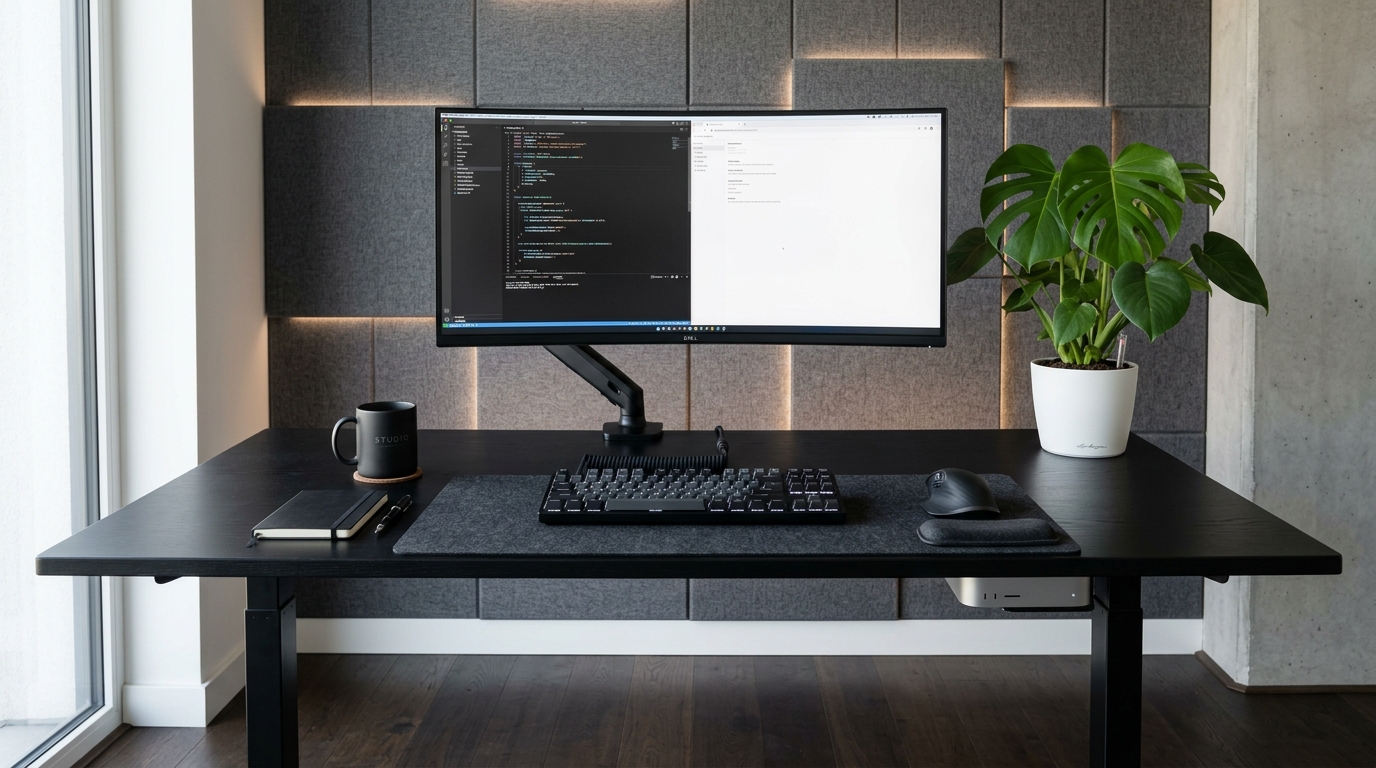
The office eventually transitioned to Secret Lab Magnus Pro desks. These were chosen because they have an integrated power supply inside the desk leg. This means only one cable runs to the floor, while every gadget on the desk gets power through a hidden tray. It makes the workspace “97% invisible” in terms of cable mess.
Studio B: The $22,000 Sofa Mistake
Studio B was originally filled with $22,000 worth of angular, futuristic furniture with built-in LEDs. It looked like a sci-fi movie, but it was a functional disaster:
- Comfort: The furniture was designed for the outdoors and felt “as comfy as a plank”.
- Mobility: Because the sofas needed power for the LEDs, they were tethered by eight different cables, making it impossible to move them for different video sets.
- Lighting: The LEDs were too dim to be seen on camera.
The fix was to move toward mobility. Everything in the studio, including the giant TV, is now on wheels. This allows the space to be reorganized in minutes for any type of project.
Acoustic Treatment: The Hidden Hero
Echo and noise are the enemies of a peaceful home. The house originally had concrete floors and thin walls, leading to terrible echoes. After trying cheap “plug-and-play” foam panels that didn’t work and looked bad, the owners committed to a professional solution.
A company called Rzonx fitted two layers of absorption across the walls. Now, even if the kitchen is noisy, the office remains as quiet as a library. They even replaced window blinds with giant acoustic panels that stick directly to the glass, blocking both light and outside noise more effectively than traditional blinds.
The Power of Systems and Organizers
If there is one lesson to take away from these smart home tech mistakes, it is the importance of organization. At first, the owner thought drawer organizers were a waste of space. He was wrong.
Drawer dividers and trays are now considered “absolutely essential”. They create a specific home for every item, like tape or scissors, so you always know where things are and when you are running low. As the owner says, “You can’t have too many of them. Buy more drawers if you have to”.
Comparison: Bioethanol vs. Gas Fireplaces
Many people are tempted by bioethanol fireplaces because they don’t require plumbing. However, they can be a massive hassle.
| Feature | Bioethanol Fireplace (The Mistake) | Gas Fireplace (The Loom Pit) |
|---|---|---|
| Startup Time | Manual pouring and lighting | 30 seconds |
| Flame Size | Small (like a big candle) | 4x larger |
| Ease of Use | High hassle | Very simple |
| Bonus Features | None | LED strips, speakers, and wireless chargers |
Pros and Cons of a High-End Smart Home
Pros:
- Optimization: When systems work, they save time and effort daily.
- Customization: You can tailor everything from your keyboard feel to your chair’s lumbar support.
- Wellness: Access to gear like TheraFace masks and Hypervolt massage guns makes recovery easy.
- Guest Experience: Intuitive tech (like the De’Longhi coffee machine) makes visitors feel at home.
Cons:
- The “Maintenance Tax”: High-end gadgets often require constant cleaning, updates, or treatment plans.
- Cable Chaos: Integrated power is rare; most “smart” furniture just adds more wires to trip over.
- The Gimmick Trap: Many products look great on Tik Tok but offer no real-world value.
Text-to-3D: The Next Frontier in Digital Modeling
Frequently Asked Questions (FAQs)
1. Is it worth buying the “best” version of every tech product? No. As seen with the Samsung Flip Pro, the “best” tech version is often too heavy or complex for daily use. Focus on the “right” version that fits your actual needs.
2. What is the most important thing to buy for a tidy home? Drawer organizers. They prevent the “black hole” effect where small items like scissors and tape disappear.
3. Are indoor water features a good idea? Generally, no. They are expensive to install ($15,000+), loud, and require constant chemical treatments to prevent mold and bad smells.
4. How can I fix echo in a room with concrete floors? Professional acoustic paneling is the most effective way. Thin, cheap foam panels often don’t cut enough noise and can look cluttered.
5. What is a better alternative to outdoor bioethanol fireplaces? A gas fireplace like the Loom Pit is much more effective. It lights faster, produces a bigger flame, and can include extra features like speakers and chargers.
Final Thoughts: 3 Rules for Your Smart Home
After spending $52,000 on smart home tech mistakes, three main rules emerged to help anyone else avoiding these traps:
- Take your time: Don’t rush big purchasing decisions in the first few weeks of moving in.
- Right version > Best version: Don’t buy a Ferrari when a bicycle is what you actually need to get around the block.
- Organize everything: Systems and drawer dividers are the secret to a stress-free home.
At TheGadgetNet.com, we hope this breakdown helps you build a home you love—without the $52,000 bill for things you don’t need!

