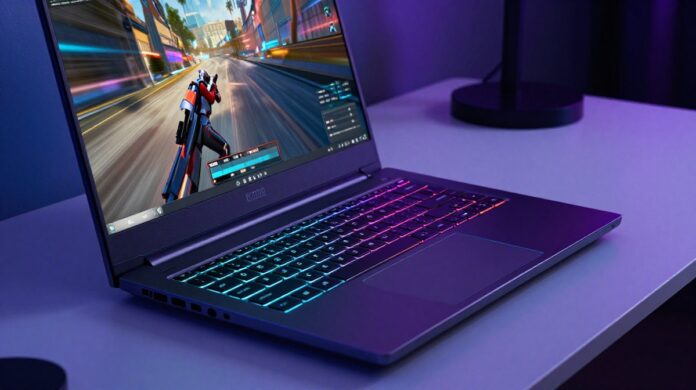
The world of gaming laptops is changing fast. New tech brings a better gaming experience. In 2025, top brands are making big leaps with new designs and strong performance.
ASUS ROG Strix G16, Jumper2025, and Lenovo Legion 5i lead the pack. They have great specs and features for gamers. These laptops are built for top-notch gaming, with cool systems, sharp displays, and fast processors.
Let’s look closer at these top gaming laptops. We’ll see what makes them special in the market.
Key Takeaways
Top gaming laptops for 2025 include ASUS ROG Strix G16, Jumper2025, and Lenovo Legion 5i.
These laptops offer advanced cooling systems and high-resolution displays.
Powerful processors and high-performance gaming capabilities.
Designed to provide an exceptional gaming experience.
Latest advancements in gaming technology.
Gaming Laptop Market in 2025: What’s Changed
In 2025, the gaming laptop world is buzzing with new tech. The latest laptops pack powerful tech, making them faster and more efficient. This change comes from better hardware and software, meeting gamers’ growing needs.
Latest Technology Advancements
The latest tech in gaming laptops includes improved processors, advanced cooling systems, and high-resolution displays. These updates boost gaming speed and make it more enjoyable. Some standout features are:
Next-generation processors for quicker performance
Advanced cooling systems to stop overheating
High-refresh-rate displays for smoother visuals
New Performance Standards
The new standards for gaming laptops focus on enhanced graphics capabilities, faster load times, and improved multitasking. Today’s top gaming laptops offer:
Improved ray tracing and DLSS
Quicker storage like NVMe SSDs
Longer battery life without losing performance
These updates have set a new high for gaming laptops. They provide a more engaging and quick gaming experience. When choosing a high-performance gaming laptop, keep these points in mind to get the best deal.
The Best Gaming Laptops: Selection Criteria
Finding the top gaming laptops in 2025 means looking at performance, design, and value. It’s important to know what makes these laptops stand out.
Performance Requirements
A top gaming laptop needs high-performance processing and advanced graphics capabilities. It should have the latest processors and top graphics cards. Key points include:
Processor speed and cores
Graphics card model and memory
RAM and storage capacity
Build Quality and Design
A durable laptop looks great and lasts long. Ergonomic design and portability are key for a good gaming experience. Today’s laptops aim to be both strong and stylish.
Finding affordable gaming laptops is a challenge. Our reviews look at how much value each laptop offers. We aim to suggest laptops that are both high-quality and budget-friendly.
“The best value gaming laptops offer a balance between performance and price, making high-quality gaming accessible to a wider audience.”
By focusing on these criteria, gamers can make smart choices when comparing laptops. Whether you want a high-end laptop or something more affordable, knowing these factors helps you find the perfect one.
The ASUS ROG Strix G16 (2025) is changing the game with its advanced tech and sleek look. It’s a high performance gaming laptop that promises an unmatched gaming experience.
Overview
The ASUS ROG Strix G16 (2025) has a strong build and a design that gamers love. Its premium materials and craftsmanship make it stand out in the market.
Design and Build Quality
The laptop’s design is both beautiful and durable. It has a sturdy aluminum construction that can handle frequent use.
Display Specifications
The ASUS ROG Strix G16 (2025) has a high-resolution display. It offers excellent color accuracy and brightness. The screen’s refresh rate is perfect for smooth gaming.
Features
This gaming laptop has advanced features to boost its performance. It includes high-end hardware specifications and an efficient cooling system.
Hardware Specifications
The laptop is powered by a latest-generation processor and a high-performance graphics card. It’s great for demanding games.
Component
Specification
Processor
Intel Core i9
Graphics Card
NVIDIA GeForce RTX 3080
RAM
16 GB DDR5
Storage
1 TB SSD
Cooling System
The advanced cooling system keeps the laptop cool during intense gaming. This enhances its longevity and performance.
Pros
Excellent Performance: Handles demanding games with ease.
High-Quality Display: Offers vibrant colors and smooth visuals.
Robust Build: Durable construction that withstands heavy use.
Cons
Premium Pricing: Priced at a premium, which may be out of budget for some gamers.
Power Consumption: High-performance components may consume more power.
Recommendations
For gamers looking for a high performance gaming laptop with premium features, the ASUS ROG Strix G16 (2025) is a great choice. It’s perfect for those who value performance and are ready to invest in a top-tier gaming experience.
The Jumper2025 Gaming Laptop is perfect for those on a tight budget. It offers great performance at a low cost, making it a standout choice.
Overview
The Jumper2025 aims to give gamers a top-notch experience without the high price. It has a sleek design and is built to last, appealing to gamers everywhere.
Design and Build Quality
The laptop’s body is made from durable materials, ready for daily use. Its design is both useful and stylish, with a slim profile for easy carrying.
Display Specifications
The Jumper2025 comes with a 15.6-inch Full HD display and high refresh rate. This ensures smooth visuals during games. It also has NVIDIA G-Sync technology to reduce screen tearing and improve gaming.
Features
The Jumper2025 is loaded with features to boost its gaming power. It includes:
Advanced Cooling System: Keeps the laptop cool during intense gaming.
Customizable Backlighting: Lets gamers personalize their keyboard.
High-Speed RAM: Supports smooth performance and multitasking.
Hardware Specifications
The laptop runs on a 12th Gen Intel Core i5 processor and NVIDIA GeForce RTX 3060 graphics card. This combo delivers strong performance for demanding games.
Battery Life
The Jumper2025 has a long-lasting battery that lasts through gaming sessions. Its battery life is boosted by advanced power management features.
Pros
Affordable Pricing: Offers great value for the price.
Impressive Performance: Handles demanding games with ease.
Sleek Design: Combines functionality with aesthetics.
Cons
Limited Upgrade Options: Some components may not be user-upgradable.
Average Battery Life: While good, it’s not exceptional compared to some competitors.
Recommendations
For gamers seeking a budget-friendly option without sacrificing performance, the Jumper2025 is a top recommendation. It’s perfect for those who want to play modern games at high settings without spending a lot.
The Lenovo Legion 5i is a top choice for gaming laptops. It combines great performance with useful features for serious gamers.
Overview
The Lenovo Legion 5i is built for a top-notch gaming experience. It has a Intel Core i7 processor and NVIDIA GeForce RTX 3070 graphics card. This means it can handle tough games without a problem.
Design and Build Quality
The Legion 5i has a sturdy aluminum construction. It looks great and is very durable. Its design is both useful and stylish, perfect for gamers who care about looks and function.
Display Specifications
The Legion 5i has a 15.6-inch Full HD display with a 144Hz refresh rate. This gives a smooth and engaging gaming experience. The display’s color accuracy and brightness are also top-notch, making it good for more than just gaming.
Features
The Legion 5i comes with many features to boost its gaming. It has up to 32GB of RAM and a 1TB SSD. This means games load fast and run smoothly.
Hardware Specifications
The laptop’s hardware is made for a seamless gaming experience. It offers up to 64GB of DDR4 RAM and multiple storage options. Users can tailor their setup to fit their needs.
Cooling System
Lenovo has put an advanced cooling system in the Legion 5i. It has dual fans and a liquid metal thermal interface. This keeps the laptop cool, even when it’s working hard, helping it last longer.
Pros
The Legion 5i has many benefits. It has powerful performance, advanced cooling, and a high-quality display. These features make it a great choice for gamers who want a reliable and powerful laptop.
Cons
Even though the Legion 5i is a strong contender, it has some downsides. It’s expensive and not as portable as some other laptops because of its size and weight.
Recommendations
For gamers seeking a mix of power and features, the Lenovo Legion 5i is a solid choice. It’s best for those who want top-notch hardware and a premium gaming experience.
Performance Comparison: Gaming Benchmarks
This section compares the gaming performance of the ASUS ROG Strix G16, Jumper2025, and Lenovo Legion5i. We’ll look at their performance in various gaming benchmarks.
FPS in Popular Titles
The ASUS ROG Strix G16 shines in frame rates for popular games. For example, it hit an average of 120 FPS in Cyberpunk 2077 at high settings.
The Jumper2025 also did well, averaging 100 FPS in Cyberpunk 2077. The Lenovo Legion5i averaged 110 FPS. These numbers show all three laptops offer smooth gaming.
Thermal Performance Under Load
Keeping cool is key for long gaming sessions. The ASUS ROG Strix G16 has a top-notch cooling system. It kept temperatures steady even when gaming for hours.
The Lenovo Legion5i also managed its heat well, but slightly warmer than the ASUS ROG Strix G16. The Jumper2025had the highest temperatures, but it’s not bad.
Ray Tracing and DLSS Capabilities
The ASUS ROG Strix G16 and Lenovo Legion5i both support ray tracing and DLSS. These features boost their gaming performance in supported games.
The Jumper2025 isn’t as strong in ray tracing but does well with DLSS. All three laptops are ready for the latest gaming tech.
Display Quality Assessment
A great gaming experience starts with a great display. It’s key to check the display quality of gaming laptops. The display quality can make games more immersive and engaging.
Refresh Rates and Response Times
Refresh rate and response time are key for smooth gaming. Higher refresh rates, like 144Hz or 240Hz, make visuals smoother. The response time shows how fast pixels change color. Faster response times reduce ghosting and blurring.
The ASUS ROG Strix G16 (2025) has a 240Hz refresh rate and 3ms response time. It’s perfect for competitive gaming. The Jumper 2025 Gaming Laptop has a 144Hz refresh rate and similar response time. The Lenovo Legion 5i also has a 144Hz display but with a slightly higher response time.
Color Accuracy and Brightness
Color accuracy and brightness are vital for an immersive gaming experience. Laptops with high color accuracy and brightness show more vivid visuals. The ASUS ROG Strix G16 (2025) and Lenovo Legion 5i have displays with high color accuracy.
Brightness is also key, for gaming in well-lit environments. The Jumper 2025 Gaming Laptop has a peak brightness of 300 nits. The ASUS ROG Strix G16 (2025) reaches up to 400 nits.
Screen Resolution Impact on Gaming
The screen resolution greatly affects gaming performance. Higher resolutions like 4K offer detailed graphics but need more powerful hardware. The Lenovo Legion 5i has a 4K resolution option for stunning visuals with powerful GPUs.
Laptop Model
Refresh Rate
Response Time
Color Accuracy
Peak Brightness
ASUS ROG Strix G16 (2025)
240Hz
3ms
95% DCI-P3
400 nits
Jumper 2025 Gaming Laptop
144Hz
3ms
80% DCI-P3
300 nits
Lenovo Legion 5i
144Hz
5ms
90% DCI-P3
350 nits
Battery Life and Portability
Battery life and portability are key for gamers. We need laptops that last long and are easy to carry.
Runtime During Gaming Sessions
The ASUS ROG Strix G16 lasts up to 6 hours on a single charge. This is great for gamers on the move. The Jumper2025 lasts about 4.5 hours, and the Lenovo Legion5i around 5.5 hours.
One gamer said, “A good gaming laptop should last at least a few hours on battery alone; anything less is a compromise.”
“A good gaming laptop should last at least a few hours on battery alone; anything less is a compromise.”
– Gaming Enthuasiast
Weight and Form Factor
The weight and design of a gaming laptop matter for portability. The Jumper2025 is the lightest at about 4.2 pounds. The ASUS ROG Strix G16 weighs around 5.3 pounds, and the Lenovo Legion5i is about 4.8 pounds.
These laptops are slim, making them easy to carry. The Lenovo Legion5i is the most sleek.
Charging Options
All three laptops charge quickly. The ASUS ROG Strix G16 charges at 100W, the Jumper2025 at 90W, and the Lenovo Legion5i at 95W. This means you can quickly charge your battery before gaming.
In summary, battery life and portability are key when choosing a gaming laptop. Each laptop has its own benefits, from long battery life to lightweight design.
Price-to-Performance Analysis
When buying gaming laptops, it’s important to look at the price-to-performance ratio. This helps you find the best value for your money.
Value Proposition of Each Model
The ASUS ROG Strix G16, Jumper2025, and Lenovo Legion5i each offer something special. The ASUS ROG Strix G16costs more but has top performance with its advanced GPU and CPU. The Jumper2025 is cheaper but also offers good gaming performance. The Lenovo Legion5i balances price and performance well.
The ASUS ROG Strix G16 has the best performance but is pricier. The Jumper2025 is great for those on a budget. The Lenovo Legion5i is perfect for those wanting a mix of cost and capability.
Long-term Investment Considerations
Thinking about the future, durability, upgradability, and customer support are key. The ASUS ROG Strix G16 and Lenovo Legion5i are durable and can be upgraded. The Jumper2025 is affordable but might not be as upgradeable.
The best gaming laptop is one that meets your needs and fits your budget. Looking at both the upfront cost and long-term value is essential for a smart buy.
Choosing the best gaming laptop can be tough with so many options. We’ve looked at top laptops like the ASUS ROG Strix G16, Jumper2025, and Lenovo Legion5i. This helps you make a smart choice.
The ASUS ROG Strix G16 is known for its top-notch performance. The Jumper2025 is a great choice if you’re on a budget but want quality. The Lenovo Legion5i is a good mix of power and features, perfect for the mid-range.
When picking a gaming laptop, think about performance, display, battery life, and price. Our gaming laptops reviewsshow the good and bad of each model. This helps you pick the best one for your budget and gaming needs.
Whether you’re a casual gamer or a serious player, the top gaming laptops here will give you a great gaming experience. By thinking about what you need and want, you can find the perfect gaming laptop from these best gaming laptops.
FAQ
What are the top gaming laptops for 2025?
The top gaming laptops for 2025 are the ASUS ROG Strix G16, Jumper2025, and Lenovo Legion5i. They offer great performance, features, and value.
What factors were considered when selecting the best gaming laptops?
We looked at performance, build quality, and value for money. These are key when choosing the best gaming laptops.
How do the ASUS ROG Strix G16, Jumper2025, and Lenovo Legion5i compare in terms of gaming performance?
We compared their frame rates in games, thermal performance, and ray tracing and DLSS capabilities. This helped us see how they stack up.
What are the key display features to look for in a gaming laptop?
Look for high refresh rates, fast response times, accurate colors, and good brightness. These features greatly impact your gaming experience.
How long do gaming laptops last on a single charge?
Gaming laptops’ battery life varies. The ASUS ROG Strix G16, Jumper2025, and Lenovo Legion5i have different runtimes during gaming.
Are there affordable gaming laptops available in 2025?
Yes, the Jumper2025 is a budget-friendly option. It offers impressive performance and features at a lower price.
What is the price-to-performance ratio of the top gaming laptops?
We looked at each model’s value. We considered their performance, features, and price to find the best value for money.
Can I expect good portability from these gaming laptops?
The portability of the ASUS ROG Strix G16, Jumper2025, and Lenovo Legion5i varies. Their weight and design impact how portable they are.
What are the latest advancements in gaming technology?
The latest tech includes powerful processors, advanced cooling systems, and high-resolution displays. These advancements enhance your gaming experience.
How do I choose the best gaming laptop for my needs and budget?
Think about your performance needs, budget, and preferred features. This will help you choose the best gaming laptop for you.
“Looking for the best laptop buying guide? Get expert tips, detailed reviews, and key features to choose the perfect laptop for your needs.”
I remember that restless search for a machine that would keep pace with my days — from long meetings to late-night edits. I want this guide to feel like the friend who knows specs, but also cares about how a device fits your life.
My approach is simple: match your use to a realistic budget, pick the right platform, then lock in the screen, processor, memory, and storage that actually matter for your tasks.
I’ll explain why the processor acts like the system’s brain, why 16GB memory is now a sensible baseline, and how display choices affect comfort, battery life, and content work.
Expect plain talk on graphics options, ports, webcam quality, and design trade-offs. I’ll also preview gaming needs, real-world battery numbers, and gear that turns portable devices into a near‑desktop setup.
Key Takeaways
Align use cases to budget before you compare specs.
Prioritize processor, memory, and SSD for the best performance.
Screen size, resolution, and refresh rate shape comfort and battery life.
Integrated vs discrete graphics matter for gaming and creative work.
Check ports, webcam quality, and build for daily usability.
I’ll include timing tips and accessories to get more value from purchases.
My quick-start roadmap to buying the right laptop today
Start with your daily tasks, then follow a tight sequence that trims options fast. This keeps choices practical and stops feature hunting from slowing you down.
Match needs to budget: what I prioritize first
Define core tasks — web work, documents, light photo/video, gaming, or creation. Match that list to a budget ceiling and accept design trade-offs you can live with.
Pick the platform that runs your must-have apps: Windows for breadth, macOS for the Apple ecosystem, ChromeOS for tight budgets.
Choose screen size early: 13–14 inches for portability or 15–16 inches for productivity. Then decide resolution and refresh rate based on clarity versus battery life.
Spec cheat sheet for 2025 at a glance
Processor: efficient V‑series or Snapdragon X for long runtimes; H/HX for heavy work.
Memory: 16GB minimum; 32GB for creators and serious gamers.
Storage: 512GB SSD is a sweet spot; 1TB if you keep large local media.
Screen: 1600p 90Hz balances clarity and battery life; 4K if color and detail matter.
Ports & features: Thunderbolt/USB4, HDMI, SD reader, Wi‑Fi 6E/7, and a 1080p+ webcam.
“$1,000 is the tier where premium starts; under $700 requires patience; sub‑$500 often points toward Chromebook Plus.”
Quick budget notes: the Dell 14 Plus can drop to $699 with Wi‑Fi 7 and a 1600p 90Hz IPS panel, while the MacBook Air M4 often returns to the $999 sweet spot. Use those landmarks to set realistic expectations.
How do I choose a laptop before buying it? in 2025
My first step is to map what I do each day to the parts that actually matter: screen, CPU, memory, and battery.
I use a commercial checklist to narrow options fast. I pick a platform, lock size and resolution, and confirm the right processor class for my apps.
Must-have checklist
Lock 16GB ram as the baseline for modern windows and Copilot+ pcs.
Pick SSD size: 512GB for most, 1TB for local video or large content libraries.
Verify on-device AI: Copilot+ needs an NPU ~45 TOPS (Qualcomm Snapdragon X, Intel Core Ultra V, or Ryzen AI).
Prefer Wi‑Fi 7 and USB4/Thunderbolt for future-proofing and fast external storage.
Weigh integrated vs discrete graphics based on gaming or heavy GPU work.
“Aim for 16GB minimum, prioritize efficient chips for long battery life, and confirm ports and webcam quality.”
Quick comparative details
Feature
Everyday use
Creator/gaming
Connectivity
Memory
16GB baseline
32GB for heavy editing
LPDDR5X or DDR5
Processor/AI
Intel Core Ultra V or Snapdragon X
H/HX or Ryzen AI
NPU ~45 TOPS
Screen & battery
1600p, 90–120Hz; all‑day battery
Color gamut and higher refresh
Wi‑Fi 7, Thunderbolt
Pick your platform: Windows, macOS, ChromeOS, or Linux
Platform choice shapes which apps run well, what screens are available, and how long your device lasts unplugged.
Windows 11: breadth and 2‑in‑1 support
Windows offers the widest hardware range and many 2‑in‑1 designs with pen input. I pick this when I need broad app compatibility, convertible design for notes or sketches, and varied port options.
macOS: M‑series efficiency and ecosystem perks
macOS runs only on MacBooks, but the M‑series delivers quiet, long battery life and strong performance per watt. Ecosystem features like AirDrop and Universal Control matter if I own iPhone or iPad.
ChromeOS: Chromebook Plus for tight budgets
ChromeOS is ideal when work lives in the browser. Chromebook Plus steps up specs and webcams while keeping boot times fast and battery life high for lower prices.
Linux: flexible power‑user option
Linux fits when I want control and open‑source tools, but Office and Adobe aren’t native. ARM Linux on Qualcomm Snapdragon devices is promising, though some software requires extra testing.
“Match platform fit to your apps, screen needs, processors, and management rules — and verify support for any special software.”
Use-case fit: the best specs for how I use a laptop
I map real tasks to practical specs so each persona gets the screen, CPU, and battery that fit their day.
The multitasker
Specs: 14–16″ 1600p at 90–120Hz, 16GB memory, efficient V‑series or Snapdragon X, and 512GB SSD.
This setup keeps dozens of tabs, office apps, and light editing responsive without killing battery life.
The student
Specs: Durable build, long battery life, 1080p webcam, and value models like Dell 14 Plus or Chromebook Plus.
Good warranty and light weight matter for daily campus carry and mixed cloud storage workflows.
The creator
Specs: DCI‑P3 color, 32GB RAM, fast NVMe, and H/HX or Apple M-series for heavy video editing.
Higher resolution timelines and local storage help when working with RAW footage and layered content.
The gamer
Specs: RTX 50‑series with 12GB+ VRAM, 15–16″ 1600p at 120–240Hz, and strong thermal design.
That combo keeps frame rates steady for modern games and prevents throttling during long sessions.
The AI enthusiast
Specs: Copilot+ PCs with ~45 TOPS NPUs, 16GB+ RAM, and on‑device models to cut cloud round‑trips.
The entertainment fan
Specs: OLED or high‑quality IPS, 1TB storage, and clear speakers for streaming and local media libraries.
“Match specs to how you use the device daily, then budget for a dock, external SSD, or monitor to expand flexibility.”
Processors: the “brain” that sets performance and battery tone
Think of the CPU as the decision-maker: it balances raw speed, thermal output, and runtime during real tasks.
Intel Core Ultra Series 2 spans efficient V parts for thin designs up to H/HX chips for sustained loads. V‑series (17W Lunar Lake) fits thin‑and‑light models with strong integrated graphics. U variants appear in value models, while H and HX deliver the power creatives and gamers need.
Qualcomm Snapdragon X family — X, X Plus, and X Elite — bring long battery life and quiet thermals. Their NPUs run ~45 TOPS per second, which matters for Copilot+ style on‑device AI and background tasks.
AMD Ryzen 7000/9000 targets gaming and hybrid workloads. Ryzen AI and high‑end chips like the 9955HX3D excel when games or render tasks demand burst and sustained power.
Apple M4 family ranges from the Air for silent, long runtimes to Pro/Max for heavier GPU and memory bandwidth needs. Step up when timelines, color grading, or large exports slow your workflow.
V and X Plus suit browser‑heavy multitasking with good battery life.
H/HX or Ryzen gaming SKUs are best for video renders and 3D work.
Check NPUs for local transcription, upscaling, and background AI without cloud trips.
Family
Best fit
Key benefit
Intel Core Ultra V/U
Thin‑and‑light, office
Efficiency, good iGPU
Intel H/HX
Creators, gamers
Sustained power, higher TDP
Qualcomm Snapdragon X
Quiet, long runtime
45 TOPS NPU for on‑device AI
AMD Ryzen 7000/9000
Gaming, mixed use
Strong iGPU options, Ryzen AI
Apple M4 Air / Pro
Everyday to pro creative
Silence and efficiency → high GPU bandwidth
“CPU choice affects perceived speed as much as cooling, memory speed, and SSD throughput.”
Graphics: integrated vs discrete graphics for gaming and creative work
Graphics choices shape whether your machine stays quiet and light or becomes a full‑blown gaming rig.
Integrated graphics today handle smooth UI, 4K playback, light gaming, and entry creative timelines. Intel Arc iGPU on Core Ultra V leads peers now, offering solid media decoding and respectable e‑sports performance while keeping thermals and battery use low.
Discrete GPUs and the RTX 50‑series
Discrete graphics like Nvidia’s RTX 50‑series (5090–5060) shine for modern AAA games and heavy renders. Multi‑Frame Generation boosts perceived frame rates without huge extra power draw, which helps on 120–240Hz panels.
VRAM guidance
Plan for at least 12GB VRAM when you want high‑res textures, complex creative projects, or future‑proof gaming. Cards with 12GB+ reduce texture streaming stalls and speed large GPU tasks.
When a powerful iGPU can replace a dGPU
Use an iGPU if your work is browser multitasking, e‑sports at medium settings, or timeline edits with modest layers. Ensure fast LPDDR5X or DDR5 memory and enough ram, since integrated designs share system memory.
“dGPUs increase weight, noise, and battery drain; good iGPUs keep laptops cooler and quieter.”
iGPU strengths: quiet, cooler, better battery life.
dGPU strengths: higher frame rates, faster renders, better ray tracing and AI effects.
Windows systems offer the widest driver and game support; keep GPU drivers current for best performance.
Memory (RAM): smooth multitasking starts at 16GB in 2025
For real-world responsiveness, memory size and bandwidth matter as much as CPU speed.
16GB is my baseline for modern laptops and macOS models that run collaboration tools and many browser tabs without swapping. Copilot+ PCs also list 16GB as the practical minimum for on‑device AI and background services.
LPDDR5X vs DDR5: speed, efficiency, and soldered trade‑offs
LPDDR5X gives higher bandwidth and better power efficiency, which boosts integrated graphics and battery life. Most premium thin designs solder that memory, so upgrades are rare.
Choosing 16GB, 32GB, or more for gaming and content
Step to 32GB for gaming, heavy timelines, or large multitasking. Consider 64GB+ only for datasets or pro apps that keep many large files resident.
“Insufficient memory forces swapping to the SSD, which hurts performance far more than a slightly slower CPU.”
Confirm whether memory is soldered at purchase; some gaming systems and Framework models offer SODIMM slots.
Prefer dual‑channel kits when possible for steady memory throughput and better iGPU results.
Balance RAM with CPU and NVMe speed to avoid bottlenecks for content work and high‑res display workflows.
Internal storage: SSD speed, capacity, and upgradability
Storage choice shapes daily speed: apps, projects, and media live or stall based on the drive inside.
NVMe PCIe SSDs are the standard for fast launches and quick edits. I verify NVMe support on specs and avoid eMMC except for the cheapest Chromebooks; eMMC is slower and usually soldered with no upgrade path.
For capacity, 256GB works if you’re cloud-first and keep few apps locally. I pick 512GB as my default for Windows and macOS. I step to 1TB+ when I store RAW photos, 4K video, or several modern games.
I check for a second M.2 slot on larger models or gaming rigs so future expansion is simple. External USB4/Thunderbolt SSDs make great scratch disks for heavy projects.
Cloud vs local balance
I keep active projects on a fast local ssd and archive older files to cloud storage. That approach preserves performance and reduces backup risk. I also leave 20–25% free on drives for consistent speed and wear leveling.
“Document install footprints — AAA titles can need 100GB+ each — and plan backups with BitLocker or FileVault plus versioned cloud files.”
Drive type
Speed
Typical use
Upgradeability
NVMe PCIe SSD
Very fast
Daily apps, video edits, games
Often replaceable (M.2)
SATA SSD
Moderate
Budget friendly, faster than HDD
Sometimes replaceable
eMMC
Slow
Low-cost Chromebooks
Usually soldered, no upgrades
External Thunderbolt SSD
Very fast (USB4)
Scratch disk, backups
Plug‑and‑play
Screen features: size, resolution, refresh rate, and color
Display decisions tie directly to performance: higher resolution and refresh raise demands on chips and battery, while panel tech shapes color and comfort.
Portability vs productivity
13–14 inches work best when I commute and need light weight and long battery life.
15–16 inches help with multitasking and side‑by‑side windows for real productivity sessions.
Resolution and refresh: tradeoffs
I pick 1600p as a sharp, efficient middle ground; the Dell 14 Plus is a good example with 1600p IPS at 90Hz and long life. The MacBook Air 13 keeps a crisp 2560×1664 panel that reads great for text and video.
90–120Hz makes scrolling and casual gaming feel smoother. Choose 240Hz only when your GPU can sustain competitive frame rates.
Color, panel tech, and battery
sRGB is fine for web work; DCI‑P3 or Adobe RGB matters for grading and print. IPS gives consistent color and cost efficiency, OLED offers deeper contrast but may hit battery and show PWM.
Consider anti‑glare in bright offices and glossy for punchy media. Verify external display support via Thunderbolt/USB4 if you dock.
Choice
Best for
Note
1080p
Battery, budgets
Good for everyday tasks
1600p
Balance: sharp + efficient
Sweet spot for many laptops
4K
Color work, detail
Higher battery cost
“Match display choices to your workflow and GPU so frame rates and color accuracy meet your needs.”
Touch screens and 2‑in‑1s: when I should make sure to get touch
A responsive touchscreen with solid pen performance speeds meetings and creative bursts more than you might expect.
When touch helps: I opt for touch if I annotate PDFs, sketch quick ideas, or prefer tablet mode for reading. Convertibles and 2‑in‑1 design add flexibility for presentations, whiteboarding, and casual browsing.
Windows offers the widest range of convertibles and integrated touch support. Chromebook Plus often includes touch on midrange models. macOS still lacks native touch on MacBooks, so that limits choices for pen workflows.
Pen quality matters: verify latency, pressure levels, tilt, and how the stylus stores or charges in the chassis.
Hinges and feel: tent and stand modes should hold steady; check wobble resistance for desk use.
Practical checks: test palm rejection and inking apps like OneNote or Photoshop before committing.
“Touch and pen are powerful tools for notes and creativity, but they complement rather than replace mouse and keyboard.”
Use case
Benefit
What to test
Annotation & note‑taking
Faster markup and natural handwriting
Latency, pressure sensitivity
Presentations & reading
Tablet mode and tent layouts
Hinge stability, brightness/glare
Creative sketches
Direct pen control, tilt support
Compatibility with apps, pen storage
One last note: touch layers add weight and can shave some battery life. Use protective sleeves or stands for tablet use and keep a keyboard handy for long typing sessions.
Battery life: what I can realistically expect in 2025
Battery numbers on spec sheets often promise the moon, but real use tells the truth. In my tests, efficient thin‑and‑lights hit near all‑day runtimes under light to mixed workloads. The Dell 14 Plus reached 20:06 and the MacBook Air 13 M4 ran about 19:56 during typical mixed use.
Efficient chips and all‑day runtime
V‑series and Snapdragon X deliver long run times
V‑series Intel and Snapdragon X favor low power draw and quiet fans. With modest web work, video, and documents, those processors can push toward 20 hours of life on many laptops.
Discrete graphics and mobile trade-offs
When dGPUs cut unplugged hours
Discrete GPUs drain the battery fast during games and heavy renders. I treat gaming as outlet‑centric and use integrated graphics for mobile work to preserve battery life and keep performance predictable.
Screen choices matter. 4K panels and 120–240Hz refresh rates pull far more power. I prefer 1600p/90Hz for a balance of clarity and endurance.
I expect ~20 hours from efficient thin designs under light tasks; real numbers vary by use.
High refresh or high resolution panels shorten runtime; lower brightness and power plans help.
Carry a compact GaN charger or a rated battery bank for longer trips.
Keep drivers and firmware current—efficiency gains sometimes arrive after launch.
Factor
Typical impact
Notes
Processor
High (efficiency vs performance)
V‑series / Snapdragon X extend life
Graphics
Medium to high
dGPU reduces life; use iGPU when mobile
Screen
High
4K and 120–240Hz draw more power
Settings & peripherals
Medium
Brightness, background apps, and docks affect system stamina
“Benchmarks help, but your pattern—video playback or tab‑heavy browsing—shapes real battery life more than lab scores.”
Ports and connectivity: future‑proofing with Wi‑Fi 7 and Thunderbolt
The right mix of Thunderbolt, HDMI, and card readers turns a thin machine into a full workstation. Good I/O means fewer dongles and faster workflows when I edit, stream, or move large files.
Wireless and wired basics: I prioritize Wi‑Fi 7 for higher throughput and lower latency, though router compatibility matters. The Dell 14 Plus already pairs Thunderbolt 4 with Wi‑Fi 7, which shows how vendors combine both for future use.
Ports I want on my day‑to‑day device: Thunderbolt/USB4 for single‑cable docks and fast external SSDs, full HDMI and USB‑A to avoid constant adapters, and an SD or microSD reader for quick media offloads.
Bluetooth, docking, and external display support
I check Bluetooth versions for headset stability and low latency during calls and gaming. I also confirm how many displays the system supports, plus max resolutions and refresh rates when docked.
“A compact dock that supports my monitor count and power delivery lets me close the lid and work like a desktop.”
I value Thunderbolt/USB4 for fast ssd access and power delivery.
SD readers help creators move RAW files without an adapter.
Ethernet via USB‑C dongles gives reliable uploads for big transfers and meetings.
Port placement matters: power and HDMI toward the rear, USB and card slots on the side for quick access.
Feature
Why it matters
Typical support
Wi‑Fi 7
Higher throughput, lower latency
Up to multi‑Gbps; router required
Thunderbolt / USB4
Single‑cable dock, fast external SSDs
40 Gbps, PD support
HDMI + SD reader
Creator and monitor convenience
4K@60Hz HDMI, UHS‑II or UHS‑I card slots
Bluetooth
Headset stability, low‑latency audio
v5.2+ preferred for better range
Final note: I carry a compact hub and keep a dock at my desk. That balance of on‑the‑go adapters and a solid desktop dock makes laptops and other devices work together smoothly.
Build quality, webcams, hinges, and keyboards: usability details that matter
Small usability choices—hinge feel, keyboard travel, and webcam quality—shape whether a device fades into the background or becomes a daily friction point.
Webcams and mics: I look for at least 1080p video, with the newer MacBook Air offering 12MP Center Stage framing on calls. Physical privacy shutters and dual or quad microphones with noise suppression make meetings quieter and more professional.
Chassis and hinges: Metal builds feel rigid and premium, while MIL‑STD ratings on business models show tested durability. I test hinge smoothness; wobble ruins typing and pen work.
Inputs and display care: Keyboard travel and touchpad feedback matter for long writing sessions. I check display rigidity, uniform backlighting, and panel protection to avoid flex and dead pixels.
Serviceability: screws and parts availability ease repairs.
Speakers and port strength: upward‑firing sound and reinforced jacks last longer.
Extras: fingerprint readers, IR cams, and backlit keys speed daily flow.
“Small design choices affect comfort far more than raw CPU or graphics numbers.”
AI features: NPUs, Copilot+ PC, and on‑device acceleration
Modern NPUs let real‑time features like transcription and smart masking run instantly on portable machines.
What NPUs do: a neural processing unit handles AI inference so the CPU and GPU keep handling traditional loads. Vendors list NPU throughput in TOPS (teraflops per second); 45 TOPS per second is the threshold that qualifies many systems for Copilot+ PC branding.
Real benefits I expect from on‑device AI
On‑device models cut latency and reduce cloud trips. That boosts privacy and keeps sensitive notes or interviews offline.
Instant features: transcription, background blur, and image generation feel immediate.
Product support: Snapdragon X, Intel, and AMD SKUs now meet the 45 TOPS mark for Copilot+ PCs, and ARM Windows hardware stabilized app compatibility.
Practical tradeoffs: the NPU speeds AI without tugging heavy power from the main processors, but you still want 16GB+ RAM so models don’t crowd your browser or communication tools.
Testing and future proofing
I test critical apps—Adobe, Microsoft 365, and niche voice or image assistants—to confirm NPU support. Driver and firmware updates often unlock new features, so I keep systems current.
“Local AI reduces latency and cloud dependence, delivering privacy and faster results for everyday tasks.”
Item
Why it matters
Target
Neural processing
Speeds inference for local AI
~45 TOPS per second
Copilot+ PC
Access to Windows on‑device suite
Qualified pcs with NPUs
macOS support
Apple neural engines power Pro app features
Integrated on M‑series processors
Gaming laptops: performance, thermals, and display choices
Gaming rigs demand a tight balance between raw graphics power and sustained cooling to keep frame rates steady during long sessions.
CPU and GPU pairing for target frame rates
Pair CPUs and GPUs so the GPU isn’t held back. H/HX processors with an RTX 5070 Ti or better hit high fps at 1600p. AMD designs like the Razer Blade 16 with Ryzen AI 9 HX 370 show strong chips and graphics pairing for modern play.
120–240Hz panels, response, and sync
Pick 120–240Hz screens with low response times. Look for VRR, G‑Sync, or FreeSync to cut stutter and keep motion smooth.
Cooling, noise, and battery trade‑offs
Accept hotter, louder operation for peak performance. Check fan curves, vapor chambers, and chassis thickness for sustained power. Battery play reduces fps; plan to game while plugged in and use hybrid iGPU when mobile.
Portable rig versus desktop replacement
Choose portable models under 5 lbs if travel matters. Pick bigger desktop‑replacement designs for top performance, extra M.2 slots, and easier serviceability. I prefer 1TB SSD plus a second slot and 32GB RAM when content or video editing doubles as gaming work.
“Target 12GB+ VRAM for modern AAA titles; go higher for 4K or heavy modding.”
Laptop accessories: what I add to complete my setup
I expand core hardware with focused accessories that boost ports, storage speed, and ergonomics.
Docking stations, external SSDs, and monitors
Thunderbolt/USB4 docks turn one cable into power, Ethernet, and multiple displays. I use a dock to connect two monitors and all my peripherals without replugging.
External ssd enclosures give near‑internal NVMe speeds for scratch disks and backups. That keeps heavy projects off the internal drive and speeds edit workflows.
I match a monitor to the work: a 27‑inch 1600p for readable text and crisp windows, or 4K for detailed color work and expansive layouts.
Keyboards, mice, headsets, and webcams for better calls
Mechanical keyboards and a precise mouse cut fatigue during long sessions. A good headset with noise cancellation improves meeting audio.
If the built‑in webcam is weak, I add a 1080p or 4K external camera for better low‑light performance and framing.
Sleeves, stands, and chargers for travel
I carry a slim GaN charger and spare USB‑C cable to keep weight low while delivering enough wattage to sustain performance. Confirm wattage support for fast charging.
A protective sleeve or hard shell with corner protection reduces bump risk. A compact stand lifts the screen for better posture and cooling when I work at a desk.
“A single‑cable dock and a fast external drive change how portable work feels—more like a full workstation.”
Compact hub: USB‑A, HDMI, and SD access for quick field work.
Cable management: label and route cables for faster setup and cleaner desks.
Backups: combine cloud and external drives to protect projects and media.
Note: keep drivers and firmware updated for dock and monitor support, especially on windows systems to avoid hiccups with new peripherals.
Budget, deals, and where I buy: timing and value tips
Hunting for midrange models during retailer events is where I find the best balance of specs and price.
Midrange sweet spots, student pricing, and refurbished options
Target midrange models with premium screens and long battery life when sales hit. PCMag notes deep cuts; the Dell 14 Plus can fall to $699, which is often the best value‑to‑spec ratio.
Use student discounts and factory‑refurbished stock to upgrade processors, SSD, and display without full retail cost. Refurbs of older M‑series Macs or business Windows models yield great build quality for less.
Retailer vs manufacturer sites and return policies
I weigh retailer promotions against manufacturer offers by checking return windows and restock fees. A generous return policy lets me test fit, thermals, and keyboard feel at home.
“Verify exact panel resolution, refresh, and SSD type in the configuration — sellers sometimes swap parts on sale units.”
Watch seasonal cycles: back‑to‑school and holiday events for last‑gen chips that still perform well.
Check outlet and clearance listings for business systems with strong design and serviceability.
Prioritize daily specs: 16GB RAM, 512GB ssd, 1600p/90Hz panel, Wi‑Fi 6E/7, and a modern CPU.
Buy strategy
Why it matters
What to check
Retail sale
Lower price, fast shipping
Return window, restock fee
Manufacturer site
Custom configs, warranty
Exact specifications and panel details
Refurbished/outlet
Better hardware for less
Certified refurb, battery health, coverage
Conclusion
To wrap up, I give a short checklist that keeps decisions practical and fast.
Match platform and screen first. Make sure the platform runs your apps, then pick a size and panel you’ll enjoy using every day.
Pick a CPU tier that fits your tasks: efficient V‑series or Snapdragon X for longer power life, H/HX for heavy work and games. Set 16GB as the memory baseline and scale to 32GB for content or gaming.
Balance storage needs with fast NVMe drives, prioritize battery life if you roam, and verify ports, Wi‑Fi 7, webcam, and build quality—those features shape daily comfort more than raw specs.
Shop smart: check exact configurations, test comfort on return windows, add a dock and external SSD for desktop power, and keep firmware updated. In short, pick the laptop that best fits how you use laptop every day.
FAQ
Best laptop buying guide — what should I read first?
I start with a clear list of priorities: my budget, primary tasks (office work, video editing, gaming), and must-have features such as battery life, screen quality, and port selection. I then compare models that match those needs and check hands-on reviews, battery tests, and real-world performance benchmarks before deciding.
My quick-start roadmap to buying the right laptop today — what’s the simplest path?
I map needs to budget, pick a platform (Windows, macOS, ChromeOS), choose a processor and GPU class, set a RAM and SSD baseline, and confirm screen size and refresh rate. I aim for the smallest compromise on battery life and thermals, then watch for discounts or certified refurbished units from trusted retailers.
Match needs to budget — what do I prioritize first?
I prioritize battery life and CPU for productivity, discrete graphics for serious gaming or editing, and at least 16GB RAM for multitasking in 2025. If budget is tight, I sacrifice screen resolution or storage over CPU performance and build quality.
Spec cheat sheet for 2025 at a glance — what are baseline specs?
I aim for 16GB RAM, 512GB NVMe SSD, an efficient CPU (Intel Core Ultra or Apple M4, or Snapdragon X for ARM), and a quality 1080p-1600p display. For gaming or pro creative work, I step up to discrete Nvidia RTX 40/50-series or Apple Pro silicon and 1TB+ storage.
Commercial intent checklist — which features impact daily use most?
I check battery life, keyboard comfort, webcam quality, thermal performance, and port selection (Thunderbolt/USB4, HDMI, SD). These features affect my daily workflow far more than flashy extras.
What changed in 2025 — RAM baseline, Copilot+ PCs, and Wi‑Fi 7 — what matters?
I note 16GB as a new baseline for smooth multitasking, broader Copilot+ integration for local AI assistance, and Wi‑Fi 7 availability for future-proof wireless speeds. I prioritize devices with NPUs for on-device AI and modern Wi‑Fi and Bluetooth versions.
Pick your platform — why choose Windows, macOS, ChromeOS, or Linux?
I pick Windows for software breadth and gaming, macOS for M‑series efficiency and creative apps, ChromeOS for simplicity and budget value, and Linux for customization and developer workflows. My choice depends on app needs and ecosystem preferences.
Windows 11 breadth and 2‑in‑1 support — good for whom?
I recommend Windows for business users, gamers, and anyone needing legacy app support. 2‑in‑1 designs shine for note-taking, tablet use, and creators who want pen input and convertible hinges.
macOS with M‑series efficiency — when should I pick it?
I choose macOS when I need excellent battery life, optimized apps like Final Cut Pro, and strong on-device AI features. M4 and Pro chips deliver top performance-per-watt for creators and professionals.
ChromeOS and Chromebook Plus — are these worth it for tight budgets?
I find Chromebooks great for students and casual users who rely on web apps and cloud storage. Chromebook Plus models add better displays, more RAM, and longer support, making them a strong value play.
Linux as a flexible option — who should consider it?
I use Linux when I want control, open-source tooling, or server-like workflows. It’s excellent for developers and power users comfortable with customization and occasional driver workarounds.
The multitasker — what specs ensure smooth performance?
I choose 16–32GB RAM, a modern multicore CPU (Intel Core Ultra, AMD Ryzen, or Apple M), and an NVMe SSD for fast app loading. Those three upgrades keep dozens of tabs and apps responsive.
The student — what matters for battery, durability, and value?
I look for 8–16GB RAM, 256–512GB SSD, 10+ hour battery life, a solid keyboard, and durable hinges. Budget Chromebooks and entry-level Windows thin-and-lights hit this balance well.
The creator — what specs for video editing and color accuracy?
I choose at least 32GB RAM for large timelines, a discrete GPU or Apple Pro silicon for hardware encoding, and a color‑accurate display (DCI‑P3). Fast NVMe storage and thermal headroom speed exports.
The gamer — how do I hit desired frame rates?
I pair a high‑core CPU with an Nvidia RTX 40/50‑series or AMD equivalent GPU, 16–32GB RAM, and a 120–240Hz panel. I also prioritize cooling to sustain high frame rates and check VRAM needs (12GB+ for modern AAA titles).
The AI enthusiast — what do I need for neural processing?
I look for devices with strong NPUs (TOPS ratings), Copilot+ PC support, and plenty of RAM. Qualcomm Snapdragon X and Apple M4 devices excel at on‑device AI tasks, speeding local inference and content generation.
The entertainment fan — what display and audio choices matter?
I choose brighter panels with good color, at least 1080p resolution, and 90–120Hz refresh for smooth video. I prioritize stereo speakers with tuning and at least 512GB storage or easy cloud integration for media libraries.
Processor choices — how do Intel, Snapdragon, AMD, and Apple compare?
I pick Intel Core Ultra for Windows multitasking and Thunderbolt support, Qualcomm Snapdragon X for ARM efficiency and strong NPUs, AMD Ryzen for gaming value and Ryzen AI, and Apple M4 for best battery and app optimization on macOS.
How much CPU do I need for my apps and tasks?
I match cores and clock speed to workload: 6–8 cores for office and light editing, 8–12+ cores for serious video or streaming, and high‑end configurations for heavy rendering or large datasets.
Integrated graphics vs discrete — when is a dGPU necessary?
I rely on integrated iGPUs for light gaming and everyday use. I choose discrete GPUs for AAA gaming, GPU‑accelerated editing, and 3D work. Modern iGPUs like Intel Arc can replace low‑end dGPUs in some scenarios.
VRAM guidance — how much for modern games and pro apps?
I aim for 12GB+ VRAM for comfortable modern AAA gaming and pro software. Creators working with large textures or 8K footage benefit from even more VRAM and dedicated GPU memory.
Memory (RAM) — why is 16GB the baseline now?
I find 16GB handles multiple browser tabs, virtual meetings, and background apps without swapping. I upgrade to 32GB or more for heavy video editing, large datasets, or professional multitasking.
Internal storage — how much SSD should I pick?
I choose 512GB as a practical minimum for everyday users, 1TB+ for creators and gamers, and rely on NVMe PCIe SSDs for fast responsiveness. I use cloud storage for archives and offloading large libraries.
Cloud storage vs local — how do I balance them?
I store current projects locally on fast SSDs and offload older files to cloud services. That keeps performance high while controlling local storage needs and backup safety.
Screen features — what size and resolution should I get?
I pick 13–14 inches for portability and 15–16 inches for productivity. For creators, I choose higher resolutions and color accuracy; for gamers, I focus on refresh rates and low response times.
Touch screens and 2‑in‑1s — when are they worth the extra cost?
I choose touch or convertible designs if I use a stylus, take handwritten notes, or want tablet mode for presentations. Otherwise, a clamshell with better cooling often offers more value.
Battery life — what can I realistically expect in 2025?
I expect 8–12 hours from efficient ultralight machines with Snapdragon or Apple M chips. Gaming and high‑performance laptops typically deliver 3–6 hours under load; battery-saving modes extend casual use.
Ports and connectivity — what should I prioritize?
I prioritize Thunderbolt/USB4, at least one USB‑A or adapter, HDMI for external displays, and an SD card reader for creators. Wi‑Fi 7 and Bluetooth 5.x improve wireless performance and future-proofing.
Build quality and webcams — which details affect daily use?
I look for sturdy metal chassis, reliable hinges, and 1080p+ webcams with privacy shutters. A comfortable keyboard and accurate trackpad influence my daily comfort more than thin bezels.
AI features — what does on‑device acceleration buy me?
I use NPUs for faster local inference, real-time background removal, and content generation without sending data to the cloud. Devices with higher TOPS deliver snappier AI workflows and lower latency.
Gaming laptops — how do I weigh thermals, noise, and battery?
I balance GPU power and cooling: stronger cooling and larger chassis sustain frame rates but add weight and noise. If I need mobility, I accept lower sustained clocks for quieter operation and longer battery life.
Laptop accessories — what should I add to complete a setup?
I add a docking station for ports, an external NVMe SSD for backups, and an external monitor for productivity. I also recommend a quality mouse, headset, and travel charger for convenience.
Budget and deals — when should I buy and where?
I watch seasonal sales, student and manufacturer promotions, and certified refurbished listings from Dell, Apple, Lenovo, and HP for savings. I prefer retailers with good return policies and clear warranty terms.
In today’s digital age, a reliable laptop has become a household essential, especially for home use. Whether it’s for remote work, online schooling, streaming entertainment, or managing daily tasks, choosing the best laptop for home use is crucial. With a plethora of options available, each boasting various features, prices, and specifications, finding the ideal laptop can be overwhelming. This article aims to guide you through selecting the best laptop for home use by examining key factors, popular models, and how to align your choice with your specific needs.
Understanding Your Home Laptop Needs
Before diving into the laptop market, it’s important to identify what you primarily need the laptop for. Home use laptops generally fall into categories based on the following activities:
Basic Computing Tasks: Browsing the internet, emailing, video calls, and document editing.
Entertainment: Streaming movies, music, casual gaming, and social media.
Productivity: Advanced work-related software, multitasking, and connectivity.
Education: Online classes, research, and assignments.
Understanding your primary usage not only simplifies your search but also helps you avoid paying for unnecessary features.
Key Features to Consider When Choosing a Home Laptop
Performance: Processor and RAM The processor (CPU) is the brain of your laptop. For home use, an Intel Core i3/i5 or AMD Ryzen 3/5 suffices for everyday tasks. If your work involves more intensive applications, consider higher-end processors. RAM is equally important, with 8GB being the sweet spot for smooth multitasking.
Storage: SSD vs HDD Solid State Drives (SSD) offer faster boot-up times and quicker file access compared to traditional Hard Disk Drives (HDD). A laptop with a minimum of 256GB SSD is recommended for home users to enjoy quick responsiveness and ample storage for files.
Display Quality Since you will be spending significant time in front of the screen, opt for at least a Full HD (1920×1080) resolution display. IPS panels feature better color accuracy and viewing angles, ideal for entertainment and creative tasks.
Battery Life For portability around the home, a laptop with at least 6-8 hours of battery life ensures you’re not constantly tethered to the power outlet.
Build and Portability A lightweight and compact design allows easy mobility within the home. Additionally, sturdy builds are beneficial if the laptop will be used by multiple family members or children.
Operating System The choice between Windows, macOS, or Chrome OS should be guided by familiarity and software requirements. Windows laptops offer versatility and compatibility, macOS is favored for creative professionals, and Chrome OS suits users focused on web-based tasks.
Connectivity and Ports Adequate USB ports, HDMI output, and Wi-Fi 6 support enhance usability for peripherals, external displays, and fast internet connectivity.
Top Laptop Recommendations for Home Use in 2024
Here are some of the best laptops that combine the above features, balanced with price performance, in no particular order.
1. Dell XPS 13
Why it’s great: Known for its premium build, excellent performance, and vibrant 13.4-inch display with touch options.
Best for: Apple ecosystem users and those seeking top-tier battery life with great performance.
3. HP Pavilion 15
Why it’s great: Affordable, reliable performance with solid specs and a large 15.6-inch Full HD display.
Specs: Intel Core i5, 8GB RAM, 512GB SSD.
Best for: Families needing a versatile laptop for everyday use and entertainment.
4. Lenovo IdeaPad Flex 5
Why it’s great: 2-in-1 convertible design perfect for those desiring a versatile device that doubles as a tablet.
Specs: AMD Ryzen 5, 16GB RAM, 256GB SSD.
Best for: Users who prefer flexibility with touchscreen and pen support.
5. Chromebook Pixel (Latest Model)
Why it’s great: Optimized for cloud computing with excellent build quality and quick boot times.
Specs: Intel Core i5, 8GB RAM, 128GB SSD.
Best for: Users focused on web browsing, streaming, and Android app usage.
How to Maximize Your Home Laptop Experience
Regular Software Updates: Keep your operating system and applications updated to ensure security and performance.
External Accessories: Consider ergonomic keyboards, mice, and external monitors for enhanced comfort and productivity.
Cloud Storage: Use cloud services like Google Drive, OneDrive, or iCloud to back up important data and access files remotely.
Antivirus and Security: Protect your laptop with robust antivirus software and practice safe browsing habits.
Final Thoughts
Selecting the best laptop for home use hinges on balancing performance, budget, and your specific needs. Whether you pursue a high-end ultrabook or a budget-friendly model, the right laptop can transform your home computing experience, making everyday tasks easier and more enjoyable. By considering the factors outlined and exploring the recommended models, you’ll be well-equipped to make an informed decision that suits your lifestyle perfectly.
If you’re embarking on the laptop buying journey for your home, remember that the best laptop is ultimately the one that aligns with your work habits, entertainment preferences, and long-term usability. Invest wisely, and your laptop will be a dependable companion for years to come.
In the continually evolving technological landscape, gadgets have become an integral part of modern living. By 2025, advancements in technology will have further embedded gadgets in everyday life, transforming how we work, communicate, and manage our daily activities. Understanding how to help gadgets function optimally and sustainably in this new era is essential for individuals and businesses alike.
This article explores practical ways to support and get the most from gadgets in everyday life 2025, ensuring that these tools enhance productivity, convenience, and well-being.
The Growing Role of Gadgets in Everyday Life 2025
As we approach 2025, the prevalence of smart gadgets will expand dramatically. Beyond smartphones and laptops, gadgets will include smart home devices, wearable technology, AI-powered assistants, and interconnected IoT (Internet of Things) appliances that streamline household and professional tasks.
Gadgets in everyday life 2025 are poised to become more context-aware, personalized, and energy-efficient. They will offer seamless integration across platforms, enabling users to manage their environments, health, and work-life balance more effectively.
Why Helping Gadgets Matters
Helping gadgets doesn’t mean just using them; it means taking proactive steps to maintain, optimize, and secure them. Proper care and management extend the life of devices, ensure smooth performance, and protect sensitive data. Moreover, in 2025, with the increasing complexity and interdependence of gadgets, user involvement in supporting these devices will become more critical.
How to Help Gadgets in Everyday Life 2025
1. Prioritize Regular Maintenance and Updates
Gadgets require consistent updates to maintain security and performance. By 2025, automatic updates will be more common, but users must still:
Monitor update notifications and install security patches promptly.
Clean physical devices regularly to prevent overheating and damage.
Optimize device storage by clearing unnecessary files and applications.
2. Enhance Connectivity Management
With billions of gadgets connected through IoT networks, managing connectivity is vital:
Use robust routers and Wi-Fi extenders to boost signal coverage.
Segment home and work networks to reduce interference and enhance security.
Regularly restart routers and modems to ensure stable connections.
3. Implement Smart Energy Practices
Energy efficiency will be a priority for gadgets in everyday life 2025:
Use smart plugs and timers to reduce power consumption when devices are idle.
Enable energy-saving modes on gadgets.
Choose devices certified for low power usage.
4. Secure Your Gadgets Proactively
Cybersecurity threats will grow with gadget sophistication:
Adopt multi-factor authentication for devices.
Use encrypted connections and VPNs where appropriate.
Regularly back up data on secure cloud platforms or external drives.
5. Customize Smart Assistants and AI Helpers
AI-driven gadgets will offer personalized experiences:
Train smart assistants with your preferences and routines.
Update voice recognition profiles for improved responsiveness.
Regularly review and adjust privacy settings.
6. Foster Sustainable Gadget Usage
Sustainability practices will be essential:
Support devices designed for easy upgrades and repairs.
Recycle or donate old gadgets responsibly.
Opt for gadgets with eco-friendly certifications.
7. Integrate Gadgets for a Cohesive Ecosystem
Seamless integration enhances efficiency:
Use platforms that support multi-device synchronization.
Choose gadgets compatible with major ecosystems like Android, iOS, or smart home systems.
Automate tasks through routines and triggers within connected apps.
8. Educate Yourself on Emerging Technologies
Staying informed about new gadgets ensures you leverage their full potential:
Follow tech blogs, webinars, and reviews.
Participate in community forums or user groups.
Experiment safely with new features and applications.
Gadgets to Watch in Everyday Life 2025
Wearable Health Monitors — Advanced sensors can track vital signs continuously, predicting health issues before they arise.
Smart Home Integrations — Devices that control lighting, heating, appliances, and security systems with voice or automated commands.
Augmented Reality (AR) Devices — Enhancing work, education, and entertainment with immersive experiences.
AI Personal Assistants — More intuitive and capable of managing complex tasks and decisions.
Environmental Sensors — Tracking air quality, noise pollution, and energy efficiency within homes and workplaces.
Challenges to Consider
While gadgets bring numerous advantages, users should address challenges such as privacy concerns, technology fatigue, and digital divide issues. Responsible use and continuous learning are key to overcoming these hurdles.
Conclusion
Gadgets in everyday life 2025 will be more intertwined with our routines than ever before. Helping these devices function at their best involves proactive maintenance, smart security practices, sustainable habits, and continuous adaptation to technological advancements. By doing so, users can harness the full benefits of gadgets to improve productivity, health, and quality of life.
Through informed use and care, gadgets will continue to be invaluable allies in navigating the dynamic world of 2025 and beyond.
The Samsung Galaxy Z Flip 7 continues Samsung’s foldable innovation with a sleek design, improved durability, and upgraded performance. Featuring a brighter AMOLED display, powerful Snapdragon processor, and enhanced camera system, the Z Flip 7 is built for style and functionality. Its compact foldable design makes it pocket-friendly, while the long-lasting battery ensures all-day usage. If you’re looking for a premium foldable smartphone in 2025, the Galaxy Z Flip 7 is one of the best options to consider.
The Galaxy Z Flip7 has great specs. It has a better camera and a strong processor. It’s perfect for those who love tech. You can also get 512GB storage for $1,219, depending on your needs.
This phone is more than just storage. It’s about experiencing the future of smartphones. Its sleek design and advanced features make it great for everyone, whether you’re a pro or just use your phone for fun.
Samsung’s Galaxy Z Flip series has seen big changes over time. The first Galaxy Z Flip was a bold move into the flip phone world. Samsung has kept making the design and features better.
From the Original Z Flip to Z Flip7
The journey from the first Z Flip to the Z Flip7 has brought many improvements. The Z Flip7 has a stronger hinge, better cameras, and a faster processor. Samsung says the Z Flip7 is more durable and packed with features, fixing some old issues.
“The new Galaxy Z Flip7 fixes most of what ailed its predecessors,” said a Samsung spokesperson, highlighting the company’s commitment to continuous improvement.
Market Position and Release Date
The Galaxy Z Flip7 came out on September 20, 2023. It’s a strong competitor in the foldable phone market. Here’s a look at some key specs:
Model
Release Date
Processor
Galaxy Z Flip
February 2020
Qualcomm Snapdragon 855+
Galaxy Z Flip7
September 2023
Qualcomm Snapdragon 8 Gen 2
The Z Flip7’s new features and timely launch make it a strong player in the smartphone world.
Samsung Galaxy Z Flip7 Review: Features, Specs, Price & Is It Worth Buying?
The Samsung Galaxy Z Flip7 is the latest flip phone from Samsung. It has advanced features and a stylish design. This review will look at its features, specs, and price to see if it’s worth buying.
Overview
The Galaxy Z Flip7 has a 6.9-inch AMOLED main screen and a 4.1-inch cover screen. Both screens have a 120Hz refresh rate. This makes for a smooth experience, whether you’re using the main screen or the cover screen.
Key Specifications at a Glance
The Galaxy Z Flip7 is powered by a top-notch processor. It also has plenty of RAM and storage options. Key specs include:
6.9-inch AMOLED main display
4.1-inch cover screen
Up to 12GB of RAM
Up to 512GB of internal storage
Advanced camera system with multiple lenses
What’s in the Box
The Samsung Galaxy Z Flip7 box includes the phone, a USB-C charger, and a quick start guide. Samsung has reduced packaging to cut down on waste. This shows a commitment to sustainability.
When looking at the Samsung Galaxy Z Flip7 price, consider the cost versus its features and performance. The Z Flip7’s competitive price makes it a great choice in the foldable phone market.
Design and Build Quality
The Samsung Galaxy Z Flip7 has a design that mixes style with function. It’s very thin, at 6.5mm when open and 13.7mm when closed. This makes it easy to carry around.
Form Factor and Materials
The Galaxy Z Flip7 is both small and strong. It has a robust aluminum frame for durability. The front and back are high-quality glass, giving it a luxurious feel.
Hinge Mechanism and Durability
The hinge is key to the Z Flip7, allowing it to open and close smoothly. Samsung has made it stronger so it lasts longer, even with lots of use.
Color Options and Finishes
The Galaxy Z Flip7 comes in cool colors like Mint, Graphite, and Pink. Each color has a special finish that makes the phone look even better.
Dimension
Measurement
Thickness (Open)
6.5mm
Thickness (Closed)
13.7mm
Display Technology
The Samsung Galaxy Z Flip7 has amazing display technology. This is thanks to its AMOLED display that shows vibrant colors and deep blacks.
Main Folding Screen Analysis
The main screen is a 6.9-inch AMOLED display with a 120Hz refresh rate. It’s perfect for watching videos, browsing, and gaming. The high refresh rate makes visuals smooth, and the AMOLED technology ensures great color and contrast.
Cover Screen Functionality and Improvements
The cover screen is a 4.1-inch AMOLED display with a 120Hz refresh rate. It’s seen big improvements, now being more functional and user-friendly. You can check notifications, control music, and use some apps right from the cover screen.
Crease Visibility and Screen Protection
Foldable phones often have a visible crease. But the Galaxy Z Flip7’s crease is less noticeable. This is thanks to better hinge and screen tech. The screen is also protected by Corning’s Gorilla Glass, making it more durable against scratches and drops.
Performance and Hardware
The Samsung Galaxy Z Flip7’s performance is powered by its Exynos 2500 processor. This is a big step up from its earlier models. The processor balances power and efficiency, making the device both small and strong.
Processor and Benchmarks
The Exynos 2500 processor in the Galaxy Z Flip7 offers strong performance. Tests show it can handle tough tasks well. For example, in CPU tests, the Galaxy Z Flip7 does very well, showing its power.
Benchmark results:
Benchmark Test
Score
Geekbench 6 (Single-Core)
1,250
Geekbench 6 (Multi-Core)
4,500
RAM and Storage Options
The Galaxy Z Flip7 has 12GB of RAM. This means it can handle lots of tasks at once smoothly. You can also choose from storage options up to 512GB. This lets you keep lots of apps, photos, and files without running out of space.
Gaming and Multitasking Capabilities
Gaming on the Galaxy Z Flip7 is great, thanks to its strong processor and lots of RAM. It can handle games that need a lot of graphics without any lag. You can also open many apps at once without any problems.
The Galaxy Z Flip7 is a top choice for gamers and power users. It offers a strong and efficient experience.
Camera System and Photography Experience
The Samsung Galaxy Z Flip7 has an amazing camera system. It has a 50-megapixel main camera, a 12-megapixel ultrawide camera, and a 10-megapixel selfie camera. This makes it great for all kinds of photos.
Main Camera Performance and Features
The 50-megapixel main camera takes stunning photos with lots of detail. It has features like optical zoom and portrait mode for professional photos. It also works well in low light, making photos clear.
Selfie Camera Quality
The 10-megapixel selfie camera takes sharp, bright selfies. It has face detection and beauty mode to make selfies even better. The advanced software makes sure selfies look great and are well-lit.
Video Recording Capabilities
The Galaxy Z Flip7 is also great for videos. It can record in high definition and has optical image stabilization for smooth videos. It has many video modes, like slow-motion and time-lapse, for creative fun.
Camera Feature
Specification
Main Camera
50-megapixel
Ultrawide Camera
12-megapixel
Selfie Camera
10-megapixel
The Samsung Galaxy Z Flip7’s camera is a big plus. It offers a top-notch photography experience. Whether it’s for everyday shots or special moments, the Z Flip7’s camera will impress.
Battery Life and Charging
Battery life is key for smartphone users. The Galaxy Z Flip7 has a big battery. It aims to last all day on one charge.
Real-World Battery Performance
The Galaxy Z Flip7 has a 4300mAh battery. It lasts up to a day. In tests, it handles heavy use well.
Users can watch videos, scroll through social media, and make calls all day. They won’t need to recharge.
Charging Speeds and Wireless Charging
The Galaxy Z Flip7 charges fast. It supports 25W wired charging and 15W wireless charging. While not the fastest, it’s enough for most.
“The charging capabilities of the Galaxy Z Flip7 are quite satisfactory, allowing for a quick top-up when needed.” – Tech Reviewer
Power Management Features
The device has power management features to save battery. It has adaptive settings and power-saving modes. These help it last longer.
Battery Feature
Specification
Battery Capacity
4300mAh
Wired Charging
25W
Wireless Charging
15W
Software Experience and Special Features
The Galaxy Z Flip7’s software is a standout feature. It runs on Android16 and One UI8.0, providing a top-notch user experience. Samsung has optimized its interface for the foldable design, adding features for better productivity and entertainment.
One UI Features Optimized for Foldables
One UI8.0 is designed for the Galaxy Z Flip7’s unique shape. It optimizes the interface for the large main screen, making multitasking more efficient. Enhanced multitasking capabilities let users run multiple apps at once, perfect for on-the-go tasks.
“Samsung’s One UI is designed to provide a seamless experience across its devices, and the Z Flip7 is no exception.” The software also includes App Continuity, allowing users to switch between screens smoothly when unfolding the device.
Flex Mode Functionality and Use Cases
Flex Mode is a unique feature of the Galaxy Z Flip7. It lets users fold the device to a certain angle for more versatile use. This is great for watching videos, gaming, or using the camera, as it offers a stable and hands-free experience.
Users can also enjoy Flex Mode with apps like YouTube or Google Duo.
Software Update Policy and Security
Samsung promises regular software updates for the Galaxy Z Flip7. This keeps the device secure and up-to-date with the latest features. The company offers regular security patches and major Android updates for a long time, giving users peace of mind.
In conclusion, the Galaxy Z Flip7’s software experience is a major highlight. With One UI8.0 and Android16, it offers a seamless and feature-rich experience. Its optimized interface, Flex Mode, and strong update policy make it perfect for demanding users.
Pros and Cons
The Samsung Galaxy Z Flip7 is a game-changer. It combines cool design with top-notch tech. Let’s look at its good points and not-so-good points to see if it’s for you.
What We Love About the Z Flip7
The Galaxy Z Flip7 shines in many ways. It’s a top pick for lots of people. Here’s why:
Innovative Flip Design: Its flip design is both trendy and handy. It’s small and easy to carry.
Improved Cameras: The Z Flip7’s cameras take amazing photos and videos. It’s perfect for those who love taking pictures.
Enhanced Performance: It runs smoothly thanks to its strong processor and lots of RAM. It’s great for doing lots of things at once.
Feature
Description
Benefit
Innovative Design
Unique flip design
Compact and stylish
Camera
Improved camera capabilities
High-quality photos and videos
Performance
Robust processor and RAM
Smooth performance and multitasking
Areas for Improvement
Even though the Galaxy Z Flip7 is amazing, it could get better in some areas:
Battery Life: Some might find the battery doesn’t last long, mainly if they use it a lot.
Software Optimization: There’s room to make the software better. This would help it run even smoother.
Price Comparison and Value Proposition
The Samsung Galaxy Z Flip7 costs $1,099, making a splash in the foldable phone world. This part will look at prices in different places and compare the Galaxy Z Flip7 with other foldables.
Price Points Across Different Markets
The Galaxy Z Flip7 has a good price in many markets. Here’s how much it costs in different areas:
Region
Price (USD)
United States
$1,099
Europe
€1,049
Asia
$1,099 (varies by country)
Competitive Analysis with Other Foldables
The Galaxy Z Flip7 goes head-to-head with top foldable phones. Here’s how it stacks up against its rivals:
Device
Price (USD)
Key Features
Motorola Razr Ultra
$1,199
6.7-inch OLED, Snapdragon 8 Gen 3
Samsung Galaxy Z Flip7
$1,099
6.7-inch OLED, Snapdragon 8 Gen 3
Huawei Pocket 2
$1,399
6.9-inch OLED, Kirin 9000
Conclusion
The Samsung Galaxy Z Flip7 has improved a lot in its latest version. It offers a better flip phone experience. Its design, cameras, and performance are all top-notch, making it a great choice for anyone looking for a stylish and useful phone.
In this review, we looked at the Z Flip7’s main features, specs, and price. It has a sleek design, a versatile camera, and works smoothly. This makes it a strong competitor in the foldable phone market.
So, is the Samsung Galaxy Z Flip7 worth buying? If you like the flip phone style and want great design, cameras, and performance, then yes. Its good price and many features make it a top choice for a premium phone.
To sum up, the Samsung Galaxy Z Flip7 is definitely worth it. It’s perfect for those who love its unique style, functionality, and performance.
FAQ
What are the key features of the Samsung Galaxy Z Flip7?
The Samsung Galaxy Z Flip7 has a big folding screen. It also has a better hinge and camera system. Plus, it has a strong processor and long battery life.
What are the storage options available for the Samsung Galaxy Z Flip7?
You can choose from 128GB, 256GB, or 512GB storage for the Samsung Galaxy Z Flip7. This lets you pick the right size for your needs.
How does the Samsung Galaxy Z Flip7 compare to other foldable devices?
The Samsung Galaxy Z Flip7 is unique because of its small size and strong build. It also has a rich software experience.
What is the price of the Samsung Galaxy Z Flip7?
The Samsung Galaxy Z Flip7’s price changes by market. But, it’s priced well against other top smartphones.
Is the Samsung Galaxy Z Flip7 worth buying?
Yes, the Samsung Galaxy Z Flip7 is a good choice. It offers a special design, advanced features, and a premium experience.
What are the camera features of the Samsung Galaxy Z Flip7?
The Samsung Galaxy Z Flip7 has a top-notch camera. It includes optical zoom, portrait mode, and better low-light shots.
How is the battery life of the Samsung Galaxy Z Flip7?
The Samsung Galaxy Z Flip7’s battery lasts all day, even with heavy use. It also supports fast and wireless charging.
What software features does the Samsung Galaxy Z Flip7 offer?
The Samsung Galaxy Z Flip7 uses One UI. This is made for foldable phones, with features like Flex Mode and Edge panels.
What are the color options available for the Samsung Galaxy Z Flip7?
The Samsung Galaxy Z Flip7 comes in many stylish colors. You can pick the one that matches your style.
How durable is the Samsung Galaxy Z Flip7?
The Samsung Galaxy Z Flip7 is built to last. It has a strong hinge and premium materials.
Selecting the right computer in 2025 requires balancing performance, portability, battery life, price, and future-proofing. Whether you’re a student attending classes and handling coursework or a professional running demanding software, the right machine can dramatically improve productivity and comfort. This guide explains how to find the best computer in 2025 step-by-step, covers the most relevant specifications and features to evaluate, and includes practical buying tips and recommended configurations for different user types.
Table of Contents
Introduction
Why choosing the right computer matters in 2025
How to find the best computer: a step-by-step framework
Define your needs and use cases
Set a realistic budget
Choose between laptop, desktop, mini PC, or tablet/convertible
Understand key hardware components
Evaluate display, keyboard, ports, and build quality
Consider operating system and ecosystem
Battery life, thermals, and noise
Connectivity and future-proofing
Warranty, support, and software considerations
Recommended specs and configurations by user type
Students (general, STEM, design/media)
Professionals (office, software developers, creatives, data scientists)
Top buying scenarios and sample builds for 2025
Where to buy and how to compare deals
Frequently asked questions (FAQ)
Conclusion: final checklist and actionable steps
Introduction
The phrase how to find the best computer is central to this article. With rapid advances in processors, integrated graphics, AI accelerators, and battery efficiency, 2025 offers a wider range of compelling choices than ever. This guide is designed to help students and professionals cut through marketing noise and choose a device that delivers the best value and productivity for their needs.
Why choosing the right computer matters in 2025
Performance diversity: Low-power chips are capable of everyday tasks, while high-core-count CPUs and discrete GPUs handle demanding workloads. Picking the wrong class wastes money or productivity.
AI and on-device acceleration: More devices include AI engines. Applications from note-taking to coding assistants use these, affecting CPU/GPU/accelerator choices.
Longevity and sustainability: Devices are increasingly repairable and modular; choosing the right machine can extend usable life and reduce long-term cost.
Ecosystem lock-in: Operating systems and cloud services influence workflow—pick one that aligns with your tools and collaboration needs.
How to find the best computer: a step-by-step framework
1. Define your needs and use cases
Begin by listing what you’ll do most often. Example categories:
Programming, virtual machines, local servers (heavy)
Photo/video editing, 3D, CAD, gaming (very heavy)
Machine learning model training/inference (specialized)
Map tasks to required resources (CPU, RAM, GPU, storage, battery life). This first step drastically narrows choices.
2. Set a realistic budget
Entry-level: 300–\600 — basic laptops, Chromebooks, or mini PCs suitable for light tasks.
Mid-range: $600–$1,200 — balanced machines for students, professionals, and light creative work.
Premium: $1,200–$2,500+ — high-performance laptops/desktops for professionals, creators, and heavy multitaskers.
Consider total cost of ownership: warranties, accessories (dock, external monitor), software licenses, and upgrades (e.g., extra storage, RAM).
3. Choose between laptop, desktop, mini PC, or tablet/convertible
Laptop: Best for portability. Ideal for students and many professionals.
Desktop: Best performance per dollar and upgradeability. Ideal if mobility is not required.
Mini PC/NUC: Space-saving desktop alternative with good performance for office tasks.
Tablet/Convertible: Great for note-taking and light creative work; consider if touchscreen and pen support matter.
Ask: Is portability essential? Will you use an external monitor regularly? How important is upgradeability?
4. Understand key hardware components
CPU (Processor):
For 2025, mainstream choices include high-efficiency mobile chips (e.g., Intel Meteor Lake successors, AMD Ryzen 8000/9000 mobile families, Apple M-series successors) and desktop CPUs with more cores for heavy tasks.
For everyday tasks: 4–6 cores are sufficient.
For developers/creatives: 6–12 cores or more.
For compute-heavy workloads: prioritize higher core counts and single-thread performance.
GPU (Graphics):
Integrated GPUs are enough for most students and office work.
Discrete GPUs (NVIDIA, AMD, Apple GPU on M-series) are necessary for video editing, 3D, gaming, and ML acceleration.
Consider VRAM size: 6–8 GB for moderate creative tasks; 10–24+ GB for serious content creation and ML.
RAM (Memory):
8 GB: bare minimum for light use.
16 GB: recommended for most students and professionals.
32 GB+: recommended for heavy multitasking, virtual machines, large datasets, or professional creative work.
Storage (SSD):
NVMe SSDs (PCIe 4.0/5.0) provide fast boot and load times.
256 GB minimal; 512 GB recommended for students; 1 TB+ for creators and pros handling large files.
Consider external or cloud storage for backups and archival.
AI accelerators / NPU:
Built-in neural processing units speed up on-device AI features (auto-summarization, transcription, coding assistants). Useful but not always essential—prioritize if you rely on AI workflows.
5. Evaluate display, keyboard, ports, and build quality
Display:
Size: 13–14″ for ultraportables, 15–16″ for balanced productivity, 17″+ for desktop replacements.
Resolution: 1080p is standard; 1440p (QHD) or 4K for creative work or high-density displays.
Panel type: IPS/mini-LED/OLED for color accuracy and contrast.
Color gamut: sRGB for general use, Adobe RGB / DCI-P3 for creators.
Refresh rate: 60Hz sufficient for most; 120Hz+ for smoother UI and gaming.
Keyboard & Trackpad:
Comfortable travel and layout are important for students and professionals who type frequently.
Backlit keys are useful for low-light study/work.
Ports:
USB-A and USB-C/Thunderbolt for peripherals.
HDMI/DisplayPort for external monitors.
SD card slot for photographers.
Ethernet (or USB-C to Ethernet adapter) if you need stable wired networking.
Build & Thermals:
Metal chassis improves durability and cooling.
Thermals affect sustained performance—look for reviews on throttling.
6. Consider operating system and ecosystem
Windows: Broad software compatibility—best for most professionals and students who need legacy or specialized software.
macOS: Excellent for creative workflows, battery life, and continuity across Apple devices. Apple Silicon (M-series successors) offers strong performance and efficiency.
Chrome OS: Lightweight, secure, and budget-friendly for students primarily using web apps.
Linux: Preferred by developers and researchers; consider compatibility and hardware driver support.
Think about ecosystem services (cloud storage, device integration, software subscriptions) and which OS aligns with your primary tools.
7. Battery life, thermals, and noise
Real-world battery life varies. For students and professionals needing all-day use, aim for 8+ hours in real-world tasks.
Manufacturers often quote ideal numbers; check independent reviews for realistic estimates.
Thermals impact performance—quiet cooling and efficient thermal design avoid noisy fans and performance throttling.
8. Connectivity and future-proofing
Wi-Fi 6E or Wi-Fi 7 in 2025 improves wireless throughput and latency—valuable in congested networks.
Bluetooth 5.3/5.4 for accessories.
Thunderbolt 4 / USB4 for fast data, external GPUs, and docking.
Consider RAM and storage upgradeability—some laptops lock components; desktops usually allow easier upgrades.
9. Warranty, support, and software considerations
Standard warranty is often 1 year; consider extended or accidental damage protection if you travel or use the device heavily.
Student discounts and corporate programs can reduce cost.
Preinstalled software and bloatware can impact performance—clean installs are an option for advanced users.
Recommended specs and configurations by user type
Students — General (notes, web, streaming, office)
CPU: Modern 2–6 core (Intel U-series, AMD Ryzen 5000/7000 U-series, Apple M-series entry)
RAM: 8–16 GB
Storage: 256–512 GB NVMe SSD
Display: 13–14″ 1080p, matte or low-glare
Battery: 8+ hours real-world
OS: Windows or Chrome OS (depending on course requirements)
Example: 14″ laptop, 16 GB RAM if budget allows — balances multi-tab browsing and light multitasking.
Students — STEM / Engineering
CPU: 6–8 cores or more (good multi-threaded performance)
RAM: 16–32 GB
Storage: 512 GB–1 TB NVMe
GPU: Discrete GPU recommended for visualizations; NVIDIA RTX 40/50 series mobile or equivalent
Display: 15–16″ 1080p or 1440p
Example: Mid-range to high-end laptop or compact desktop for simulation workloads.
Creatives — Photo & Video Editors, Designers
CPU: 8+ cores
GPU: Dedicated GPU with 8–16+ GB VRAM
RAM: 32 GB recommended (16 GB minimal)
Storage: 1 TB NVMe + external RAID or network storage
Display: 16″ 1440p or 4K OLED/mini-LED with wide color gamut (P3/Adobe RGB)
Example: High-end laptop with Apple M-series Pro/Max/Ultra alternatives or Windows workstation.
Professionals — Office, Business, Remote Work
CPU: 4–8 efficient cores (for battery life and multitasking)
RAM: 16 GB
Storage: 512 GB
Battery: All-day performance with fast charging
Connectivity: Thunderbolt, Wi-Fi 6E/7
Security: TPM, optional biometrics for business use
Example: Ultrabook with enterprise support and docking options.
Developers & Data Scientists
CPU: 8–16+ cores for local builds and container workloads
RAM: 32–64 GB for large datasets and multiple VMs/containers
GPU: Discrete GPU for ML workloads (CUDA support preferred)
Storage: 1 TB NVMe + external storage
Example: Desktop workstation preferred for heavy ML training; high-end laptop for mobile dev with docking solution.
Top buying scenarios and sample builds for 2025
Budget student laptop: 14″ 1080p, 8 GB RAM, 256 GB NVMe, Intel/AMD entry CPU or Chromebook — 350–\600
Balanced student/professional: 14–15″ 1080p, 16 GB RAM, 512 GB NVMe, efficient CPU with integrated GPU — $700–$1,200
Desktop workstation: Mid-tower with Ryzen/Intel 12–16 core, 32–64 GB RAM, RTX 40/50 series or equivalent, 1–2 TB NVMe + HDD for archive — $1,500–$4,000 depending on components
Where to buy and how to compare deals
Buy from reputable retailers or manufacturer stores (Amazon, Best Buy, direct manufacturers).
Use price trackers and back-to-school/student discounts.
Compare return policies and warranty terms.
Check independent review sites and benchmarks for thermal performance, battery life, and real-world workloads.
Consider refurbished or certified open-box units for savings—ensure warranty coverage.
Frequently asked questions (FAQ)
Q: How much should I spend on a computer in 2025? A: For students, $600–$1,000 will typically cover a versatile machine. Professionals needing high performance should budget $1,200+ depending on workload.
Q: Is a Mac or Windows PC better for students? A: It depends on coursework and software requirements. Mac is great for creatives and general reliability; Windows is more versatile for specialized academic software and gaming. Chrome OS is best for budget-focused students who primarily use web apps.
Q: Do I need a discrete GPU? A: Not for general productivity or web tasks. Yes for video editing, 3D, CAD, gaming, and many ML workflows.
Q: How important is 4K resolution? A: 4K improves detail but uses more battery and reduces battery life. QHD (1440p) is often the best compromise for high DPI and battery life.
Q: Should I buy a laptop with upgradeable RAM and storage? A: Upgradeable components extend device lifespan and are recommended, especially for professional use.
Conclusion: Final checklist and actionable steps
Define needs: List your core tasks and peak workloads.
Set budget: Decide on total budget including accessories and warranties.
Pick form factor: Laptop vs desktop vs convertible vs tablet.
Choose specs: Prioritize CPU, RAM (16 GB recommended for most), and SSD size (512 GB recommended).
Check ports & display: Ensure ports for your accessories and a display that matches your workflow.
Verify battery & thermals: Read independent reviews for real-world battery life and thermal behavior.
Future-proof: Look for Thunderbolt/USB4, Wi-Fi 6E/7, and upgradeability if possible.
Buy from reliable sources: Use discounts, read return policies, and consider extended warranties.
By following this structured approach, you’ll be well-equipped to answer how to find the best computer for your unique needs in 2025. Start by defining your use cases, then match them to the recommended specs above; this will ensure you get the best combination of performance, portability, and value.
If you’d like, tell me:
Your primary use cases (study subjects or professional tasks),
Your preferred form factor (laptop/desktop/tablet),
Take your gaming to the next level with cutting-edge gadgets designed for immersive play. This guide reviews mechanical keyboards, ergonomic gaming chairs, high-DPI mice, and noise-cancelling headsets. Perfect for both casual gamers and esports competitors.
In today’s fast world, keeping devices safe is key. This is true in places like schools and offices. Secure laptop storage is now more important than ever to guard against theft or damage.
The Luxor Lockable 30-Unit Laptop/Tablet USB Type-C Charging Cart is a great example. It’s a secure storage solutionthat keeps devices safe while they charge. These laptop security cabinets make storing and managing devices safe and neat.
Secure storage solutions are key in public and shared spaces.
Laptop lockers protect against theft and damage.
The Luxor Lockable Charging Cart is a safe and organized storage option.
Secure device storage is vital for schools and offices.
Laptop security cabinets offer safe charging and storage.
The Growing Need for Device Security in a Mobile World
In today’s world, keeping devices safe from theft and data breaches is very important. More people are using devices in many places, not just at work or school.
Rising Theft and Data Security Concerns
Laptops and other devices are often stolen, leading to big losses and data breaches. Data security is key because devices hold important information. Laptop security cabinets and electronic device lockers help keep devices safe by providing a secure place to store them.
Security Feature
Description
Benefit
Secure Locking Mechanism
Prevents unauthorized access
Protects against theft
Data Encryption
Encrypts data stored on devices
Ensures data safety
Access Control
Restricts access to authorized personnel
Enhances security and compliance
Beyond Physical Protection: Data Safety and Compliance
Keeping data safe is just as important as keeping devices safe. Companies must follow rules to protect data. Electronic device lockers with data safety features help meet these rules. They offer charging and encryption, making devices safe and legal.
Types of Laptop Lockers Available in Today’s Market
Today, there are many laptop lockers for different needs. You can pick one that fits your place, like an office or school. This makes finding the right locker easy.
Wall-Mounted Laptop Lockers
Wall-mounted laptop lockers are great for small spaces. They stick to the wall, keeping things safe and tidy. You’ll find them in libraries, classrooms, and offices.
The Luxor Lockable 10-Unit Modular Charging Cabinet is a top choice. It stores and charges many devices safely.
Portable Laptop Lockers
Portable laptop lockers are flexible and easy to move. They’re perfect for changing workspaces or events. These lockers are secure and can be fixed to prevent theft.
The KwikBoost 8-Bay Self-Service Charging Locker is loved for its ease of use and charging.
Charging Station Lockers
Charging station lockers store and charge laptops at the same time. They’re great for places where devices are always in use, like schools. They keep things organized and charged, helping you work better.
Multi-Device Storage Solutions
Multi-device storage solutions hold more than just laptops. They fit tablets, phones, and other gadgets. They’re perfect for places with lots of devices. They keep everything safe and in one spot.
In short, there’s a laptop locker for every need and place. Choosing the right one means better security, organization, and ease.
Essential Features of a Quality Laptop Locker
To keep your laptop safe, look for a locker with strong security and durability. A top-notch laptop locker protects against theft and damage. It keeps your device safe in many places.
Security Mechanisms and Lock Types
The security of a laptop locker is key. Advanced locking systems like digital locks or biometric checks are better than old key locks. Some lockers also have anti-pick pins and anti-drill plates to stop thieves.
Size Compatibility and Adjustable Compartments
A great laptop locker fits different sizes. Adjustable compartments let you change the space for your laptop. This is great when many laptops are used.
Construction Materials and Durability
The material of the locker matters a lot. High-quality steel or heavy-duty plastic are strong and last long. A durable locker keeps your device safe for a long time.
Power Integration and Charging Capabilities
Today’s laptop lockers have power outlets for charging. This is super useful in schools or offices. Look for lockers with USB charging ports or power outlets to keep your devices charged.
Choosing a laptop locker with these features ensures your device is safe. It also meets your needs, whether for personal use, school, or work.
Top Laptop Locker Products for 2023
Laptops are more important in schools and offices now. In 2023, new laptop lockers have come out. They meet the needs of schools and offices.
LockerMate Pro X7
Overview
The LockerMate Pro X7 is a safe laptop locker for schools and offices. It’s strong and has smart locks.
Pros
Enhanced Security: It has a digital lock and alarm.
Adjustable Compartments: Fits different laptop sizes.
Cons
Higher Cost: It costs more than some others.
Installation Requirements: Needs a pro to install.
Features
Feature
Description
Locking Mechanism
Digital lock with alarm system
Material
Durable steel construction
Compartments
Adjustable to fit various laptop sizes
SecureCharge Elite
Overview
The SecureCharge Elite is a laptop locker that also charges devices. It’s great for places where devices are always used.
Pros
Charging Capability: Has charging ports for easy charging.
Multi-Device Support: Can charge and store many laptops at once.
Cons
Power Requirements: Needs its own power source.
Complexity: Harder to install because of the charging feature.
Features
Feature
Description
Charging Ports
Multiple USB-C and USB-A ports
Security
Combination lock with key override
Capacity
Stores up to 10 laptops
TechVault Guardian Series
Overview
The TechVault Guardian Series is a top laptop locker with advanced security. It uses biometric authentication and watches in real-time.
Pros
Advanced Security: Uses biometric authentication for access.
Real-Time Monitoring: Watches with cameras all the time.
Cons
Cost: Its high-end features cost more.
Technical Requirements: Needs a network for full use.
Features
Feature
Description
Authentication
Biometric fingerprint reader
Monitoring
Real-time video monitoring
Alert System
Alerts right away for security issues
CompuSafe Traveler
Overview
The CompuSafe Traveler is a portable laptop locker for people always on the move. It’s safe and easy to carry.
Pros
Portability: It’s light and easy to carry.
Ease of Use: Has a simple combination lock.
Cons
Limited Capacity: Only for one laptop.
Durability: Not as strong as fixed models.
Features
Feature
Description
Lock Type
Combination lock
Material
Durable nylon exterior
Dimensions
Compact for easy carrying
Laptop Lockers for Educational Environments
Laptop lockers are key in schools for keeping devices safe. They help make learning places safer. With more tech in schools, we need better ways to store things.
Benefits for Schools and Universities
Laptop lockers help schools a lot. They keep devices safe, cut down on theft, and make classrooms better. They protect important stuff and let students learn without worry.
Key benefits include:
Enhanced device security
Reduced loss and theft
Improved classroom management
Increased student productivity
Classroom Management Solutions
Laptop lockers fit into classroom plans. They keep things tidy and help students stay focused. This lets teachers teach better and students learn more.
Student-Friendly Features and Accessibility
Today’s laptop lockers are made for students. They have simple locks, adjustable spots, and charge devices. This makes it easy for students to use their devices right.
Some key student-friendly features include:
Easy-to-use locking mechanisms
Adjustable compartments for different device sizes
Charging capabilities for convenient power management
Office and Corporate Laptop Locker Solutions
Businesses are moving to flexible workspaces. This means they need strong laptop lockers. These lockers keep devices safe and organized in hot-desking areas.
Hot-Desking and Flexible Workspace Security
Hot-desking means workers change stations often. Laptop lockers keep devices safe and tidy. They fit many users and devices, growing with your team.
Key benefits include:
Enhanced security through locked storage
Reduced clutter and improved workspace organization
Adaptability to changing workforce sizes and needs
Enterprise-Grade Security Features
Corporate laptop lockers have top security. They include:
Security Feature
Description
Benefit
Digital Locking Mechanisms
Electronic locks that can be controlled via software or keypads
High-level access control and audit trails
Reinforced Materials
Lockers made from durable, tamper-resistant materials
Resistance to forced entry and vandalism
Smart Locker Technology
Integration with IT systems for real-time monitoring and management
Enhanced security through continuous monitoring
Integration with Office Management Systems
Modern laptop lockers work with office systems. This makes them better and more useful. It helps with:
Streamlined operations and efficient troubleshooting. It gives real-time info on locker use and device storage.
Public Space Laptop Locker Options
Public places like airports and libraries now have laptop lockers. These lockers keep laptops safe while people work, travel, or do other things.
Airport and Transportation Hub Solutions
Airports and transportation hubs have laptop lockers for travelers and commuters. These lockers are safe and easy to use. They often have:
Strong construction for lots of use
Advanced locks for extra safety
Power outlets for charging
A study found that more people want safe storage in airports. This is because more travelers need to work or check important info while moving.
Library and Community Center Installations
Libraries and community centers also have laptop lockers. They want a safe place for people to use their devices. The lockers help by:
Lowering the chance of theft and loss
Making the experience better for users
Helping the centers offer free or cheap tech access
Pay-Per-Use vs. Free Access Models
There are different ways to use laptop lockers in public spaces. You can pay each time or use them for free.
Access Model
Description
Suitability
Pay-Per-Use
Users pay for each use
Airports, transportation hubs
Free Access
Use is free
Libraries, community centers
John Doe, a security expert, says the choice depends on the public space’s needs. By knowing what their users need, places can pick the best option. This makes devices safer and users happier.
Installation, Maintenance, and Security Best Practices for Your Laptop Locker
Putting your laptop locker together right and keeping it up is key. A good locker keeps your device safe and works well for a long time.
Professional vs. DIY Installation
You can choose to have a pro install your laptop locker or do it yourself. Professional installation makes sure it’s done right and safe. This is best for big setups or places that need extra security.
DIY installation can save money and is good for small setups or personal use. But, you must follow the maker’s instructions well to keep it safe.
Think about how hard it is to install and if you can do it.
Look at what the maker says about DIY setups.
Think about how secure your area needs to be.
Regular Maintenance and Cleaning Tips
Keeping your laptop locker in good shape is important. This means:
Checking the parts often for damage.
Cleaning it and around it to stop dust.
Updating software or firmware if needed.
Cleaning should be done with care to not hurt the locker. Use a soft cloth and mild cleaners as the maker suggests.
Enhancing Security Through Proper Usage
Keeping your laptop locker safe is more than just setting it up and keeping it clean. It’s also about how you use it. This includes:
Always following the maker’s rules for locking and unlocking.
Using strong, unique passwords or combinations.
Checking and updating who can access it often.
“A laptop locker is only as secure as its weakest link. Ensuring that users follow best practices for security can significantly enhance the overall protection of the device.”
Conclusion: Investing in Peace of Mind for Your Digital Assets
Laptop lockers are key in keeping devices and data safe. They are used in schools, offices, and public places. By getting a secure laptop storage, you can keep your digital stuff safe from theft and damage.
A laptop locker is not just for storing things. It’s a big part of keeping your stuff safe. Choosing the right one means your devices are safe in school, work, or anywhere. This gives you peace of mind knowing your stuff is safe.
When picking a laptop locker, think about what you need. Consider the devices, how safe you want it, and extra features like charging. This way, you get a safe and useful storage that fits your needs.
FAQ
What is a laptop locker, and how does it provide security for devices?
A laptop locker is a safe place for laptops and other devices. It keeps them safe from theft and damage. It has locks, special spots for different sizes, and places to charge devices.
What types of environments can benefit from laptop lockers?
Laptop lockers are good for many places. Schools, offices, airports, and libraries can use them. They are great where lots of devices are used or shared.
What are the key features to look for in a quality laptop locker?
Look for strong locks, spots that fit different sizes, and tough materials. Also, check if it can charge devices. These things make the locker good at keeping devices safe.
How do laptop lockers help with data security and compliance?
Laptop lockers keep devices safe, which helps protect data. This is key in places where data is very important. It helps follow rules about keeping data safe.
Can laptop lockers be used in hot-desking and flexible workspaces?
Yes, laptop lockers work well in places where people share workstations. They keep devices safe and organized in changing work areas.
What are the benefits of using laptop lockers in educational settings?
In schools, laptop lockers keep devices safe and help teachers manage the classroom. They make sure devices are safe when not in use, which helps avoid loss or damage.
How do I choose the right laptop locker for my needs?
Think about what you need, like how many devices, charging, and security. Look at different models, like the Luxor Lockable30-Unit or the ChargeTech UV Clean & Charge2.0 cabinet, to find the best one.
What are the installation and maintenance requirements for laptop lockers?
Installation needs vary by model. Some you can do yourself, others need a pro. Keep it clean and check the locks often to keep it working well.
Are there different models of laptop lockers available for public spaces?
Yes, there are many models for public areas. Some are for pay, others are free. They fit different needs, like airports or libraries.
Can laptop lockers integrate with office management systems?
Some laptop lockers work with office systems. This makes security and management better in companies.
Wearables are not just about tracking steps anymore. Discover the most advanced smartwatches, health trackers, and wearable AI devices of 2025. This article covers key features like ECG monitoring, fitness coaching, and seamless smartphone integration. Whether you’re into fitness or productivity, there’s a wearable for you.
Transform your house into a smarter home with gadgets that bring convenience and efficiency. This article explores voice-activated assistants, smart lighting systems, intelligent thermostats, and home security cameras. We’ll break down how these devices work, their benefits, and why they’re worth the investment.