
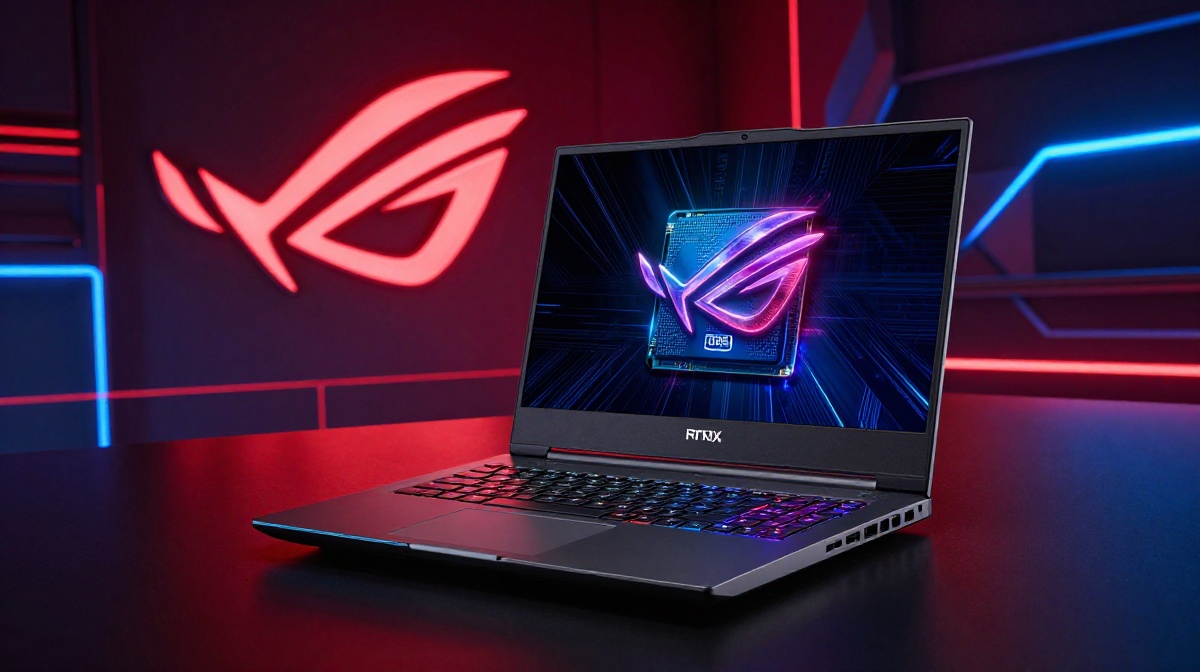
ASUS Strix G16 (2025) Comprehensive Review: Why Intel Takes the Lead Over AMD’s “Sloppy Seconds”
The 2025 gaming laptop market has arrived with a peculiar dilemma for fans of the ASUS ROG lineup. ASUS has released two distinct versions of the popular Strix G16, featuring either Intel or AMD processors. However, unlike previous years where the choice was merely a matter of CPU preference, the 2025 iteration presents two fundamentally different machines. In a surprising move, ASUS has introduced a brand-new chassis and internal design exclusively for the Intel model, while the AMD version retains the older design—a choice the sources describe as giving AMD the “sloppy seconds”.
For gamers and power users, this choice is no longer just about benchmarks; it is about build quality, cooling technology, and future-proofing. This deep dive analyzes every facet of these two machines to determine which version of the Strix G16 deserves a spot on your desk.
Design and Build Quality: A Tale of Two Chassis
At first glance, both versions of the Strix G16 share the same aesthetic DNA: grey metal lids and grey plastic interiors that feel solid to the touch. However, the physical dimensions tell a different story. The Intel version is slightly deeper and thicker than its AMD counterpart. Despite this, both laptops are on the thicker side for 16-inch machines, leaning closer to the bulk of 18-inch models.
The weight difference is marginal, with the AMD version weighing slightly less, though it is barely noticeable in daily use. Where they truly diverge is in the user experience of the design. The Intel model features a massive 360-degree RGB light bar that wraps around the entire machine. In contrast, the older AMD design limits its light bar to the front and corners.
Furthermore, the Intel model introduces a revolutionary easy-open design. Users can simply slide a notch and pull the panel off without any tools to access RAM and SSD slots. The AMD version remains stuck in the past, requiring the removal of 11 Phillips screws of varying lengths and the use of pry tools.
Port Layout and Connectivity: The Thunderbolt Advantage
The disparity continues in the I/O selection. The Intel Strix G16 is equipped with Thunderbolt 5 on both of its Type-C ports, offering significantly faster data transfer and more versatile connectivity. It also includes an extra USB Type-A port on the left side and a superior 2.5 gigabit Ethernet port.
The AMD version lacks these high-speed standards. Its ports are also located closer to the front of the machine because the side vents are dedicated to exhausting hot air, which can unfortunately blast the user’s mouse hand during intense gaming sessions. Intel avoids this by using those side vents for air intake instead.
Wireless connectivity also favours Intel, which comes equipped with Wi-Fi 7. The AMD version utilizes MediaTek 6E, which, while functional, lagged behind in performance tests.
The Display: 240Hz Brilliance and the “Panel Lottery”
One area where ASUS has maintained parity is the display. Both laptops utilize the same 16-inch 2560 x 1600 240Hz panel. The screen is impressive, offering a 500-nit peak brightness and a fast 4ms average response time when overdrive is enabled.
However, the sources highlight the “panel lottery”—small variances in brightness and backlight bleed that occur even between identical models. While both screens are excellent for esports and creative work, they fall short of the brightness found in Lenovo’s OLED options or ASUS’s own higher-tier Mini-LED displays.
Internal Performance: Intel Efficiency vs. AMD X3D V-Cache
Under the hood, both test units were specced with Nvidia’s RTX 5070 Ti and 32GB of RAM. The real battle is between the Intel and AMD silicon.
- Intel Performance: The Intel model held an edge in raw CPU power, outperforming AMD by about 7% in both single-core and multi-core Cinebench workloads.
- AMD’s X3D Secret Weapon: The AMD version features 3D V-Cache, which provides a massive boost in specific scenarios. In Counter-Strike 2, the AMD laptop reached a 29% higher average frame rate than the Intel model. It also set new records in Adobe Photoshop, a workload that thrives on the extra cache.
While gaming at 1440p—the native resolution for these screens—the difference between the two CPUs becomes negligible in most triple-A titles like Cyberpunk 2077 or Alan Wake 2, as the GPU becomes the primary bottleneck.
Thermals and Cooling: Vapor Chambers vs. Heatpipes
The internal redesign of the Intel model pays dividends in thermal management. The Intel Strix G16 features a vapor chamber cooler and liquid metal applied to both the CPU and GPU. The AMD model uses a more traditional heatpipe design and only applies liquid metal to the GPU.
In testing, the Intel model’s GPU ran roughly 10 degrees cooler than the AMD model during stress tests. Additionally, the Intel model was notably cooler to the touch at idle. While the Intel fans are slightly louder in Turbo and Manual modes, the trade-off is a machine that feels “cold” during lighter tasks.
Battery Life: A Decisive Victory
For a gaming laptop, the battery results were surprisingly lopsided. Despite both machines using the same 90Wh battery, the Intel model lasted 29% longer in video playback and a staggering 53% longer during gaming.
The sources note that AMD’s powerful HX processors are currently inefficient regarding battery life compared to Intel’s latest offerings. Furthermore, gaming on battery with the AMD model was a poor experience, resulting in frame rates below 30 FPS and noticeable stuttering, whereas the Intel model remained playable.
Audio, Camera, and Quality of Life
Even the secondary features show a preference for the Intel design:
- Audio: The Intel model’s speakers provide more bass and a less “tinny” sound at high volumes.
- Biometrics: The Intel model includes an IR camera for Windows Hello face unlock, a feature missing from the AMD version.
- Touchpad: The touchpad on the Intel model is significantly larger and offers a more tactile click.
- Storage: Both of Intel’s M.2 slots support PCIe Gen 5, while the AMD model only supports Gen 5 on one of its two slots.
The Verdict: Which Strix G16 Should You Buy?
The ASUS Strix G16 (2025) is a fantastic gaming laptop in either configuration, but the Intel version is undeniably the superior machine. By gifting Intel the new chassis, ASUS has provided it with better cooling, faster ports, superior battery life, and more modern features like Wi-Fi 7 and tool-less entry.
Choose the Intel version if:
- You want the best overall feature set and a modern design.
- You value battery life and quiet idle operation.
- You want the convenience of tool-less RAM and SSD upgrades.
Choose the AMD version only if:
- You can find it at a significantly lower price (at least several hundred dollars cheaper).
- You play specific games (like CS2) or use apps (like Photoshop) that are uniquely optimized for AMD’s 3D V-Cache.
At a retail price of approximately $2,400–$2,500 USD for the RTX 5070 Ti configurations, these are premium machines. Unless you are a die-hard fan of AMD’s X3D technology, the Intel Strix G16 is the clear winner for 2025. ASUS has indeed “done AMD dirty,” and as a consumer, your best bet is to follow the features—which, this year, all point toward Intel.

