
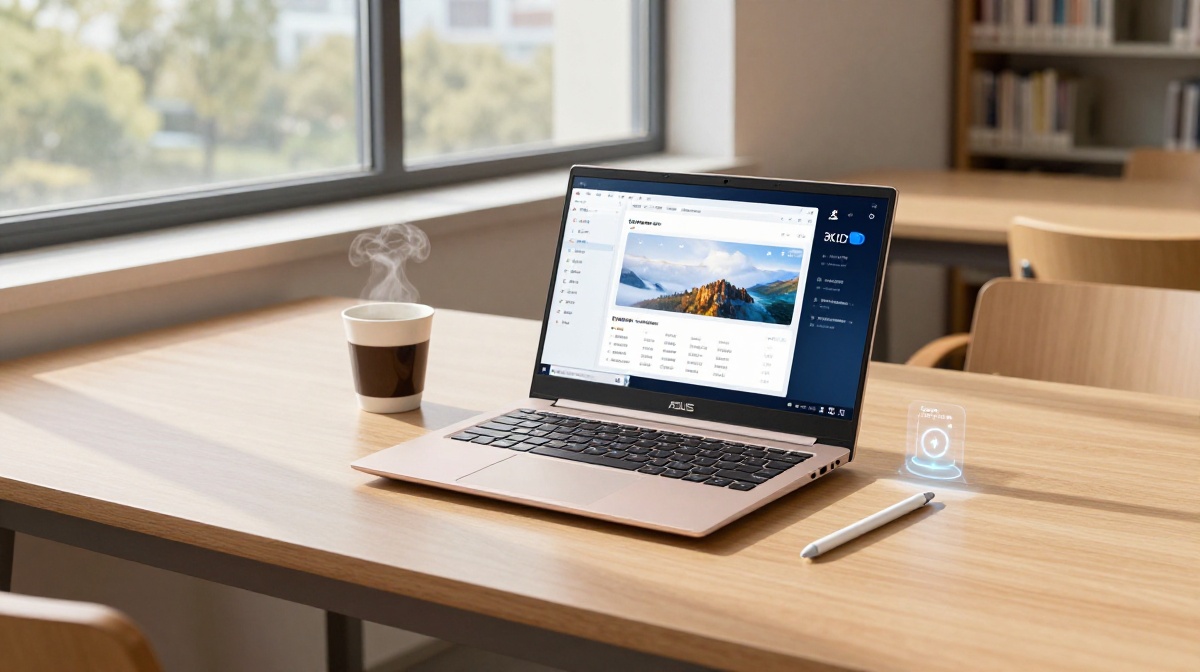
Best AI-Powered Laptops for Students: 2026 Rankings
The academic landscape has undergone a seismic shift in 2026, transitioning from simple digital literacy to an era where AI-powered computing is a mandatory requirement for student success. Whether you are a humanities student using LLMs like ChatGPT and Claude for research or a STEM major training local neural networks, the hardware in your backpack now determines your academic “flow state”.
This year, the “AI PC” is no longer a marketing buzzword but a technical standard defined by powerful Neural Processing Units (NPUs) capable of 40 to 80+ TOPS (Trillions of Operations Per Second). With the arrival of Intel’s Panther Lake (Core Ultra Series 3), Apple’s M5 series, and Qualcomm’s Snapdragon X2 Elite, students have more power at their fingertips than ever before.
At TheGadgetNet, we have analysed over 75 of the latest models and benchmarked them against real-world student workloads—from coding and data analysis to 20-hour library marathons—to bring you the definitive guide to the best AI laptops of 2026.
1. Best Overall AI Laptop: Apple MacBook Air (M5, 13-inch & 15-inch)
The MacBook Air (M5) remains the gold standard for the average student in 2026. Apple has finally addressed the biggest bottleneck for AI users by making 16GB of RAM the absolute minimum across the lineup.
Why It’s Perfect for Students
The M5 chip delivers exceptional single-core and multi-core performance, rivalled only by its “Pro” siblings that require active cooling. For students, the fanless design means you can work in a silent library or a lecture hall without your laptop sounding like a jet engine.
- AI Performance: The M5 chip is optimized for Apple Intelligence, handling writing assistance, image generation, and complex multitasking with zero lag.
- Battery Life: It continues to dominate the “real-world use” category, easily lasting 12+ hours on a single charge while juggling dozens of AI-heavy browser tabs.
- Portability: At just 2.7 pounds, the 13-inch model is almost unnoticeable in a backpack.
TheGadgetNet Verdict: If you want a machine that “just works” for the next four years of your degree, the MacBook Air M5 is the safest investment you can make.
2. Best Windows AI Laptop for Most Students: Asus Zenbook A14 (UX3407NA)
For those who prefer the Windows ecosystem, the Asus Zenbook A14 has dethroned the Surface Laptop as our top recommendation for 2026.
The NPU Powerhouse
The standout feature of the 2026 Zenbook is its Qualcomm Snapdragon X2 Elite processor. It includes a massive 80-TOPS NPU, which is double Microsoft’s requirement for a “Copilot+ PC”. This means local AI tasks—like real-time translation or on-device image editing—run faster on this machine than on almost any other ultraportable.
- Display: It features a vivid OLED panel made from “Ceraluminum,” a unique material that is scratch-resistant and incredibly light.
- Stamina: In rigorous battery rundown tests, it lasted a staggering 27 hours and 36 minutes, making it one of the longest-lasting laptops ever tested.
- The Build: Weighing only 2.4 pounds, it combines the premium feel of a MacBook with the versatility of Windows 11.
3. Best Budget AI Laptop: Apple MacBook Neo
In 2026, the laptop market has been hit by “RAMageddon”—a global shortage that has driven up prices for most Windows PCs. Apple countered this by launching the MacBook Neo, which has quickly become the best student value on the market.
Premium Experience for Under $600
Starting at $599 ($499 with an education discount), the Neo brings the premium Apple experience to a budget price point. It uses the Apple A18 Pro chip (originally from the iPhone) to run a full version of macOS.
- Design: You get an all-metal chassis, a high-resolution Liquid Retina display, and a 1080p webcam.
- Trade-offs: To hit this price, Apple sacrificed the backlit keyboard and limited the RAM to 8GB, which is sufficient for light browser-based AI tools but may struggle with heavy local model training.
TheGadgetNet Insight: For humanities or business students who spend most of their time in a browser (ChatGPT, Claude, Google Docs), the Neo offers a build quality that no $600 Windows laptop can currently match.
4. Best 2-in-1 for STEM Students: Lenovo Yoga 7 (83JR0001US)
STEM students often need a device that can transition from typing up lab reports to sketching diagrams with a stylus. The Lenovo Yoga 7 2-in-1 is our top pick for this category in 2026.
Performance Meets Versatility
Powered by the AMD Ryzen 7 AI 350, this laptop provides a balanced AI experience. Unlike ARM-based laptops (like the Snapdragon models), the Yoga 7 uses traditional x86 architecture, ensuring that specialized software required for engineering or math courses will run without compatibility issues.
- Display: A 14-inch OLED touchscreen that flips 360 degrees.
- Keyboard: Lenovo’s legendary “clacky” keyboard remains the best in its class for long coding sessions.
- Battery: It offers nearly 18 hours of life, ensuring it survives even the longest days on campus.
5. The Performance King: Asus Zenbook A16 (UX3607OA-ZB)
If you are a student who refuses to compromise on screen size or raw speed, the Asus Zenbook A16 is a 2026 marvel.
The “Snapdragon X2 Elite Extreme” Advantage
This is the first laptop to feature the Elite Extreme chip, which handily beats the latest M5 MacBooks in both single-core and multi-core productivity tasks.
- AI Specialization: With 48GB of RAM and an 80-TOPS NPU, this is the ultimate machine for students running Large Language Models (LLMs) locally on their device.
- Weight: Remarkably, despite having a massive 16-inch 2.8K OLED touchscreen, it weighs only 2.87 pounds—the lightest 16-inch laptop we have ever tested.
Specialized Rankings: Best Laptops for AI, Data Science, and Machine Learning Students
For students specializing in Machine Learning (ML) or Data Science, the requirements are much stricter. You cannot simply rely on a good processor; you need VRAM and CUDA support for training models locally.
Best for Local Training: HP Omen Max 16
If your coursework involves training neural networks, you need an NVIDIA RTX 50-series GPU.
- The HP Omen Max 16 (2025/2026) features the RTX 5090 and an Intel HX-class processor.
- Its robust cooling system ensures that the GPU can sustain high performance during long training sessions without thermal throttling.
Best for Hybrid Workflows: MacBook Pro 16 (M5 Max)
For students who mix cloud-based development with local testing, the MacBook Pro 16 with the M5 Max is unparalleled.
- Unified Memory: You can configure this with massive amounts of unified memory, which is essential for working with larger local AI datasets that would choke a standard laptop.
- Efficiency: It offers professional-grade power with very low fan noise and exceptional battery life.
- Note: If your specific program requires CUDA, you must stick with an NVIDIA-equipped Windows machine like the Omen or the Lenovo Legion.
A Note from TheGadgetNet
At TheGadgetNet, we understand that a laptop is the most significant investment a student makes. In 2026, the market is more complex than ever due to the divide between ARM-based chips (Snapdragon) and x86 chips (Intel/AMD). While ARM chips offer the best battery life, some universities still recommend x86 laptops for engineering and specialized software compatibility. We recommend checking your department’s specific hardware requirements before making your final choice.
Student Buying Guide: What Specs Actually Matter in 2026?
When shopping for an AI-capable laptop, ignore the flashy stickers and focus on these three pillars:
1. RAM: The Critical Bottleneck
In 2026, 8GB of RAM is officially “not enough” for anything beyond basic browsing.
- 16GB is the minimum for a smooth AI experience.
- 24GB to 32GB is the “sweet spot” for students who keep 30+ tabs open while running AI tools like Claude or Gemini in the background.
2. NPU and TOPS
Look for the Copilot+ branding or a listed TOPS rating.
- 40-50 TOPS is the standard for 2026.
- 80 TOPS (found in the new Asus Zenbook series) offers future-proofing for next-generation on-device AI features.
3. Battery Life: The 12-Hour Rule
As a student, you shouldn’t have to hunt for a power outlet between classes.
- Aim for at least 12 hours of real-world battery life.
- The HP OmniBook 3 16 is the current champion, lasting over 40 hours in testing, though it sacrifices some raw processing power to achieve this.
Summary of Top 2026 Student AI Laptops
| Category | Model | Top Feature | Price Range |
|---|---|---|---|
| Best Overall | MacBook Air (M5) | Silent, powerful, M5 chip | $949 – $1,299 |
| Best Windows | Asus Zenbook A14 | 80-TOPS NPU, 27hr battery | ~$1,349 |
| Best Budget | MacBook Neo | All-metal, macOS, cheap | $499 – $599 |
| Best 2-in-1 | Lenovo Yoga 7 | Versatile, x86 compatibility | ~$1,099 |
| Best for ML | HP Omen Max 16 | NVIDIA RTX 5090, Pro cooling | ~$3,600+ |
| Best Battery | HP OmniBook 3 16 | 40+ hours of runtime | ~$899 – $1,099 |
In 2026, the “perfect” laptop depends on your workflow. If you are mostly using cloud-based tools, prioritize portability and battery life (MacBook Air or Zenbook A14). If you are training models locally, prioritize GPU power and RAM(HP Omen or Lenovo Legion).
Regardless of your choice, ensure your machine has the memory and NPU power to handle the AI revolution that is now a core part of the modern educational experience.

