
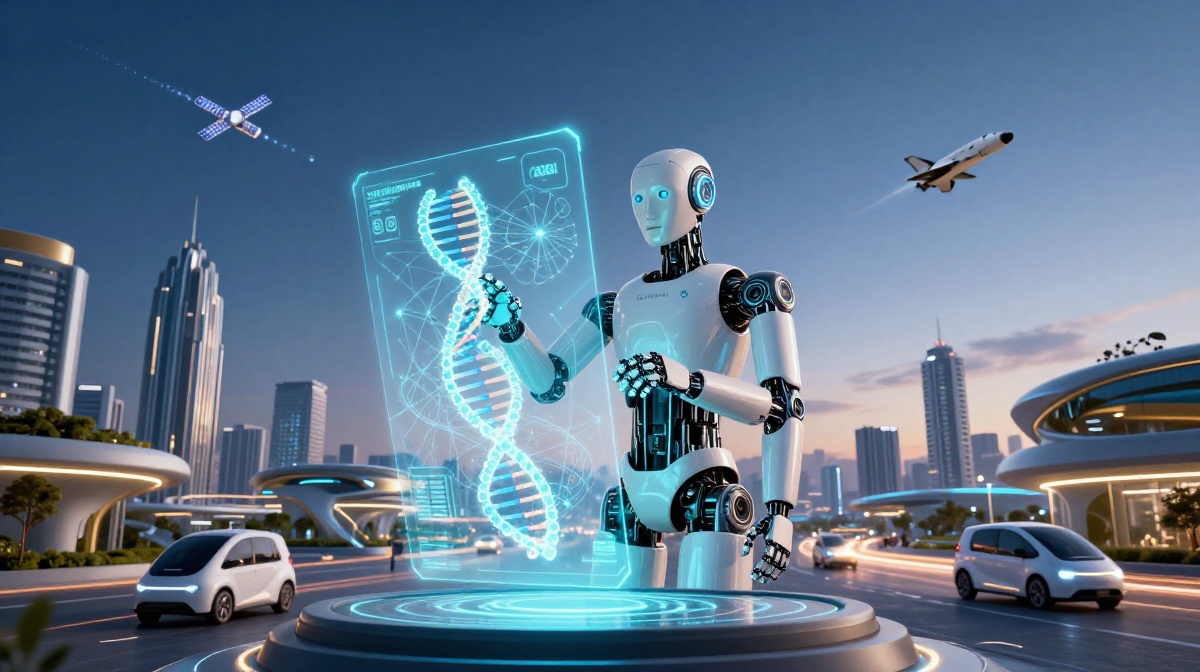
The Architecture of Tomorrow: 20 Emerging Technologies Redefining the Human Experience
The world is standing at the precipice of a technological renaissance. While the previous decade was defined by the ubiquity of the smartphone and the cloud, the coming years will be shaped by technologies that do not just change how we interact with information, but how we interact with reality itself. From the microscopic manipulation of atoms to the establishment of interplanetary internet, the blueprint for our future is being written in real-time.
1. The Dawn of Artificial General Intelligence (AGI)
At the pinnacle of the computing revolution lies Artificial General Intelligence (AGI). Unlike the “narrow AI” we use today for specific tasks like image recognition or language translation, AGI represents a machine’s ability to understand, learn, and apply intelligence across any problem, mirroring human cognitive versatility.
Current research by pioneers like OpenAI and Google DeepMind is focused on neural networks that mimic the human brain’s structure. By employing techniques such as reinforcement learning—where systems learn through trial and error—scientists are moving closer to a general problem-solving model. Once achieved, AGI could revolutionize every sector, from performing complex medical diagnoses to surpassing human intelligence in scientific research. Ultimately, these entities might even enhance their own architectures, leading to superintelligence that exceeds human capability by millions of times.
2. Rewriting the Code of Life: CRISPR Gene Editing
In the realm of biotechnology, CRISPR-Cas9 has emerged as a revolutionary tool for biological engineering. Often described as “molecular scissors,” it uses guide RNA to identify specific DNA sequences and the Cas9 enzyme to cut and modify the genetic code.
Currently, CRISPR is being used to correct genetic defects in animal models for conditions like cystic fibrosis and sickle cell anemia. The future of this technology, however, suggests a shift toward personalized medicine and even the potential to edit human embryos to prevent hereditary diseases. While this offers immense hope for healthcare, it also invites profound ethical debates regarding “designer babies” and the selection of physical traits like height or intelligence.
3. The Quantum Leap: Next-Generation Computing
While classical computers rely on binary bits (0 or 1), Quantum Computing utilizes qubits. Because of quantum principles like superposition and entanglement, qubits can exist in multiple states simultaneously, allowing these machines to process vast datasets at speeds previously thought impossible.
Google has already claimed “quantum supremacy” with its Sycamore processor, which completed a calculation in 200 seconds that would take a traditional supercomputer thousands of years. As IBM and others scale these systems, we expect breakthroughs in cryptography, drug discovery, and complex optimization for finance and logistics.
A Message from The Gadget Net
Before we dive deeper into the future of robotics and neural interfaces, it is essential to have a reliable guide through this rapidly evolving landscape. www.thegadgetnet.com is dedicated to bringing you the latest “inside information” on the tools and trends shaping our lives. From deep dives into the newest hardware to analysis of global tech shifts, The Gadget Net serves as your digital compass in an age of exponential change. We don’t just report on the future; we help you understand your place within it.
4. Merging Mind and Machine: Neuralink and BCIs
The boundary between human consciousness and digital hardware is blurring thanks to Brain-Computer Interfaces (BCIs) like Neuralink. By implanting ultra-thin threads into the brain to record neural activity, these devices can translate thoughts into computer commands.
The immediate focus is medical—helping paralyzed individuals control prosthetic limbs. However, the long-term vision involves enhancing human cognition, enabling telepathic-like communication, and even “downloading” information directly into the brain. This could culminate in a symbiosis where humans merge their minds with superintelligent AIs.
5. The Rise of the Humanoids
Robotics is moving away from stationary industrial arms toward versatile Humanoid Robots. Companies like Boston Dynamics and Tesla are leading the charge in creating machines that can navigate stairs, perform backflips, and interact with humans naturally.
Equipped with advanced AI, robots like Sophia and Ameca can recognize faces and interpret speech. In the future, these machines will likely become commonplace in our homes and workplaces, serving as caregivers for the elderly, assistants in hazardous disaster zones, or educators in schools.
6. The Generative AI Explosion
Generative AI has already transformed content creation. Large language models can now draft articles, while tools like Midjourney generate hyper-realistic art from text. The next frontier is AI-generated video.
Imagine a world where you can request a bespoke two-hour film in the style of Christopher Nolan, and the AI renders it for you in hours. Beyond entertainment, generative AI will revolutionize education by creating personalized learning materials that adapt to a student’s individual pace.
7. Global Connectivity via Starlink
SpaceX’s Starlink is currently building a massive constellation of low Earth orbit (LEO) satellites to provide high-speed internet to the most remote corners of the globe. By orbiting closer to Earth than traditional satellites, Starlink reduces latency, making satellite internet a viable competitor to broadband.
The future of Starlink extends beyond Earth; it is envisioned as the communication infrastructure for Mars colonization, facilitating “interplanetary internet” between our two worlds.
8. Reproductive Frontiers: Artificial Wombs
Artificial wombs, or “exowombs,” are being developed to support premature infants in a controlled, fluid-filled environment that mimics a natural uterus. While the current focus is neonatal care, future applications could include helping those facing infertility or providing a solution for human reproduction in space, where gravity-related challenges make traditional pregnancy difficult.
9. Nanotechnology: The Power of the Small
By manipulating matter at a scale smaller than 100 nanometers, Nanotechnology is creating materials with extraordinary properties, such as graphene. In medicine, we are moving toward nanobots that can travel through the bloodstream to repair tissue or target cancer cells directly. In terms of sustainability, nanotech will enable more efficient solar cells and water filtration systems.
10. The Internet of Things (IoT) and Smart Cities
The Internet of Things (IoT) refers to the vast network of interconnected devices that exchange real-time data. When integrated with AI, these devices create “smart” environments—from thermostats that learn your habits to Smart Citiesthat use big data to optimize traffic flow, manage waste, and reduce carbon footprints.
11. Autonomous Vehicles and Logistics
Self-driving cars use a suite of LIDAR, radar, and AI to perceive their surroundings. Beyond personal convenience, autonomous tech will revolutionize logistics through driverless trucks and delivery drones, potentially making car ownership obsolete in favor of widespread car-sharing models.
12. Space Tourism and Orbital Living
Space is no longer the exclusive domain of government astronauts. Private companies like Blue Origin are already offering suborbital flights to the edge of space. The future holds the promise of space hotels (like Orbital Reef) and even lunar tourism, where ordinary people can explore the surface of the Moon.
13. Mixed Reality (MR)
Mixed Reality blends the physical and digital worlds, allowing users to interact with holographic elements in their real environment. Industry leaders like Apple and Meta are refining headsets that will allow architects to walk through virtual buildings or medical students to practice surgery on digital patients.
14. 3D Printing: Localized Manufacturing
3D Printing, or additive manufacturing, is moving beyond plastics to include metals and even bio-materials. This technology allows for the on-demand production of everything from custom prosthetics to entire buildings. In space, 3D printers will allow astronauts to manufacture tools without waiting for resupply from Earth.
15. Solid-State Batteries
To solve the limitations of current electric vehicles, solid-state batteries offer a safer, denser alternative to lithium-ion. These batteries eliminate flammable liquid electrolytes, charge faster, and provide significantly longer ranges for EVs and smartphones alike.
16. Fusion Power: Creating a “Mini Sun”
Fusion power aims to replicate the process that powers the stars by fusing atomic nuclei to release immense energy. With the development of high-temperature superconducting magnets, scientists are closer than ever to achieving net energy gain. As a clean, nearly limitless energy source with no greenhouse emissions, fusion could be the ultimate solution to the global climate crisis.
17. Blockchain Beyond Currency
While famous for Bitcoin, Blockchain is essentially a decentralized, immutable ledger. Its future lies in securing digital identities, creating fraud-proof voting systems, and enabling decentralized finance (DeFi), which provides banking services without traditional intermediaries.
18. Smart Homes and Personal Automation
Modern Smart Homes leverage IoT and AI to proactively manage environments. Future iterations will go beyond voice commands to include health monitoring sensors that can alert doctors to potential issues, providing independence for the elderly and highly personalized daily routines for everyone.
19. Lab-Grown Meat: Sustainable Nutrition
Lab-grown meat (or cultured meat) involves cultivating animal cells in bioreactors, eliminating the need for slaughter. This technology has expanded from beef to poultry and seafood. It requires significantly less land and water than traditional farming, offering a more ethical and sustainable way to feed a growing global population.
Conclusion: Navigating the Future
The 20 technologies explored here are not isolated developments; they are deeply interconnected. AGI will design new nanomaterials; quantum computers will solve the equations for fusion; and blockchain will secure the data of our smart cities. As we move forward, the challenge will be to balance this rapid innovation with ethical foresight.
The future is arriving faster than many anticipated. To stay informed on how these “Architectures of Tomorrow” are being built, continue your journey with us at The Gadget Net, where we bring the future into focus, one breakthrough at a time.

