19.7 C
New York
Saturday, July 25, 2026
Home Blog Page 5

The Vaultek DS2i Smart Station Review: The Future of Secure Bedside Home Protection

0


The Vaultek DS2i Smart Station Review: The Future of Secure Bedside Home Protection

In the rapidly evolving world of personal security, the line between “utility” and “technology” continues to blur. For those who prioritize both safety and modern convenience, the traditional bedside safe is no longer enough. Enter the Vaultek DS2i Smart Station, a device that redefines what a quick-access safe can be.

At The Gadget Net, we pride ourselves on uncovering the latest tech that actually enhances your daily life, and the DS2i is a prime example of a “purpose-built” device that refuses to sacrifice aesthetics for function. Whether you are looking to upgrade from previous models like the Vaultek Slider series or the VS20i, the DS2i offers a comprehensive leap forward in features and integration.

A Sleek Addition to the Modern Home

One of the first things users notice about the Vaultek DS2i is its sleek and clean design. Unlike traditional safes that often look out of place in a master bedroom, the DS2i is designed to look “sharp” on a nightstand. Vaultek understands that a safe in a living space should complement the decor, offering the unit in three distinct colors:

  • Titanium Gray
  • Alpine White
  • Straight Black

This variety ensures that the safe fits seamlessly into any modern home security setup.

The “Smart” in Smart Station: Display and Monitoring

The DS2i is more than just a locked box; it is a functional desktop hub. The front of the unit features a touch display screen that is incredibly user-friendly. This screen provides real-time information that is vital for both the owner and the items stored within, including:

  • A digital clock
  • Temperature readings
  • Relative humidity levels

It is important to note that while it features a prominent clock, the DS2i is not an alarm clock. Vaultek intentionally omitted this feature, recognizing that 99% of modern users rely on their smartphones for alarms. Instead, they focused on making the safe a central charging point for those very devices.

Integrated Charging and Connectivity

As a “Smart Station,” the DS2i serves as a power hub for your daily tech. It features a built-in cell phone charging docklocated right on the top of the unit. This allows users to place their phones down for the night and have them fully charged by morning without extra cables cluttering the nightstand.

For additional devices like an Apple Watch or tablets, the back of the safe includes:

  • A USB port
  • A USB-C port

These thoughtful inclusions demonstrate that Vaultek designed the DS2i to be applicable for modern-day users who need more than just home protection—they need a device that integrates into their digital lifestyle.

Multi-Layered Access and Biometric Excellence

Security remains the core mission of the DS2i, and it offers multiple redundant ways to gain entry, ensuring you are never locked out of your protection.

  1. High-Quality Biometrics: Vaultek is renowned for its biometric technology, and the DS2i features what is described as the highest quality biometric reader on the market. This scanner is exceptionally reliable and can be programmed to recognize up to 20 different fingerprints.
  2. Digital Keypad: For those who prefer traditional codes, there is a digital keypad that can be programmed with a four to eight-digit code.
  3. Nano Key Compatibility: For those who want remote access, the DS2i is compatible with the Vaultek Nano Key(available in standard and biometric versions). This allows a user to trigger the safe from a distance—for example, if the safe is in a closet and you want to open it from your headboard.
  4. Manual Backup Key: In the event of a total power failure or a dead battery, Vaultek includes a physical backup key to ensure entry is always possible.

Silent Operation for Tactical Advantage

A standout feature for home defense is the quiet, soft-open door. In a high-stress situation in the middle of the night, silence is critical. The DS2i’s door opens without “slamming or banging,” allowing the user to retrieve their contents without notifying an intruder of their location.

Interior Capacity and Versatility

Despite its compact exterior, the DS2i offers significant internal space. It is large enough to accommodate:

  • A full-size pistol
  • A compact pistol (or even two compacts)
  • Extra magazines

Beyond firearms, the DS2i is a “nice solution” for securing other small valuables such as jewelry, passports, and important paperwork. However, users are advised not to use it for “large amounts of cash,” as its primary design is for quick-access protection.

Hardened Security Features

The DS2i is engineered to resist both curious children and determined “smash and grab” intruders. Key security features include:

  • Anti-Drop Latch: An internal mechanism that prevents the door from jarring open if the unit is picked up and slammed on the ground.
  • Anti-Pry Features: The structural design is specifically tailored to make it difficult for an intruder to force the door open.

Mounting and Portability Options

To prevent the safe itself from being stolen, Vaultek offers three different mounting methods:

  1. Desktop Mount: Secures the unit directly to the top of a surface.
  2. Under-Desktop Mount: Allows the safe to be tucked away beneath a surface for a lower profile.
  3. Security Cable: The safe includes a slot for a security cable to lock into the back.

The security cable option is particularly versatile, allowing the DS2i to transition from a home safe to a portable one. It can be moved from a nightstand to a vehicle, an RV, or a camper, making it an excellent choice for those who want protection while camping or traveling.

Conclusion

The Vaultek DS2i Smart Station stands out as the most feature-rich pistol safe on the market. By combining top-tier biometric security with modern lifestyle features like wireless charging and environmental monitoring, it offers a level of utility that few competitors can match.

For the tech-savvy homeowner, it represents a significant upgrade in both form and function. If you are looking for a sleek, clean, and reliable way to protect your home and organize your tech, the DS2i is “undoubtedly the best choice” currently available.

Beyond Science Fiction: A Deep Dive into the 10 Most Advanced Holographic Technologies Revolutionising Our Reality

0

Beyond Science Fiction: A Deep Dive into the 10 Most Advanced Holographic Technologies Revolutionising Our Reality

For decades, holograms were the exclusive province of science fiction. We watched in awe as Princess Leia pleaded for help in a shimmering blue projection and marvelled at Tony Stark’s interactive digital workbenches. However, as we often see in the tech world, the line between fiction and reality is rapidly blurring. Holograms are no longer a futuristic dream; they are a sophisticated, present-day reality that has been evolving for many years.

At www.thegadgetnet.com, we pride ourselves on being at the absolute forefront of this technological frontier. Our mission is to bridge the gap between complex engineering and the everyday consumer, providing a home for enthusiasts who want to know what the “next big thing” is before it hits the mainstream. As we explore these ten breathtaking holographic advancements, you’ll see why TheGadgetNet is the premier destination for deep dives into the hardware and software shaping our collective future.

In this comprehensive analysis, we will deconstruct the most advanced holographic systems currently in use, from Victorian-era illusions resurrected for the digital age to mind-bending plasma displays that ionise the very air we breathe.


1. The Resurrection of Pepper’s Ghost

While many view the holographic “resurrections” of icons like Tupac Shakur at Coachella in 2012 or Michael Jackson at the 2014 Billboard Music Awards as cutting-edge 21st-century tech, the foundational principle actually dates back to 1862.

The technique, known as Pepper’s Ghost, was developed by English scientist John Henry Pepper. Originally, it was a stage illusion used to project “ghosts” by reflecting a brightly lit figure—hidden from the audience—onto a pane of glass positioned between the performer and the spectators. The magic lies in the audience’s inability to see the glass itself.

In the modern era, companies like MDH Hologram have mastered this through photorealistic 3D CGI and high-end motion capture technology. By digitally recreating a person from head to toe and projecting them onto nearly invisible glass, they achieve a level of realism that can deceive even the sharpest eye.

2. The 360-Degree Digital Holographic Tabletop

If you have ever envied the holographic interfaces in the Marvel Cinematic Universe, you are not alone. While we aren’t quite at the level of Tony Stark’s lab yet, significant strides have been made.

A pioneering team from South Korea has successfully developed the world’s first holographic table that offers a true 360-degree viewing experience. Unlike traditional projections that require a specific viewing angle, this table allows multiple people to view the image simultaneously from any position. This is achieved through a complex system of multi-coloured, high-powered lasers and a high-speed rotating mirror display built directly into the tabletop. The resulting “floating” image is a product of diffraction caused by the interference between these mini-lasers.

3. The Nologram: Breaking the 2D Barrier

Artist Joanie LeMercier has introduced a concept called the Nologram, a term she coined to distance her work from the frequently “misleading” use of the word hologram.

The Nologram utilizes depth sensors and image analysis to facilitate real-time interaction between the viewer and the projection. While she employs classic techniques like semi-transparent screens and lenses, her most groundbreaking work involves volumetric projections. By using high-pressure gas, fine water particles, and custom nozzles, she creates true 3D projections that are not limited by size, effectively breaking the constraints of flat 2D screens.

4. Aerial Burton: Laser Plasma Technology

Perhaps the most “sci-fi” entry on this list comes from Japan. Aerial Burton Inc. has succeeded in creating true 3D displays using plasma technology.

This is a revolutionary shift because it does not require a surface, mirror, or glass to bounce light off. Instead, the system uses a one-kilowatt infrared laser focused by a 3D scanner onto specific points in the air. This intense focus ionises the air molecules, creating a visible plasma. This allows light to be “drawn” directly into thin air, opening up staggering possibilities for outdoor displays and emergency signalling where screens are unavailable.


Why TheGadgetNet is Your Tech Home

Before we dive into the next five innovations, it is worth noting that staying updated on these fast-moving sectors is exactly what we do at TheGadgetNet. In an era of “fake news” and “vapourware,” our readers trust us to provide vetted, technical insights. Whether you are a professional developer, an architect looking for the next design tool, or simply a gadget lover, www.thegadgetnet.com is your central hub for the tech that matters. We don’t just report on the news; we analyze the mechanics that make the impossible possible.


5. Fan Holograms and the Hypervsn Wall

Commonly seen at theme parks and special events, Fan Holograms are one of the most commercially accessible forms of this technology.

These devices consist of blades with strips of RGB LEDs attached to them. As the blades spin at high speeds, a control unit flashes the pixels in a specific sequence, creating the illusion of a floating, high-definition image. A recent evolution of this is the Hypervsn Wall, which can stand over three meters tall. Despite its massive size and ability to produce full HD imagery, it is incredibly efficient, operating on only 65 watts of power.

6. Touchable Holograms: The Haptic Revolution

The traditional understanding of a hologram is something you can see but never touch. Researchers at the University of Bristol are challenging that notion.

By using tactile technology and haptic feedback, they have created 3D shapes in mid-air that can be felt by human hands. This has massive implications beyond just gaming. In the future, doctors could feel a 3D projection of a tumour before an operation, or museum visitors could “touch” priceless historical artifacts without risking damage to the original item.

7. MIT’s inFORM: Tangible Shape Displays

Taking the concept of “touch” even further, MIT has developed inFORM, a “tangible dynamic shape display”.

While most holograms use light, inFORM uses physical matter—specifically, up to 900 motor-driven columns in a small area. These columns can move up and down to “sculpt” shapes in real-time. This allows for a “physical hologram” where an architect could remotely manipulate a 3D model, or a person could “touch” the shape of a loved one’s face from miles away. MIT proposes that this tech can mediate interaction, provide physical affordances, and even actuate physical objects.

8. Voxon VX1: Volumetric Perfection

The Voxon VX1 is a masterclass in tricking the human eye. It utilizes an ultra-high-speed digital light engine and a volume rendering engine to project over half a million points of light into a volumetric space every second.

The system projects hundreds of digital cross-sections of an image onto a high-speed reciprocating screen. As the light hits this moving screen, it diffuses at the precise time and place to form a physical cross-sectional image. Because this happens so fast, our eyes blend the layers into a single, seamless 3D image that requires no special glasses to view.

9. Fairy Lights: The Power of Femtoseconds

Similar to the touchable holograms from Bristol, Fairy Lights are 3D interactive projections that can be felt. Created by the Digital Nature Group, these holograms feel like “sandpaper” because you are essentially touching laser dots.

The technology behind this is mind-blowing: it uses femtosecond lasers. A femtosecond is one quadrillionth of a second. These lasers create 3D images comprised of tiny points of light plasma called voxels, with resolutions reaching a staggering 200,000 dots per second.

10. The Euclideon Hologram Table

Finally, we have the Euclideon Hologram Table, an immersive multi-user system that focuses on massive data handling.

While it may use different underlying tech than the South Korean laser table, it is incredibly powerful, utilizing algorithms that can process up to 1,000 gigabytes of graphic data. This makes the images not only stunning but highly functional for industries like the military, government, and urban planning. From smart cities to high-end real estate and even interactive restaurant menus, the Euclideon table proves that holograms are a tool for serious industry, not just entertainment.


Conclusion: The Future is Projected

As we have seen, holographic technology is no longer a monolith. It is a diverse field ranging from the tactile “sandpaper” feel of femtosecond lasers to the physical, motor-driven columns of MIT’s inFORM.

The possibilities for the future are truly endless. Whether it is a doctor preparing for a complex surgery or an architect viewing a 1,000GB data model, these technologies are fundamentally changing how we interact with information and each other.

At www.thegadgetnet.com, we will continue to track these developments as they move from the laboratory to the living room. The era of the “true” hologram has arrived, and it is every bit as crazy and breathtaking as we imagined it would be.

Which of these innovations blew your mind the most? Join the conversation at TheGadgetNet, where we dive deeper into the tech that defines tomorrow.

Master Your Space: The Ultimate Guide to the Handheld Bluetooth Label Maker for Seamless Organization

0


Master Your Space: The Ultimate Guide to the Handheld Bluetooth Label Maker for Seamless Organization

In an increasingly cluttered world, the quest for order can often feel like an uphill battle. Whether it is a kitchen pantry overflowing with unlabelled jars or an office desk buried under a mountain of cables, the lack of a clear system can lead to wasted time and unnecessary stress. However, as we explore today at TheGadgetNet, there is a small, revolutionary device designed to turn that chaos into a perfectly categorized haven. This pocket-sized powerhouse is a portable label maker that proves big things really do come in small packages.

A New Era of Portable Organization

The primary appeal of this device is its sheer convenience; it is a small box that has the potential to make your environment significantly more organized. Unlike the bulky, industrial label makers of the past, this modern iteration is roughly the size of a human hand, making it exceptionally portable.

At TheGadgetNet, we understand that our readers value devices that fit into their mobile lifestyles. This label maker is entirely rechargeable, meaning you are no longer tethered to a wall outlet or forced to hunt for spare AA batteries just to label a few folders. Because it does not need to be plugged in during use, you can take it from the garage to the attic or even use it on the go to label items at a job site or school.

Hardware Design and Ease of Use

The physical design of the machine is as intuitive as it is compact. On the front of the device, a simple button pops open the top cover to reveal the internal compartment where the label stickers are housed. One of the most user-friendly features is the labeling on the sticker rolls themselves; the size of the stickers is clearly marked, which is crucial information for when you are setting up your print jobs later in the accompanying app.

Loading the machine is a straightforward process. Users simply need to remove the protective seal from the sticker roll, insert it into the machine, and ensure a small amount of the label paper is hanging out before snapping the lid shut. This ensures the machine can properly feed the paper through for the first print.

Perhaps the most impressive technological feat of this device is that it is entirely inkless. By utilizing thermal printing technology (information not explicitly in the source but inferred by the “inkless” description), it saves the user from the ongoing cost and mess of ink cartridges.

The “We Print” Ecosystem: Connectivity and Setup

To unlock the full potential of the hardware, the device connects via Bluetooth to a dedicated mobile application called “We Print”. The setup process is designed for speed and simplicity. By holding down the start button on the label maker and selecting the corresponding button within the app, the two devices connect almost instantly.

Once connected, the “We Print” app serves as a robust command center for all your labeling needs. To start a project, the user simply hits the “new label” button and selects a blank template. At this stage, it is vital to input the correct size of your label stickers—the measurements you noted earlier when loading the roll.

Customization at Your Fingertips

The software provides a high degree of creative control that goes far beyond basic text. Within the app, you can create a text box, double-tap to enter your desired names or descriptions, and then begin the customization process.

The customization settings allow for:

  • Text Formatting: You can center your text, adjust the font size, and apply italics to emphasize certain words.
  • Visual Styles: For those who want a more aesthetic or high-contrast look, the app allows you to change the background color. You can even choose to print labels with a black background and white lettering.
  • Orientation Control: Before hitting the print button, the app prompts you to adjust the orientation to match how the stickers are fed through the machine, ensuring the text is never cut off or misaligned.

Real-World Applications: From Water Bottles to Workshops

Why is a device like this essential? In the source video, a practical example is given: labeling water bottles. By applying a durable sticker label to personal items, it becomes much easier to keep track of your belongings and prevent them from being lost or mixed up with others.

Because these are sticker labels, they are designed to adhere to almost anything. This makes them perfect for:

  • Kitchen Organization: Labeling spice jars, flour bins, and “use-by” dates on leftovers.
  • Home Office: Identifying mysterious power cords, filing cabinets, and external hard drives.
  • Children’s Items: Marking school supplies, lunchboxes, and toy bins.

The GadgetNet Perspective

At www.thegadgetnet.com, we are constantly on the lookout for tools that simplify daily life. We believe that technology should be an enabler, not a complication. This portable label maker aligns perfectly with that philosophy. It removes the friction of old-school labeling—no more searching for a Sharpie that actually works or dealing with messy handwriting. Instead, you get crisp, professional-grade labels in seconds. Our mission at TheGadgetNet is to bring you “inside information” on gadgets just like this, helping you decide which tech is worth your investment.

Final Touches: Printing and Tearing

Once you have perfected your design in the app, the printing process is near-instantaneous. As soon as you hit the final print button, the label is spat out of the machine.

The designers also included a clever physical feature to finish the job: “claw teeth”. These teeth are built into the top of the label maker, acting as a manual cutter that makes it incredibly easy to tear off your finished label cleanly without needing scissors.

Conclusion

The handheld Bluetooth label maker is a masterclass in portable utility. It is super simple to use, highly portable, and offers enough customization to satisfy even the most meticulous organizer. By combining the convenience of a smartphone app with a robust, inkless printing mechanism, it provides a seamless way to keep track of your things and ensure you never lose them again.

For more deep dives into the latest organizational tech and pocket-sized innovations, stay tuned to TheGadgetNet. Whether you are a minimalist looking to declutter or a busy parent trying to keep the household running smoothly, this little box is a game-changer for your daily routine.

The Future of Play: Testing the Most Extreme Gaming Gadgets of 2024

0


The Future of Play: Testing the Most Extreme Gaming Gadgets of 2024

In the rapidly evolving landscape of interactive entertainment, the line between “useful tool” and “expensive gimmick” is often blurred. From handhelds that emulate classic consoles at four times their original resolution to 11-speaker surround sound systems that attach to your office chair, the world of gaming hardware has never been more experimental.

This article dives deep into the most extreme gaming tech currently hitting the market, evaluating whether these gadgets are the future of the industry or simply high-priced curiosities.

1. The Transformation of Handheld Gaming: The 1X Player “Sugar One”

One of the most fascinating developments in recent years is the rise of the ultra-powerful handheld. The 1X Player “Sugar One” is presented as a “modern reimagining” of the dual-screen concept popularized by the Nintendo 3DS.

High-Resolution Nostalgia

The Sugar One distinguishes itself by its ability to emulate 3DS titles at four times the original resolution, providing a level of visual fidelity that the original hardware could never achieve. For many gamers, the 3DS remains a peak handheld experience, and seeing those games “up-resed” on a modern Android-based system feels like a generational leap.

Hardware and Tactility

The device’s build quality aims to rival industry titans like the Steam Deck or the Nintendo Switch OLED. Notable features include:

  • Tactile Clicky Buttons: Unlike the mushier buttons of some older handhelds, these provide immediate physical feedback.
  • Enhanced Joysticks: The sticks are described as feeling superior to any hardware Nintendo has produced, offering more precision for modern titles.
  • Dual-Screen Versatility: It can function as a standard Android device or a dedicated dual-screen gaming machine, though testers noted that the moving parts might make the internal space slightly inefficient.

2. Breaking the Second Dimension: AI-Generated 3D Gaming

For years, glasses-free 3D was considered a failed experiment of the early 2010s. However, new hardware is attempting to revive the concept using Artificial Intelligence.

How it Works

Unlike the 3DS, which required games to be specifically coded for 3D, this new “behemoth” monitor uses AI to convert 2D games into 3D in real-time. It features a tracking camera that follows the user’s eyes to maintain the depth effect regardless of head movement.

The User Experience

While the effect is described as “really immersive,” it comes with significant drawbacks. Testers noted that the intensity of the AI-generated depth could lead to a migraine within minutes. There is also a sense of “gimmick fatigue”; while the execution of the technology is impressive, the practical application remains questionable for long-term gaming sessions.

3. Ergonomics and Recovery: The Gamer Hand Massager

As esports and competitive gaming become more physically demanding, hardware companies are pivoting toward gamer wellness. The “Gamer Hand Massager” is a specialized device designed to alleviate the strain caused by high-intensity actions like “jitter clicking” in Minecraft.

The Sensation of Relief

The device functions similarly to a high-end blood pressure monitor, using airbags to clamp down on individual fingersand the palm. It incorporates:

  • Heat Therapy: To loosen stiff muscles in the hands and wrists.
  • Specific Finger Sockets: Ensuring that every part of the hand that interacts with a mouse or keyboard is massaged.
  • Pressure Points: Designed to target the back of the hand, an area frequently prone to cramping during long typing or gaming sessions.

While initially intimidating—with one tester comparing the sensation to being “murdered” or “clamped down”—the consensus was that the pressure provides a unique form of relief that cannot be replicated manually.

4. The Return of Social Gaming: “The Board”

The digital revolution has largely moved multiplayer gaming into online lobbies, often sacrificing the “couch co-op” feel of the past. “The Board” is a smart board game system designed as an “antidote” to this trend.

Digital Meets Physical

The system uses physical pieces on a digital screen that runs at a smooth 60 frames per second. The pieces are tracked by the board, allowing for immediate interaction—such as digital characters walking toward where a physical piece is placed.

Gameplay and Limitations

The experience is described as “fun for the whole family,” offering a hybrid gaming style that feels like something out of Star Wars. However, there is a notable absence of major licensed IPs like Catan or Ticket to Ride, likely due to the high cost of digital licensing. Despite this, the $400 device offers a “new gaming experience” that feels immediate and social.

5. Total Audio Immersion: The Colo GCS 11-Speaker System

If headphones feel too restrictive and standard speakers too distant, the Colo GCS offers a radical middle ground. This 11-speaker system is designed to attach permanently to a gaming chair, creating a “sound cocoon”.

A 360-Degree Soundstage

The system acts as a 360 surround sound system, mimicking the directional audio of high-end headphones without the physical discomfort of wearing them. In testing, the directional audio was so precise that users could hear virtual voices moving from one side of the chair to the other as they passed characters in-game.

The “Nightmare” Factor

Interestingly, the immersion was almost too effective for some. In horror or high-stress games, hearing “screams all around” through an 11-speaker array was described as “unnerving” and even “a nightmare”. Furthermore, for competitive players, the fidelity did not necessarily surpass high-end headphones, which many would still prefer for tracking footsteps in online shooters.

6. Mobile Gaming and Portability

The source explores several tools meant to bridge the gap between “casual” mobile gaming and “hardcore” console gaming.

Mcon O Snap Controller

This MagSafe-compatible controller “snaps” onto a smartphone, ejecting handles to create a full-sized gaming interface. It features:

  • High-Quality Joysticks and Triggers: Providing a tactile feel usually reserved for consoles.
  • Wireless Detachability: The controller can be detached from the phone while the phone sits on a kickstand, allowing for a more relaxed posture.

The Pocket Projector

For gaming on the go—specifically “at your grandma’s house” or in a hotel—a tiny portable projector offers a surprisingly viable solution. Roughly the size of a folding phone, it can project a gaming screen onto a ceiling, allowing players to lie flat in bed while playing titles like Super Smash Bros. Its portability and “ceiling mode” make it one of the most practical items tested.

7. The “Endgame” Portable Rig: Poger Yez OLED

Finally, for those who refuse to leave their PlayStation 5 at home, the Poger Yez OLED Edition represents the extreme end of portable gaming.

A PS5 in a Suitcase

This is essentially a hard-shell suitcase containing a PS5 Pro, a Quad HD OLED screen, and a built-in sound system. It even includes a wireless charging pad for your phone.

The Weight of Power

While it offers the ultimate “portable” console experience, its practicality is limited by its sheer size and weight. Testers noted it is the size of a long-haul suitcase, and while it has wheels, “lugging this around Heathrow airport” would be a significant chore. For most, a simple handheld portal or a HDMI cable for a hotel TV might suffice, but for “esports players,” this represents the peak of mobile performance.

Conclusion: Which Extreme Tech is Worth It?

The testing of these gadgets reveals a fascinating trend: while “extreme” tech often focuses on high specs and “wow” factors, the most successful items are those that solve a specific problem or enhance a social experience.

  • The Winners: The portable projector and The Board stood out for their immediate utility and “fun factor”.
  • The Niche: The 1X Player Sugar One is a masterpiece for retro enthusiasts, and the hand massager is a genuine recovery tool for high-APM (actions per minute) gamers.
  • The Over-the-Top: The Colo GCS and Poger Yez OLED are impressive feats of engineering but remain “a bit much” for the average consumer.

As gaming continues to push into AI and advanced ergonomics, these gadgets serve as a preview of a future where play is more immersive, more comfortable, and—occasionally—a little bit more bizarre.

Dreo Lynx S Smart Air Circulator: An In-Depth Review of Modern Desktop Cooling

0

Dreo Lynx S Smart Air Circulator: An In-Depth Review of Modern Desktop Cooling

In the modern household, the line between a simple home appliance and a piece of high-tech furniture is increasingly blurred. The Dreo Lynx S Smart Air Circulator (model DR-HAF001S) is a prime example of this trend, positioning itself as a sophisticated, silver-toned solution for those seeking both powerful airflow and intelligent home integration. While it occupies the competitive “desk fan” category, its technical specifications and user feedback suggest it aims for a much higher standard of air management.

Design, Build, and Physical Interface

At first glance, the Lynx S stands out with its modern, metallic aesthetic. It is a compact device, with product dimensions approximately 30 x 29.01 x 33.5 centimetres and a weight of just under one kilogram (884.51 grams), making it highly portable for use on desks, nightstands, or kitchen counters. Despite its small stature, the build quality is frequently praised by consumers as being of “high quality”.

The unit features an 18-centimetre blade diameter housed within a sturdy plastic frame. For physical operation, the Lynx S includes a touchpad interface on the device itself, providing a sleek, button-free look. The design philosophy of Dreo, as stated in their branding, is to combine maximum performance with stunning design, aiming to be a “new super power” for the home.

The Power of WingBoost Technology

What differentiates an “air circulator” from a standard fan is its ability to move a concentrated column of air to equalise room temperature, rather than just blowing air at a nearby person. The Lynx S achieves this through proprietary WingBoost technology. This allows the 18cm fan to deliver a cooling wind that can reach up to 21.3 metres.

The technical data provided in the sources highlights its efficiency:

  • Airflow Volume: 9.72 cubic metres per minute.
  • Wind Speed: 7 metres per second.
  • Power Consumption: 52 Watts, powered by a standard electrical cable.

This power is designed to serve rooms of up to 21.34 square metres, ensuring that “stale air” is removed from every corner. Users have corroborated these claims, with one reviewer noting that the airflow is so powerful they rarely need to exceed the second speed setting.

Versatile Air Distribution: Oscillation and Tilt

To ensure “full room circulation,” the Lynx S offers a combination of automated and manual movement. It features 90° horizontal oscillation, allowing it to sweep back and forth across a room. For vertical adjustments, the fan head can be manually tilted up to 120°.

This range of motion is particularly useful when the device is used in tandem with other climate control systems. By pointing the fan toward a ceiling or corner, it can help move air from air conditioners or heaters more efficiently, which Dreo suggests can help lower energy bills by reducing the workload on those larger appliances. However, some users have noted a desire for the vertical tilt to be automatic rather than manual, which remains a minor limitation of this specific model.

Smart Features and Connectivity

The “Smart” moniker of the Lynx S is well-earned through its extensive connectivity options. It is designed to fit into a connected home ecosystem, offering compatibility with Amazon Alexa and Google Assistant for voice commands. While some users have mentioned that Alexa can occasionally struggle with specific language nuances, the overall consensus is that the smart integration “works perfectly”.

The Dreo App provides a deeper level of control. Users can adjust between 4 speed settings and 5 wind modes directly from their smartphones. One of the most praised features within the app is the ability to set complex schedules. For instance, a user in Mexico highlighted how they program the fan to turn on exactly when their air conditioner is scheduled to turn off, ensuring a seamless transition and continuous comfort through the night. For those who prefer a more traditional tactile experience, the device also comes with a small, aesthetically pleasing remote control.

Acoustic Performance: Whisper or Hum?

A primary selling point for the Lynx S is its “stunningly quiet” operation, with Dreo claiming a noise level as low as 28.5 decibels. This is achieved through a unique bionic fan blade design that applies principles of aerodynamics to reduce turbulence.

User feedback on noise is the most debated aspect of the product.

  • The Positive: Many users find it “super silent” and “perfect for the night,” especially on the lower settings. Some describe it as so quiet they cannot hear it while sleeping.
  • The Negative: Other customers have reported a “distracting humming sound” or found it “loud and heavy” for a bedroom environment. One reviewer even suggested their unit might have had a “design defect” or suffered “damage during transport” because of the noise level on the lowest setting.

This suggests that while the fan is technically capable of very quiet operation, individual units or sensitivities to specific frequencies may vary.

Market Position and Value

Priced at €75.61 on Amazon, the Lynx S sits in a mid-to-high price bracket for a desktop fan. This has led to “shared” opinions regarding its value. Some users believe it is “worth every penny” given its performance and smart features. Conversely, others find it “expensive” compared to ordinary fans and feel the price-to-performance ratio is slightly disappointing, particularly when considering the lack of automatic vertical tilt.

It is also worth noting that a newer model is available for approximately €90.74, which offers a lower noise floor (22 dB), 9 speed levels, and more advanced 3D oscillation. For those where silence is the absolute priority, the newer version might be a tempting alternative.

Global User Perspectives

The Lynx S has garnered a 4.5 out of 5-star rating from over 3,850 global reviews.

  • Belgium: Users report being “very satisfied,” specifically citing its usefulness on a nightstand.
  • France: Reviewers describe it as “small, effective, and powerful”.
  • Mexico: A user noted its excellence in “high heat and humidity,” praising the app’s automation features.
  • Sweden: It is described as having a “good draw” and being “relatively quiet” during the summer months.
  • United Arab Emirates: One notable negative review reported a catastrophic failure where the coil burned out upon first use, though this appears to be an outlier in the broader data set.

Conclusion

The Dreo Lynx S Smart Air Circulator is a robust, technologically advanced cooling tool that transcends the capabilities of a standard desk fan. Its ability to project air over 21 metres, combined with a highly functional app and voice control, makes it an excellent choice for a home office or smart bedroom.

Pros:

  • Exceptional Range: 21.3m reach is impressive for its size.
  • Smart Ecosystem: Seamless integration with Alexa, Google, and the Dreo App.
  • Design: Modern, compact, and lightweight.
  • Customization: 5 modes and 4 speeds allow for tailored comfort.

Cons:

  • Noise Variability: While marketed as 28.5dB, some units may produce a hum that bothers light sleepers.
  • Manual Tilt: Vertical adjustment is not automated.
  • Price: At over €75, it is a significant investment for a tabletop device.

For users who value smart automation and powerful air movement, the Lynx S is a top-tier contender. However, those strictly looking for the quietest possible experience may want to compare it closely with Dreo’s newer, more expensive models.

The Future of Lifestyle: 15 Game-Changing Gadgets for a Smarter, More Efficient Life

0
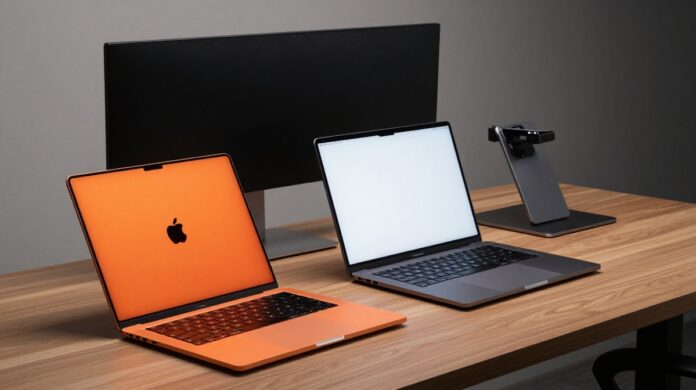
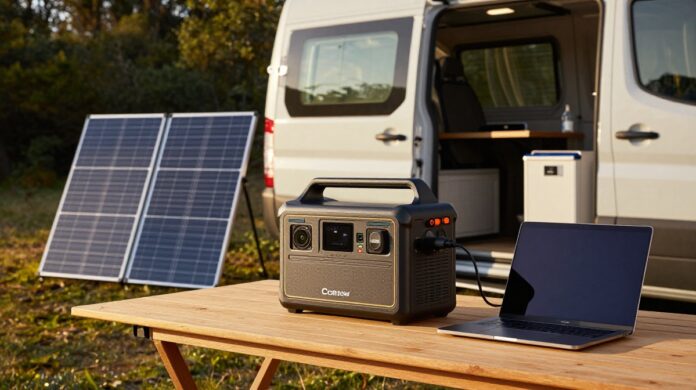
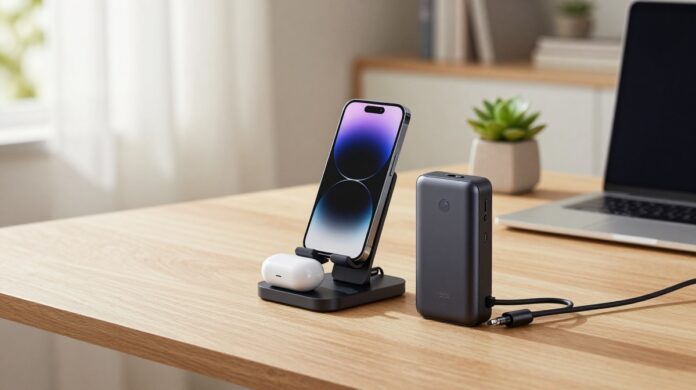
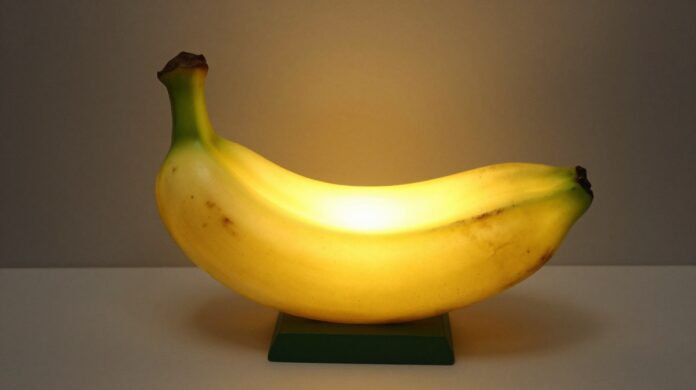
"A collection of innovative lifestyle gadgets including a 3D hologram projector, TCL smart glasses, a Mix ProQ cybersecurity tool, and a banana-shaped designer lamp on a modern desk."

Intruduction

In an era where technology evolves at breakneck speed, our homes and workspaces are no longer just physical environments; they are integrated ecosystems of efficiency. We are constantly searching for that “next big thing” that simplifies a mundane task, enhances our security, or provides a moment of pure sci-fi wonder. From the way we cool our rooms to the way we protect our digital identities, the right tools can fundamentally shift our daily experience.

At TheGadgetNet.com, we pride ourselves on being your ultimate compass in the vast ocean of consumer electronics. Our team is dedicated to scouring the globe—and the deepest corners of the Amazon marketplace—to find innovations that offer genuine value. Whether you are a hardcore tech enthusiast, a small business owner, or someone looking to upgrade their home setup, TheGadgetNet.com is your go-to destination for honest reviews, deep dives, and the latest trends in the tech world.

In this comprehensive guide, we analyze 15 of the most innovative gadgets available today that promise to redefine “smarter living.”


1. The Intelligent Air Circulator: Cooling Redefined

Traditional fans often present a binary choice: either they are too weak to be effective, or they are so loud they disrupt your concentration. The new generation of intelligent fans has solved this dilemma. These devices go beyond merely blowing air; they utilize smart application controls and voice commands to manage your environment.

With a powerful airflow capable of reaching up to 18 meters, these units can refresh an entire room without the annoyance of a noisy, direct blast to the face. By automatically adjusting its tilt and oscillation—up to 120° vertically—the fan ensures perfect circulation in every corner. Its near-silent operation makes it an ideal companion for sleeping, working, or gaming without auditory distractions.

2. The Pocket-Sized Label Revolution

Organization is the cornerstone of productivity, yet few people enjoy the clunky interface of traditional label makers. Enter the Bluetooth-enabled pocket printer. This gadget eliminates the need for ink, toner, or complicated setups. By simply typing text into a smartphone app, users can create professional, clean labels for cables, school supplies, kitchen jars, or small business inventory in seconds. Its portability allows for “on-the-go” organization that makes you wonder how you ever lived without it.

3. 3D Holographic Displays: Sci-Fi in Your Living Room

If you want to capture attention, whether for a retail window or a personal gaming setup, 3D holographic fans are the pinnacle of visual tech. At first glance, it appears to be a standard spinning fan, but it quickly transforms into a floating 3D hologram. Capable of displaying logos, animations, and videos controlled via Wi-Fi from your phone, the visual effects look like they belong in a futuristic film. It is arguably one of the most effective tools for immediately drawing the human eye.

4. The Discreet Smart Safe

Security is often most effective when it is invisible. This smart safe is designed to sit inconspicuously on a nightstand, masquerading as a modern clock that displays temperature and provides wireless charging for your smartphone. However, a quick biometric fingerprint scan allows the safe to open automatically in a fraction of a second. It is the perfect blend of technology and discretion for protecting cash, jewelry, and vital documents like passports or wallets.


A Note from TheGadgetNet.com: As we explore these cutting-edge tools, remember that the best gadget is one that solves a specific problem in your life. At TheGadgetNet.com, we don’t just list products; we evaluate how they fit into the “human” side of technology. We believe that innovation should be accessible, practical, and, occasionally, just a little bit fun.


5. Desktop DTF Printing: The Small Business Powerhouse

For creators and entrepreneurs, the Desktop DTF (Direct to Film) printer is a game-changer. This all-in-one machine handles the printing, powdering, heating, and cutting processes automatically. What sets it apart is an integrated AI camera that monitors the health of the machine, detecting clogged nozzles and cleaning only the necessary areas. This technology drastically reduces maintenance time and material waste, allowing small businesses to produce professional-grade custom apparel with the press of a button.

6. The “Banana Lamp”: Where Art Meets Utility

Sometimes, innovation is about design and personality. The “Banana Lamp” serves as a striking centerpiece, providing a soft, warm light that elevates the ambiance of a bedroom or gaming station. It blurs the line between a functional lighting fixture and a conversation piece, proving that high-end tech aesthetics don’t always have to be cold and industrial.

7. The Ultimate 3-in-1 Power Solution

The modern traveler faces a constant “cable chaos.” A single device now combines a 20,000 mAh power bank, a dual USB-C high-power charger, and a global travel adapter. It even features an integrated solar panel for emergency charging. By plugging directly into a wall to recharge itself, it eliminates the need for separate charging cables for your laptops and smartphones, making it the only external battery many users will ever need.

8. TCL Smart Glasses: The Pocket Cinema

Why buy a 130-inch television when you can carry one in your pocket? TCL’s smart glasses utilize dual OLED screens and integrated speakers to create a private cinematic experience. Whether you are connected to a phone, laptop, or gaming console, these lightweight glasses allow you to work or play in complete privacy without disturbing those around you. It is a massive screen experience in a form factor no larger than a pair of sunglasses.

9. Precision Engineering: The Electric Screwdriver

For DIY enthusiasts or PC builders, manual labor is being replaced by precision tools. This electric screwdriver features 16 precision bits, adjustable torque, and enough battery life to handle hundreds of screws on a single charge. Its integrated LED lighting ensures you can see into the dark corners of a computer case or furniture assembly, while the magnetic housing keeps every bit organized.

10. The Foldable Productivity Tool

The primary barrier to working on a smartphone or tablet is the touch keyboard. A compact, foldable Bluetooth keyboard solves this by providing a full-sized typing experience that fits into a pants pocket. With an integrated stand for your device, it transforms any location—a cafe, a train, or a park—into a functional office, rendering the phone’s tactile keyboard “prehistoric” by comparison.

11. The Triple-Source Desk Lamp

Many desk lamps fail to illuminate an entire workspace, leaving shadows over keyboards or dual-monitor setups. The latest innovation in productivity lighting features three distinct light sources to cover the entire desk surface. Users can adjust the light temperature from warm to cool, ensuring the light adapts to the task rather than the user having to move the lamp throughout the day.

12. The Smart Waste Bin

Hygiene and convenience meet in the smart trash can. Equipped with a motion sensor, it opens automatically so you never have to touch a dirty lid while cooking. To ensure a pleasant home environment, it includes an integrated odor filter and a soft-close lid. Powered by a rechargeable battery, it eliminates the constant need for disposable batteries, fitting perfectly into modern, sustainable kitchens.

13. The Versatile Roll-up Sink Rack

Space is a premium in modern kitchens. A roll-up rack transforms the unused space above a sink into a dish drainer, a food prep area, or a heat-resistant stand for hot pots. Its ability to support heavy weights and then roll up into a compact cylinder for storage makes it an essential tool for maintaining an organized kitchen.

14. Electronic Darts: Data-Driven Fun

Traditional dartboards often lead to disputes over scoring. An electronic version now automates the process for up to eight players, offering 28 different built-in games. Beyond just counting points, it stores your darts within its cabinet and displays detailed performance statistics after each match, bringing a professional, competitive edge to any game room.

15. Mix ProQ: The Future of Digital Sovereignty

In an age of data breaches, the Mix ProQ represents the ultimate in cybersecurity. This compact device serves as a password manager, a 2FA (Two-Factor Authentication) generator, and an NFC/Bluetooth authentication tool. Crucially, it operates without an internet connection or cloud storage, giving the user total control over their data. With a built-in touchscreen, it proves that the future of digital security can be both incredibly powerful and pocket-sized.


Conclusion: Embracing the Modern Essential

The gadgets we’ve explored today are more than just “toys”; they are reflections of how we want to live—more efficiently, more securely, and with a touch of creative flair. Whether it’s the privacy of a 130-inch virtual screen or the offline security of a hardware password manager, these tools provide tangible solutions to modern problems.

As you look to upgrade your lifestyle, remember to visit TheGadgetNet.com for more insights into the products that are shaping our future. Our commitment to finding the most innovative, useful, and high-quality tech remains our top priority. The future isn’t just coming; with these gadgets, it’s already here.

Android 17 and the Gemini AI Revolution: Why This Is Google’s Biggest Smartphone Shakeup in Years

0


Android 17 and the Gemini AI Revolution: Google’s Bold Leap Beyond the Smartphone

Google has recently held a keynote that arguably represents the single biggest shakeup to the smartphone experience in the last five years. By unveiling “Gemini Intelligence” alongside Android 17, Google is moving beyond simple software updates into an era where AI takes over the phone to perform complex tasks on behalf of the user. This revolution is not just limited to mobile; it extends to a complete reimagining of Android Auto and the birth of an entirely new hardware category: the Google Book.

Gemini Intelligence: The End of Boring Admin

The centerpiece of this update is Gemini Intelligence, a suite of five core features designed to solve long-standing user frustrations through “personal intelligence”.

One of the most relatable additions is “Rambler”. This feature addresses the common issue of rambling during voice dictation. Instead of typing out every “um,” “ah,” or side thought, the AI smartly interprets the user’s core intent. For example, if a user dictates a long, rambling message to their spouse, the phone can filter out the inner monologue and format the actual points into a list or even translate the message into another language, like Hindi, on the fly.

Furthermore, Gemini is set to solve the “pain” of autofill. Unlike traditional systems that rely on rigid code, Gemini Intelligence can “read” and understand forms like a human. It taps into a “personal intelligence pocket” to retrieve difficult-to-remember data, such as passport details, and accurately populates forms even on poorly coded websites.

Customization Through Natural Language

Android 17 introduces a level of customization that essentially makes every user a programmer. Through Gemini, users can now build widgets by literally asking for them. Examples include:

  • Custom countdowns for specific events like marathons.
  • Location-based activity widgets that suggest things to do based on GPS and the current time.

This “natural language” approach extends to app automations. Gemini can now act as an “agent,” taking information from one source—like a photo of a tour flyer—and searching for alternatives on apps like Expedia. It can even handle complex logistics, such as booking a parking space for a comedy night, by reading the context of what is on the user’s screen without needing manual instructions.

Android 17: The Influencer’s New Best Friend

While Gemini Intelligence handles the “admin” of life, Android 17 brings significant upgrades to the creative and social experience. Google is launching a “full-frontal assault” on Apple’s dominance in the creator market.

Key features for creators include:

  • Instant Screen Reaction Content: A native tool that records the screen and the user’s front camera simultaneously, automatically cutting away backgrounds for a professional look.
  • Adobe Premiere for Android: Coming in Summer 2026, featuring templates specifically for YouTube Shorts.
  • Instagram Optimization: Google is fixing the long-standing “Android Instagram quality” issue at a base software level. Premium Android devices will now support Ultra High Dynamic Range processing, native Night Mode, and built-in video stabilisation directly within the Instagram app.
  • Audio Eraser in Instagram: Users can now split audio tracks into individual “stems” (e.g., removing wind noise) directly within the Instagram editor.

Digital Wellbeing and Aesthetics

Google has also introduced “Pause Point,” a feature functionally similar to the popular “One Sec” app. It forces users to stop and breathe for 10 seconds before opening distracting apps, encouraging more purposeful phone usage. Additionally, in a massive aesthetic overhaul, Google has remade all 4,000 Android emojis into 3D.

The Transformation of Android Auto

Perhaps the most surprising highlight is the evolution of Android Auto. If your car supports it, Gemini Intelligence becomes a co-pilot that can:

  • Order food via DoorDash on the way home, bringing the user directly to the checkout page.
  • Provide Immersive 3D Navigation, where the map view matches the buildings and overpasses seen out the window.
  • Perform high-accuracy lane tracking by using the car’s front-facing camera.
  • Answer vehicle-specific questions, such as “Will this TV fit in my trunk?” or “How do I turn on cruise control?” by referencing the car’s dimensions and manual.
  • Support 1080p 60fps video playback (for YouTube Premium members) and Dolby Atmos audio while the vehicle is parked.

Introducing the Google Book: A New Laptop Era

Google is expanding its ecosystem with the “Google Book,” a laptop where “intelligence is the new spec”. These machines are designed to lean heavily on AI rather than raw rendering power. A unique feature is the “wiggle cursor”—wiggling the mouse activates an AI mode that allows for tasks like fusing multiple images together instantly.

The Google Book offers unparalleled integration with Android phones, allowing users to access phone storage as if it were a folder on the laptop and open mobile apps directly on the screen.

Conclusion: A New Competitive Landscape

The Android 17 and Gemini update is a clear signal that Google is no longer content to follow Apple’s lead. By focusing on reducing “boring admin” and giving creators professional-grade tools, Google is positioning itself as the more “intelligent” and versatile choice for 2026 and beyond. While the rollout will initially favour flagship Samsung and Google devices due to the power required for the Gemini Nano model, the breadth of these features suggests a fundamental shift in how we will interact with our technology.


The AI Plus Saga: From ‘Made in India’ Promise to Industry-Wide Debate

0

The AI Plus Scandal: Unmasking the Truth Behind India’s “Sovereign” Smartphone Controversy

The Indian smartphone market, currently the second largest on earth with over 700 million users, has long been dominated by international players. For years, brands like Xiaomi, Vivo, and Oppo have held a firm grip on the landscape, creating a vacuum for a truly homegrown hero. Enter AI Plus, a brand that launched in July 2025 with a bold, nationalistic pitch: to provide India’s first “fully sovereign” smartphone, expertly engineered and built within the country. However, what began as a promising leap for Indian tech quickly spiralled into a saga of legal injunctions, allegations of rebranded Chinese hardware, and a massive controversy involving some of the tech community’s most prominent voices.

The Promise of Sovereignty and National Pride

The central pillar of the AI Plus marketing strategy was the concept of data sovereignty. In a market where at least two-thirds of phones sold are Chinese-branded, AI Plus leaned heavily into the distrust stemming from border clashes and historical tensions between India and China. Their boot screens boldly proclaimed, “Your data stays safe in India,” and the company claimed their devices were “certified for government,” implying a level of security far beyond the reach of foreign competitors.

The face of this movement was Madhav Sheth, a man with a storied history in the mobile industry. Having served as a Sales Director for Oppo, co-founder and CEO of Realme, and a leader for brands like Honor and Alcatel, Sheth possessed the credentials of a tech titan. His rhetoric was fiercely anti-Chinese dominance, even going as far as releasing marketing materials—described by some as “comic book-like”—that depicted Chinese entities as unsafe compared to the “Indian hero” of AI Plus.

The First Cracks: Gyan Therapy and the Sprocom Connection

The controversy began to simmer when YouTuber Gyan Therapy conducted a deep dive into the AI Plus software, known as Next Quantum OS. Despite claims of being built from scratch in India, the OS bore a striking resemblance to Realme’s operating system. More alarmingly, the investigator discovered three pre-installed Chinese apps: Clean Assistant, Phone Clone, and Mobile Butler.

Technical analysis revealed that these apps were not merely inspired by Chinese software; they were built in China. The privacy policy for “Phone Clone” explicitly listed Sprocom Technologies, a China-based company, as the service provider. Research indicated that the package names had been altered to make the apps appear as part of the “Next Quantum OS,” yet they still functioned as data-collecting tools with direct links to Chinese servers. This discovery directly contradicted the brand’s promise that “not a shred of data” would leave Indian soil.

The ODM Model: Innovation or Rebranding?

To understand how a “Made in India” phone could be filled with Chinese software, one must look at the Original Design Manufacturer (ODM) model. Unlike Apple, which designs its products and hires contractors to build them to exact specifications, many budget brands go to ODMs. These ODMs design, engineer, and own the rights to a product; a client simply adds their logo and requests minor aesthetic variations.

Investigations into Sprocom revealed they are a Chinese ODM. Comparisons between Sprocom’s catalog and AI Plus devices showed nearly identical camera modules, display specs, and chassis designs. Furthermore, industry insiders suggest that Sprocom operates as a low-tier ODM, often cutting costs by using secondhand components, such as used memory chips sourced for a fraction of the price of new parts. This raised two critical concerns: not only was the “Indian-designed” claim questionable, but the actual hardware quality was potentially inferior to the Chinese brands AI Plus claimed to surpass.

The Explosion: Pulse 2 and the Nova Flip

As AI Plus moved into 2026 with its second wave of products, the tech community was ready. The Pulse 2 and the Nova Flip became the new targets of scrutiny. YouTuber Techweiser released a video titled “This Indian phone is a marketing disaster,” accusing the company of hiding the same Chinese bloatware they claimed to have removed. By using simple laptop commands, investigators could reveal the hidden Chinese apps still residing on the supposedly “clean” Indian devices.

The Nova Flip controversy was even more blatant. Comparisons revealed the phone was an exact hardware match for the ZTE Nubia Flip 2. Internal identifiers within the software—from the compass app to the fingerprint service—were clearly labeled with ZTE identifiers. While Madhav Sheth later claimed that ZTE was credited on the box, the mention was a tiny footnote, and the ZTE name was never mentioned during the high-profile launch event where the phone was presented as an AI Plus innovation.

The Wearbuds and the “Designed in India” Myth

The allegations extended beyond smartphones to the Wearbuds—a watch containing built-in earphones. Sheth claimed this product was “designed in India” and “patented in India”. However, a Chinese company called AI Power had been selling an identical product for years.

The most damning piece of evidence was the branding itself. A visual comparison showed that the “AI” portion of the AI Plus logo was a perfect match for the logo of AI Power. When AI Power posted on social media about a “great cooperation” with AI Plus, it further shattered the narrative of a solo Indian design effort.

The Legal War: Ex Parte Injunctions and “John Doe”

In a move that shocked the tech world, AI Plus responded to these criticisms not with counter-evidence, but with legal force. The Delhi High Court granted AI Plus an ex parte injunction against YouTubers Techweiser and Techbar. This meant the court heard only one side of the story before issuing an order to take down the videos and banning the creators from making further “disparaging” content.

A particularly controversial element of the lawsuit was the naming of “John Doe” as a defendant. In legal terms, this allowed the injunction to apply to “unnamed future critics,” effectively creating a gag order that silenced anyone else who might want to speak out against the brand. Legal experts noted that while ex parte orders are common in domestic violence cases for immediate safety, using them to suppress tech reviews is almost unheard of and highly aggressive.

Critics have accused AI Plus of using “tricks” to obtain these orders, such as naming “John Doe” as the primary defendant to bypass the need to serve notice to the actual YouTubers. Furthermore, reports emerged that the company sent legal notices to fake or unused email addresses, ensuring the creators would not be present to defend themselves in court.

The Marketing Mirage and Fake Reviews

Beyond hardware and legal battles, the AI Plus marketing engine has faced accusations of being a facade. While YouTubers were criticising the phones, the AI Plus website displayed flawless five-star reviews. Closer inspection revealed that many of these were likely fake; some were simply support questions (“Where can I buy?”) that were automatically assigned five stars, while others featured repetitive, generic praise seen across multiple platforms.

The company’s website transparency was also called into question when it was discovered that their Terms and Conditions page appeared to be a copy-paste job from a template, even including the prompt “Let me know if you’d also like a downloadable version” at the end. Additionally, promotional photos claimed to be taken on the phones were dismissed by professional photographers as being impossible to achieve with the device’s actual hardware.

Confronting the CEO: Madhav Sheth’s Defense

In a series of tense interviews, Madhav Sheth attempted to defend his brand’s reputation. When questioned about the Chinese apps, his story shifted multiple times. He first claimed they were only on “global versions” for other countries, but when confronted with evidence of Indian units containing the software, he suggested the units might have been “tweaked” or that the software “never existed”.

Regarding the “Made in India” claims, Sheth eventually admitted that the Pulse 1 was “imagined in China,” but argued that for basic 4G and 5G phones, imagining it in China or India was “one and the same thing”. He defended the aggressive legal action by claiming the YouTubers’ videos were based on “unverified claims” and that he acted in a “jiffy” (haste) out of fear of jeopardising a multi-million dollar launch.

Perhaps most notably, Sheth blamed agencies for the breakdown in communication between the brand and the creators, eventually stating he was willing to rescend the court orders. However, critics point out that this “change of heart” only occurred after the negative publicity became overwhelming and the courts began demanding his presence to answer for the “wool over our eyes”.

Conclusion: The Future of AI Plus and Tech Accountability

As of late May 2026, the legal battle continues. While Madhav Sheth has spoken of reconciliation, the videos remain down, and the next court hearing is scheduled for August. The AI Plus scandal serves as a cautionary tale for the “Made in India” movement. It highlights the fine line between leveraging national pride for marketing and the ethical requirement for transparency in manufacturing.

For consumers and the tech community, the case underscores the vital role of authentic, independent reviews. The attempt to use legal injunctions to suppress technical criticism sets a dangerous precedent that could stifle accountability in the industry. Whether AI Plus can truly move toward being a sovereign Indian brand remains to be seen, but for now, the “rebound” from this controversy may be harder to engineer than any smartphone.

The Truth Behind Viral Tech: An In-Depth Review of 16 Instagram Gadgets from a $25,000 Experiment

0


Top 10 Gadgets Under $50 You Must Buy


The Truth Behind Viral Tech: An In-Depth Review of 16 Instagram Gadgets

In the modern digital landscape, Instagram has become a primary hub for innovative, often futuristic-looking gadgets that promise to solve everyday problems with a single click. But how many of these “game-changing” products actually live up to their cinematic advertisements? To find out, a team spent ten weeks trolling Instagram ads, purchasing every compelling gadget they encountered—a haul that included 16 distinct products and a flagship investment of $25,000 on a single high-tech printer. This review breaks down each of those items to determine which are truly revolutionary and which are merely “AliExpress aesthetic” wrapped in “Hermes” packaging.

The Crown Jewel: The $25,000 UV Texture Printer

The most ambitious purchase in this experiment was a $25,000 machine from New Things Lab, designed to print three-dimensional textures onto almost any surface. The core appeal of this device is its ability to replicate complex finishes, such as marble or stone, with physical depth that can actually be felt.

During testing, the printer successfully applied a natural stone finish to a smartphone and even replicated the folds of a fabric hoodie and the texture of brickwork in a photo. The technology utilizes a specialized ink that hardens instantly upon exposure to UV light, allowing it to print on materials as varied as plastic and metal. While the machine is undeniably expensive and perhaps niche for a typical household, the quality of the results—including the ability to print “unlimited” metal posters or custom 3D finishes—was described as “mind-blowing”.

Home Lighting and Acoustics: The Glowite Halo Lux

Among the 16 products tested, the Glowite Halo Lux lamps emerged as the standout winner. At $50 per bulb, these wireless, magnetic lights are designed for a “toolless experience”. Users can simply peel and stick a magnetic mount to a wall, allowing the light to snap into place securely without the need for screws or wiring.

The design is highly functional, featuring one diffused end for soft lighting and one non-diffused end for sharper focus. The interface is equally intuitive: a simple tap toggles the light, while holding the button adjusts brightness and color temperature. Furthermore, the system includes responsive hand and motion sensors, allowing for touchless control. With a 10,400 mAh battery that can last up to a month and easy USBC charging, these lamps were praised for being exactly “what it says on the tin”.

In addition to lighting, the experiment looked at Audio Silk panels, which cost $240 for a set of eight. These ultra-thin, sleek panels are designed to reduce echo and audio reflections in rooms with hard surfaces like concrete or plaster. In a real-world test within a hallway, the panels provided a roughly 40% improvement in acoustic clarity, making them a “triple win” by reducing noise entering, leaving, and reflecting within the room.

Wearable Tech and Daily Accessories

The world of wearable accessories provided a mix of high-quality alternatives and disappointing gimmicks.

  • The Magnetic Watch Band: This band, which features individual magnetic segments, was noted for its incredible strength and “delightful” tactile feel. Despite a brand name that appeared to be a typo, the product was seen as a legitimate, high-quality upgrade over expensive first-party watch bands.
  • Water Bears: These are $15 cleaning cloths that stick to the back of a phone or laptop. While they clean screens effectively without sprays, they have a significant caveat: they easily pick up lint and “rubbish” from pockets, which can then be transferred back to the screen. However, their stickiness and cleanliness can be restored with water.
  • Manual Tinting Sunglasses: These glasses were one of the experiment’s biggest failures. They feature a manual dial to adjust the tint of the lenses, but the mechanism was described as heavy, clunky, and “freaking stupid”. The lenses must be adjusted individually, and the tactile experience did not match the satisfying sound advertised in the videos.

Innovative Lifestyle Solutions: Laundry and Wellness

Several products aimed to improve home maintenance and personal health.

  • Laundry Shoe Bags: These mesh bags are specifically designed to protect both sneakers and the washing machine during a cleaning cycle. They feature over a thousand internal bristles to scrub the shoes and secure zippers to prevent rattling. Tests showed that while they didn’t remove 100% of deep stains, they achieved a “97% cleaned” result and kept the interior of the bags pristine.
  • Shakti Premium Acupressure Mat: Despite looking like a “sadistic torture method” due to its thousands of sharp plastic spikes, this mat was found to be surprisingly therapeutic. By spreading the user’s weight across the spikes, it provides a “grounding” sensation that improves blood flow and leaves the user feeling “limbered up” and alert after 15 minutes of use.
  • Breeze Spray (by Kiss): This $100 probiotic mouth spray claims to kill 99.9% of bad-breath bacteria and provide 12 hours of freshness compared to the 2 hours offered by gum. The mango-flavored spray was described as “delicious” and effective, with the user’s spouse confirming that their breath simply “smelled like nothing” four hours later.

The “Weird” Tech: Robots, Toys, and Massagers

Instagram ads often feature products that defy traditional categories.

  • The “Alien” Neck Massager: This device, which looks like a “little alien doing a Naruto run,” features human-like “fingers” that knead the neck and shoulders. While it looks freakish—even featuring “fingernails”—the massage quality was described as “hard and firm,” providing a sensation similar to a professional massage.
  • Patrol Bot: This is a mobile security camera that resembles a hybrid between a Roomba and a toy. It can automatically return to its dock and be controlled via an app to “patrol” a home. While it sounds cute (like Mario) and is not particularly intimidating to intruders, its live video quality was sharp, and it successfully navigated carpets.
  • Oddball: A “toy” category product, this is a ball that makes music when bounced. It connects to an app that allows users to layer sounds and create beats. While well-made, it was deemed strictly a toy rather than a professional musical tool.

High-End Office and Entertainment Gadgets

For productivity and social gaming, the experiment tested:

  • The Poker Provoke Machine: This device shuffles and deals cards for up to 10 players using individual remotes. While it struggles with a “perfect shuffle” (often just alternating cards), its ability to deal cards accurately and even “burn” cards according to Texas Hold’em rules was impressive.
  • Aura Displays Triple Boost: This device adds three 14-inch monitors to a laptop via a single Thunderbolt cable. While it creates an “epic” quad-monitor setup, the 1080p IPS panels do not match the quality of high-end laptop screens like a MacBook, making them better suited for secondary tasks like Slack or to-do lists rather than color-accurate work.
  • New Things Lab Wallet/Whiteboard: This $89 product is a “decent whiteboard” but a “bad wallet”. The slots are too tight for cards, and if they aren’t inserted perfectly, they can block the whiteboard from opening or even destroy written notes.

The Controversial: Rebranded Tech and Emotional Marketing

The final category of products highlighted the darker side of social media marketing.

  • The E-Ink Photo Frame: This frame uses e-paper technology to display images with almost zero power consumption. However, the resolution and color quality were significantly worse than traditional glossy photo prints, making the high price point difficult to justify.
  • The Chattsy Phone: Targeted at seniors, this phone is marketed as a simplified device with a custom software skin and a 24/7 support hotline. Investigation revealed it to be a rebranded, cheap “Uukitel” phone from China that had been significantly upcharged. While the hardware is low-end and the dialer unresponsive, the experiment noted that the 24/7 customer support was “delightful” and the ability for families to remote into the device could be genuinely useful for its specific demographic.

Final Verdict: Are Instagram Ads Worth It?

The results of this $25,000 experiment were more positive than expected, though many products still fell into the “gimmick” category. While items like the Glowite lamps and UV printer proved their worth, others—like the manual sunglasses and rebranded senior phone—showcased how ads can use “aesthetic” packaging to hide mediocre or overpriced hardware. For consumers, the takeaway is clear: while some viral gadgets are genuine “game changers,” many require a healthy dose of skepticism before you hit the “buy” button.

Android 17 and the Gemini Intelligence Revolution: The Biggest Smartphone Shakeup in Years

0

The smartphone landscape has just experienced what is arguably its most significant transformation in the last half-decade. At a recent keynote, Google unveiled a massive suite of updates that fundamentally change how we interact with our devices. From the introduction of Gemini Intelligence to the highly anticipated Android 17, and even a surprise foray into a new category of laptops, the ecosystem is evolving at a breakneck pace.

For followers of The Gadget Net, this isn’t just another incremental update; it is a full-scale offensive against the status quo, making rival software look “depressing” by comparison. Here is an in-depth look at the innovations set to redefine your digital life.


1. Gemini Intelligence: The Birth of the AI Agent

At the heart of this revolution is Gemini Intelligence, a system designed to take over your phone and perform tasks that were previously impossible or cumbersome. Unlike previous iterations of voice assistants, Gemini is evolving into an “agent”—a system that can see what you see, understand your personal context, and act across multiple apps.

The Rambler Feature: Fixing Your Inner Monologue

We have all been there: dictating a message, losing our train of thought, and ending up with a rambling mess of text. Gemini’s new Rambler feature is the solution. It intelligently filters your dictation to realize what you are trying to say, rather than just transcribing your every word.

For example, if you are describing a list of tasks to your phone, it can automatically format them into a numbered list. You can then follow up with natural language commands like “Swap the numbers for emoji” or “Turn this message into Hindi”. This level of fluidity makes current smartphone dictation feel antiquated.

Smart Autofill: The Cure for Digital Friction

Traditional autofill relies on reading website code, which means it often fails if a site is poorly programmed. Smart Autofill powered by Gemini Intelligence bypasses this by “reading” and understanding the form just like a human would.

By tapping into your “personal intelligence pocket,” Gemini can access information you might never remember, such as passport details, and fill out forms with a much higher success rate than legacy systems. It’s a major fix for one of the most common pain points in mobile browsing.

Generative Widgets and App Automations

Android 17 allows users to build widgets simply by asking for them. Instead of searching for the right app, you can command Gemini to create a custom countdown for a marathon or a widget that displays local activities based on your GPS and current time.

Furthermore, App Automations take this a step further by bridging the gap between apps. In one demonstration, a user took a photo of a tour flyer and asked Gemini to find a similar tour for six people. Gemini was able to interpret the flyer and move that data into Expedia to find the booking page. While Gemini doesn’t finalize the payment—a safety feature many users will appreciate—it handles the heavy lifting of research and navigation.


2. Android 17: A Comprehensive Creator Powerhouse

While Gemini Intelligence grabs the headlines, Android 17 brings a host of native features that cater to the modern mobile user and the burgeoning creator market.

Winning Over the Creator Market

Google is launching a “full-frontal assault” on Apple’s dominance in the creator space. For years, the quality of content uploaded to Instagram from Android devices has been lower than that of iPhones. Android 17 aims to fix this on a base level.

  • Optimized Pipeline: Google has optimized the capture-to-upload process to ensure minimal quality loss.
  • Instagram Integration: Users shooting within the Instagram app on premium Android devices will now get ultra high dynamic range (HDR) processing, full night mode, and built-in video stabilization.
  • Native AI Editing: Features like Audio Eraser—which can split audio tracks into individual stems (e.g., separating wind noise from a voice)—are now available directly within the Instagram editor.
  • Adobe Premiere for Android: Arriving in the summer of 2026, this version of Premiere will include templates specifically designed for creating YouTube Shorts.

The Pause Point: Digital Wellbeing 2.0

In an effort to curb mindless “doom scrolling,” Android 17 introduces Pause Point. This feature allows you to select distracting apps that, when opened, trigger a mandatory 10-second breathing exercise.

This small friction point gives the brain enough time to decide if they actually need to use the app or if they should redirect to something more productive, like a meditation app. While similar to third-party apps like “One Sec,” having this baked into the OS makes the experience significantly slicker and more accessible.


3. The Transformation of Android Auto

Surprisingly, Android Auto emerged as a standout during the announcements. Google is bringing the full power of Gemini Intelligence to the car, where a hands-free assistant is most critical.

Immersive Navigation and Lane Tracking

Google Maps is receiving immersive 3D navigation. The map view will now closely match the actual buildings and overpasses you see out your window, making it far more intuitive than traditional 2D maps. In Gemini-supported vehicles, the system can even use the car’s front-facing camera to confirm exactly which lane you are in, providing pinpoint accuracy for complex motorway roundabouts.

Car-Specific Context

Gemini will now have an awareness of your car’s physical dimensions and hardware. You could ask, “If I buy this TV, will it fit in my trunk?” and Gemini will answer based on the car’s exact dimensions. It can also act as a digital manual, explaining how to use features like cruise control and describing what the physical buttons look like.

Entertainment in the Car

For those times when you are parked, Android Auto now officially supports video playback at 1080p 60fps with Dolby Atmos audio. To ensure safety, the video minimizes to audio-only as soon as the vehicle starts moving.


4. “Google Books”: A New Category of Hardware

In a surprise reveal, Google announced a new type of laptop referred to as a “Google Book”. Moving away from traditional specifications, Google’s tagline for these machines is “Intelligence is the new spec”.

The AI-First Interface

The most striking feature of the Google Book is the reimagined cursor. By “wiggling” the cursor, users enter an AI mode that allows for complex tasks, such as selecting multiple images and asking the AI to fuse them together. Every Google Book will also feature a multicoloured light strip to indicate when the intelligence features are active.

Seamless Ecosystem Integration

Google Books are designed to work in perfect harmony with Android phones.

  • Unified Storage: Your Android phone’s storage appears as a folder on the Google Book, making file transfers as simple as dragging and dropping.
  • App Access: Users can open and use apps from their phone directly on the laptop without ever picking up the mobile device.

5. Availability and the Competitive Edge

Despite the excitement, there are some caveats regarding availability. Most of these Gemini Intelligence features are set for a phased rollout starting in the Summer of 2026.

Initially, these features will likely be exclusive to flagship Samsung and Google devices, as they require the powerful Gemini Nano model to run locally on the device. Google has been transparent about this, seemingly wanting to avoid the “overpromising” pitfalls associated with Apple Intelligence.

Comparison with Apple

The overarching theme of this revolution is a direct challenge to the Apple ecosystem. By focusing on reducing boring admin and fixing long-standing issues like Instagram quality and smart dictation, Google is positioning Android as the more capable, “agentic” platform.

The gap between Google’s AI and competitors like Siri is becoming “too wide to ignore”. If Google can maintain the build quality of its new Google Books to match the MacBook, we may see a significant shift in user loyalty.


Conclusion

The 2026 Google keynote has set a high bar for the future of mobile and personal computing. Between the 4,000 remade 3D emojis, the immersive 3D maps, and the sophisticated Gemini Intelligence agent, Android is no longer just an operating system; it is becoming a personal coordinator.

For the tech enthusiasts at The Gadget Net, the message is clear: the “Intelligence Revolution” is here, and it is happening on Android first. Whether you are a creator, a commuter, or someone just looking to reduce “boring admin”, the upcoming updates to Android 17 and Gemini Intelligence are poised to change your relationship with technology forever.