
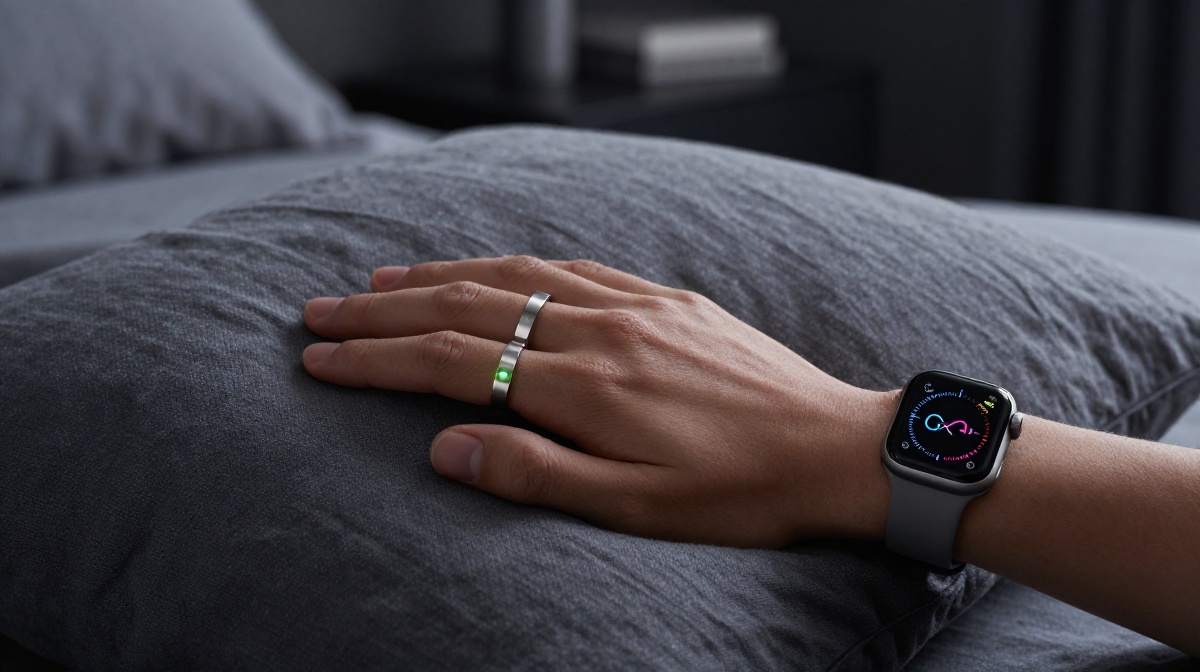
The year 2026 has brought us to a crossroads in wearable technology. We no longer just count steps; we are obsessed with “optimizing” our lives, starting with the one thing we do for a third of our existence: sleep. If you are looking to buy a new tracker, you are likely facing the ultimate 2026 dilemma: Smart Rings vs. Smartwatches.
At www.thegadgetnet.com, we have spent the last several months testing every major device on the market, from the sleek Oura Ring 5 to the powerful Apple Watch Ultra 3. We know that picking the right device isn’t just about the spec sheet—it’s about what you can actually live with every single night.
In this guide, we will break down the science, the comfort, and the battery life to help you decide which form factor deserves a spot on your body.
The Core Philosophy: Passive vs. Active
Before we dive into the data, it is important to understand that these two devices represent different philosophies.
- A Smartwatch is an active companion. It has a screen, shows you data in real-time, pings you with notifications, and tracks your GPS route while you run.
- A Smart Ring is a passive observer. It sits quietly on your finger, lacks a screen, and focuses on collecting biometric data around the clock to send to your phone for later.
For sleep tracking, this distinction is massive. Do you want a device that helps you “do” things during the day, or one that quietly watches you “recover” at night?
1. Sleep Tracking Accuracy: The Finger vs. The Wrist
When it comes to pure science, Smart Rings vs. Smartwatches often see the ring taking the lead in accuracy.
Why the Finger Wins for Data
The physiological advantage of a ring comes down to where it sits. Arteries in your fingers are closer to the skin’s surface and have a denser network of capillaries than your wrist. This allows the sensors (using photoplethysmography or PPG) to get a “cleaner” signal with less noise from movement or light leaking in.
The 2026 Stats
Research from 2024 and 2025 has given us clear numbers:
- Oura Ring 4/5: Achieved roughly 79% agreement with medical-grade sleep studies (polysomnography) for four-stage sleep classification.
- Apple Watch Series 11: Landed around 74% agreement.
- Google Pixel Watch 4: Shows similar high-tier performance, often outperforming Samsung in deep sleep accuracy.
- Garmin & Amazfit: These devices tend to struggle more with REM sleep detection compared to the top-tier rings and watches.
The Verdict on Accuracy: If you want the most accurate consumer-grade sleep stage data currently available, a high-end smart ring is your best bet.
2. Comfort and Wearability: The 2 AM Test
The most accurate tracker in the world is useless if you take it off because it’s annoying. This is where the battle of Smart Rings vs. Smartwatches gets personal.
The Ring Experience
Smart rings in 2026 are incredibly light, usually weighing between 2 and 6 grams. Most users report that they completely forget they are wearing them after a few nights. For side sleepers, rings are a dream because there is no bulky strap digging into your wrist or catching on the sheets.
The Watch Experience
Smartwatches are bulkier by nature. Even a “slim” watch like the Apple Watch SE 3 or the Garmin Vivoactive 6 can feel intrusive if you sleep with your hand under your pillow. Furthermore, many people find the “glow” of a smartwatch screen at night—even with sleep mode on—to be a distraction they’d rather avoid.
3. Battery Life: The “Charging Gap” Problem
Battery life is arguably the biggest divider in the Smart Rings vs. Smartwatches debate.
- Smart Rings: Most top models like the Oura Ring 4, Samsung Galaxy Ring, and RingConn Gen 2 Air last 5 to 10 days on a single charge. This means you can track an entire week of sleep without ever taking the device off.
- Smartwatches: Flagship watches like the Apple Watch Series 11 or Pixel Watch 4 typically require daily charging.
Why this matters for Sleep
If your watch needs to charge every 24 hours, you have to find a window during the day to do it. If you forget, you’re forced to choose: do I charge it overnight and lose my sleep data, or wear it to bed on a low battery and have it die at 3 AM?. This “charging gap” often leads to inconsistent data trends.
Comparison Table: Smart Rings vs. Smartwatches in 2026
| Feature | Smart Ring (e.g., Oura 5, Galaxy Ring) | Smartwatch (e.g., Apple Watch 11, Garmin) |
|---|---|---|
| Weight | 2g – 8g (Ultra-light) | 25g – 50g+ (Moderate) |
| Battery Life | 5 – 10 Days | 1 – 2 Days (Garmin lasts longer) |
| Sleep Accuracy | High (Cleaner signal from finger) | Moderate to High (Can be noisy) |
| Notifications | None (Peaceful) | Full (Can be distracting) |
| Workout Utility | Low (Poor for high-intensity/lifting) | High (Real-time heart rate/GPS) |
| Subscription | Often required (Oura: $6/mo) | Usually free (Apple/Garmin) |
4. Top Contenders for 2026
If you have decided on a side, here are the best devices we recommend here at The Gadget Net.
Best Smart Rings
- Oura Ring 4 & 5: Still the gold standard for sleep. The Oura Ring 5 is 40% thinner than previous versions and lasts up to 10.5 days. It excels at HRV, readiness, and detailed sleep reports.
- Samsung Galaxy Ring: The best choice if you are deep in the Samsung ecosystem. It offers a “concave” design to prevent scratches and provides an “Energy Score” based on your sleep.
- Ultrahuman Ring Air: A top contender for those who hate subscriptions. It focuses heavily on “circadian alignment”—telling you when to see sunlight and when to avoid caffeine.
- RingConn Gen 2 Air: The value king. At around $199, it offers 10-day battery life and surprisingly accurate sleep tracking without any monthly fees.
Best Smartwatches
- Apple Watch Ultra 3: The powerhouse for iPhone users. While bulky for sleep, its health monitoring (including hypertension detection) is top-tier.
- Garmin Vivoactive 6: Our “Best Overall” pick for 2026. It balances a 11-day battery with advanced health tracking like “Body Battery” and “Smart Wake” alarms that wake you during light sleep phases.
- Google Pixel Watch 4: The refined choice for Android users. It features excellent heart-rate accuracy and deep integration with Fitbit’s sleep algorithms.
5. Pros and Cons: A Quick Breakdown
Smart Rings
Pros:
- Invisible Tech: You forget it is there.
- Battery: Only charge it 3-4 times a month.
- Science: Better blood flow signal from the finger.
- Passive: No “screen addiction” or late-night notifications.
Cons:
- Subscription Fees: Many (like Oura) require a monthly fee to see your own data.
- Workout Weakness: They struggle during heavy lifting or high-intensity interval training (HIIT) due to movement on the finger.
- No Screen: You must have your phone to see any stats.
Smartwatches
Pros:
- All-in-One: Tracks your run, pays for your coffee, and monitors your sleep.
- Real-time Feedback: See your heart rate or pace instantly on your wrist.
- Safety Features: Many now include fall detection and satellite SOS.
Cons:
- Charging Fatigue: Constant charging leads to gaps in sleep data.
- Bulk: Not everyone likes a “computer” strapped to their wrist at night.
- Distractions: Harder to disconnect from the digital world.
6. The “Hybrid” Approach: Can You Have Both?
One trend we are seeing more of at www.thegadgetnet.com is users wearing both. Many serious athletes use a Smartwatch for their morning runs and gym sessions to get real-time GPS and heart rate data, but switch to (or also wear) a Smart Ring for 24/7 recovery and sleep tracking.
Apps like Vora can actually pull data from both an Oura Ring and an Apple Watch to give you a single, unified “Health Score”. This gives you the best of both worlds: precision at night and performance during the day.
Frequently Asked Questions (FAQs)
Are smart rings really more accurate than watches?
Generally, yes. Because the skin on your finger is thinner and the blood vessels are closer to the surface, the sensors in a ring get a much clearer “picture” of your heart rate and oxygen levels than a watch can through the thicker tissue of your wrist.
Can I wear my smart ring while lifting weights?
We don’t recommend it. Not only can the metal bar scratch the ring, but your finger changes shape when you grip things tightly, which can lead to inaccurate heart rate readings. Many users take their rings off at the gym and rely on their watches for those sessions.
Which device is better for people with sleep apnea?
While neither is a medical device, the Samsung Galaxy Ring and the RingConn Gen 3 have specific features designed to detect the likelihood of sleep apnea. However, if you suspect you have a sleep disorder, you should always consult a doctor.
Do I have to pay a monthly fee for these?
It depends. Oura requires a subscription for full data ($6/mo). However, Samsung, RingConn, and Ultrahumancurrently offer their core experiences without a mandatory monthly fee.
Final Thoughts: Which Is Right for You?
The winner of the Smart Rings vs. Smartwatches debate depends on your lifestyle.
- Choose a Smart Ring if: Your #1 priority is sleep and recovery. You want a device that “disappears” and doesn’t require you to think about charging every day.
- Choose a Smartwatch if: You are an active person who wants real-time data during workouts, or if you value having apps and notifications on your wrist.
No matter what you choose, remember that the data is just a tool. As we like to say here at The Gadget Net, the best sleep tracker is the one that helps you identify patterns so you can make real changes to your routine.
Sleep well, and happy tracking!

