
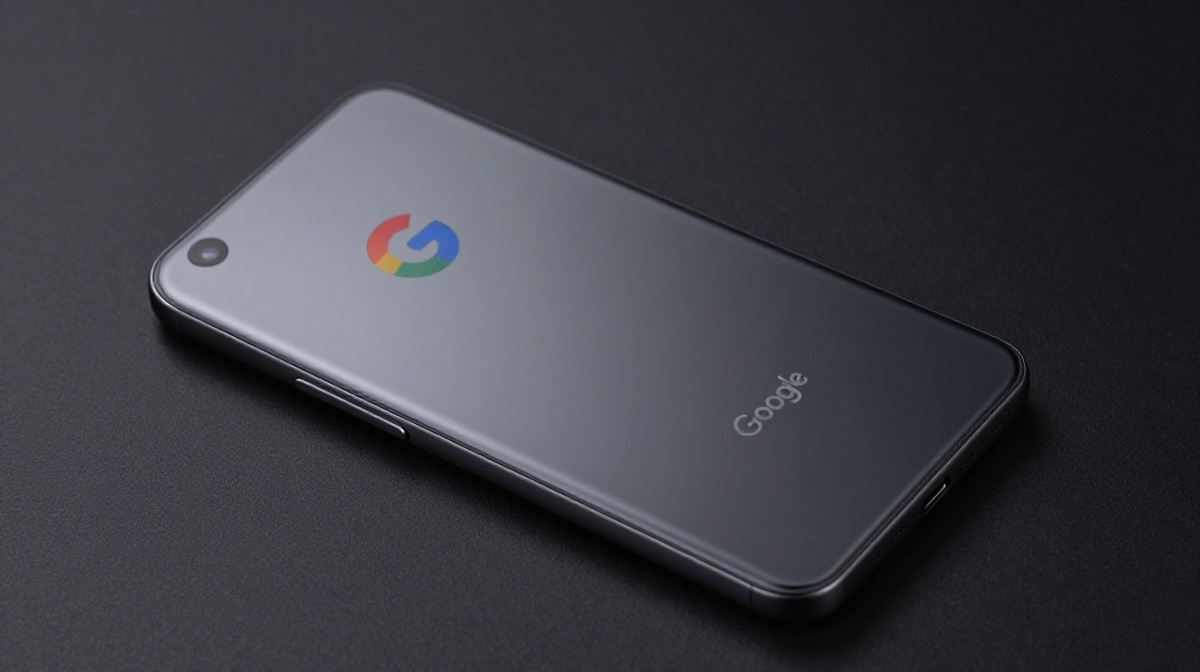
Google Pixel 10 Pro: The AI Revolution or Just an Incremental Update?
The official launch of Google’s latest flagship lineup, the Pixel 10 series, was far from a traditional tech event. Hosted in New York as a “Late Show” style broadcast, complete with Jimmy Fallon and a star-studded cast including the Jonas Brothers, Google signaled that these devices are meant for the mainstream spotlight. While the lineup includes the standard Pixel 10, the Pixel 10 Pro XL, and the Pixel 10 Pro Fold, the Pixel 10 Pro stands out as the most balanced model for users seeking professional-grade features in a more manageable 6.3-inch form factor.
After extensive testing, the verdict is clear: if there is one mantra for the Pixel 10 Pro, it is “Artificial Intelligence, Artificial Intelligence, Artificial Intelligence”. Google’s mastery of the AI chain, from silicon to software, has never been more apparent than in this 2026 flagship.
The Heart of the Machine: Tensor G5 and the TSMC Shift
The most significant internal change this year is the Tensor G5 chip. For the first time, Google has partnered with TSMC, the world leader in semiconductor manufacturing, to engrave their silicon using a 3nm process. This move away from previous manufacturing partners is “bluffing” in its execution.
However, the Tensor G5 presents a unique paradox. In traditional benchmarks, it remains far behind competitors like the Snapdragon 8 Elite. On paper, the scores might look underwhelming, but Google’s philosophy remains focused on usage optimization rather than raw power. In real-world scenarios—whether gaming, 8K video recording, or heavy multitasking—the phone is incredibly smooth with no lags or hiccups.
To support these intensive AI operations, Google has beefed up the internals. The Pixel 10 Pro now boasts 16GB of RAM, a necessary upgrade for the on-device Gemini models, while storage options now reach up to 1TB.
A Camera System Reimagined by Generative AI
Google has long been a leader in mobile photography, but the Pixel 10 Pro moves beyond “taking” photos to “generating” them. The hardware is formidable:
- Main Sensor: 50MP.
- Ultra-wide: 48MP.
- Telephoto: 48MP with 5x optical zoom, capable of reaching 100x digital zoom.
- Selfie: A massive 48MP sensor capable of 8K video.
The Zoom Pro Phenomenon
The standout feature is Zoom Pro. This is a supplementary software installation (roughly 1GB) that uses generative AI to “sublime” images taken at high magnification levels. When you zoom in at x20, x50, or x100, the AI analyzes the scene and generates content to fill in the blanks.
In tests, the results were impressive:
- Billiards: An unidentifiable blur of balls becomes a sharp image where you can count the individual spheres.
- Nature: A distant bird or a pigeon’s foot gains realistic textures and details that simply weren’t visible in the original capture.
- Architecture: Shots of Big Ben at 100x zoom show improved definition and more saturated, pleasing colors.
While the AI can occasionally make mistakes—as it is technically “inventing” detail based on what it thinks should be there—the overall effect makes high-zoom photography actually usable for the first time.
Photo Coach: Your Personal Photographer
For those who struggle with composition, Google introduced the Photo Coach. By clicking a camera icon, the AI analyzes the scene and suggests better angles. For example, if you are photographing city ramps, the coach might instruct you to “rotate to horizontal,” “zoom to x2,” or “align the ramps to create leading lines”. It even guides you to shoot from a low angle to capture wood textures or to position rails to create depth. This “tutorial” style of photography is integrated throughout the OS, making professional composition accessible to everyone.
Magic in Post-Production
The AI integration continues in Google Photos with “Reinvent the Image.” This feature allows you to circle an area and type a text prompt to add elements. You can add a “brilliant sun” to a cloudy sky, or even more whimsical elements like a flying cat. The “Magic Eraser” and “Unblur” features remain, now faster and more precise thanks to the G5 chip.
Gemini: More Than Just a Chatbot
The Pixel 10 Pro is built entirely around Gemini. The device features two primary models: 2.5 Flash for quick daily tasks and 2.5 Pro for deep reasoning and complex analysis.
The most futuristic implementation is Gemini Live, which allows you to film your surroundings and ask the AI questions about what it sees. It can analyze your screen to provide context-aware help or even translate phone calls in real-time.
Live Call Translation (a 1.5GB download) allows a French speaker to talk to a Portuguese or English speaker, with the AI translating the conversation on the fly after the first few words. While perhaps a niche tool for tourists or professionals, it showcases the raw processing power of the G5.
Even the Voice Recorder has received an AI makeover. It can now “Create Music” by generating a background track for your voice notes. You can choose styles like “Rock” or “Chill” and even set an emotion like “Angry”. While the reviewer noted that this particular feature feels a bit like a “gadget” with limited practical use, it serves as another example of Google’s “because we can” approach to AI.
Design, Software, and Longevity
Visually, the Pixel 10 Pro is an evolution of the Pixel 9 Pro. It retains the elegant, premium feel with a matte glass back (Gorilla Glass Victus 2) and an aluminum frame. The only notable physical change is the SIM tray moving to the topof the device. It carries an IP68 rating for water and dust resistance, though it lacks the newer IP69 rating seen on some competitors.
On the software side, the device ships with Android 16, featuring the latest Material 3 design updates. Google continues its industry-leading commitment to longevity, promising 7 years of OS and security updates. Through “Pixel Drops,” the phone is designed to become more intelligent over time as new software features are rolled out.
The Compromises: Charging and Connectivity
The Pixel 10 Pro is not without its flaws. One of the most frustrating aspects is the charging speed. While the XL model supports 45W wired charging, the standard Pro is limited to 30W. Wireless charging is also capped at 15W (QI2), which feels dated for a “Pro” device in 2026. Interestingly, the devices are now explicitly MagSafe compatible, a nod to Apple’s accessory ecosystem that Google even mentioned on stage.
In terms of connectivity, the Pro models feature WiFi 7. However, it is worth noting that Google made a strange “step backward” with the standard Pixel 10, which only features WiFi 6E to keep costs down—a sacrifice made to include a telephoto lens on the entry-level model.
Conclusion: Genius or Gadget?
At €1,099, the Google Pixel 10 Pro is a high-end investment. It is not the fastest phone on the market in terms of raw benchmarks, nor the fastest-charging. However, it is arguably the smartest.
The combination of the TSMC-made Tensor G5, the groundbreaking Zoom Pro generative photography, and the deep integration of Gemini makes it a unique proposition. It is a smartphone that evolves with you, offering a refined, AI-driven experience that no other manufacturer can currently match from top to bottom.
If you value camera versatility and the cutting edge of AI, the Pixel 10 Pro is a “genius” piece of hardware. If you are looking for raw gaming power and ultra-fast charging, the competition might still have the edge.

