
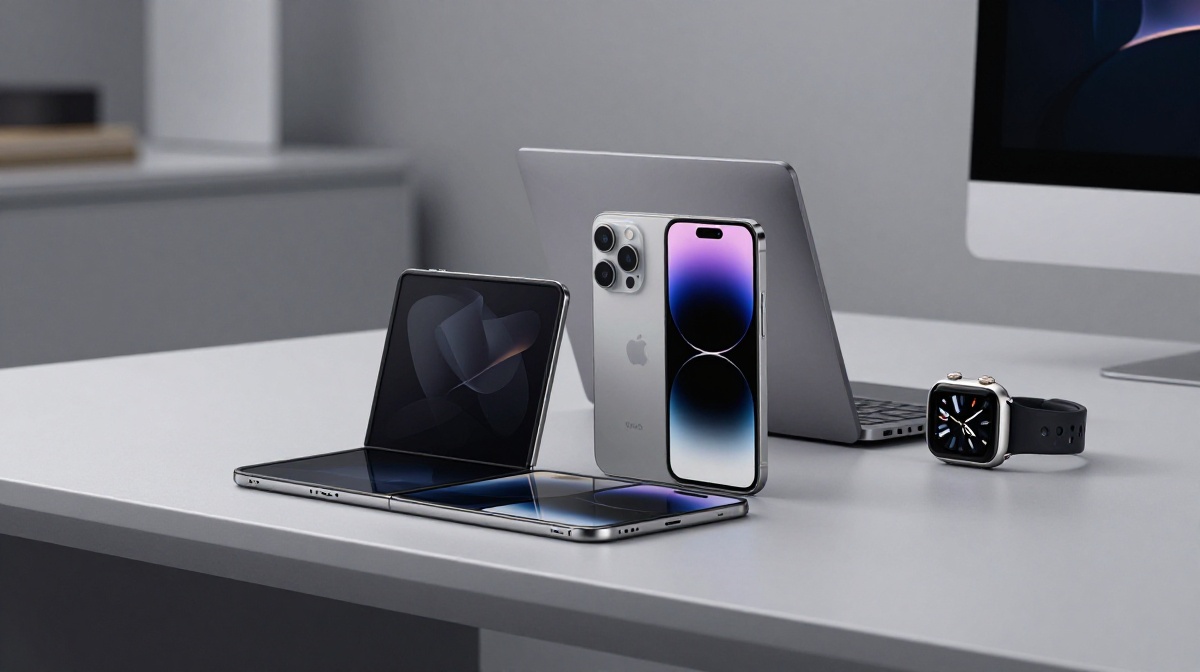
The Apple landscape is currently undergoing its most significant seismic shift since the introduction of the first iPhone. With the announcement that John Ternus will succeed Tim Cook as CEO on September 1st, the tech world is bracing for a new era led by a “hardware guy” who promises the most exciting product roadmap in Apple’s history.
At www.thegadgetnet.com, we live and breathe these transitions. As your premier destination for cutting-edge tech analysis and reviews, we’ve dissected every leak, transcript, and official announcement to bring you this definitive guide to the Apple Product Lineup. Whether you are looking for a budget-friendly iPhone 16e or eyeing the futuristic 20-inch foldable iPad, this 2025-2026 roadmap is your North Star.
1. The iPhone Hierarchy: Segmenting for Every User
Apple has moved away from the “one-size-fits-all” approach of the Steve Jobs era, opting for a highly segmented lineup that balances performance, style, and price.
The Budget Entry: iPhone 16e
The iPhone 16e serves as the new entry point into the ecosystem, replacing the former SE lineup. Priced at $599, it introduces the Apple C1 chip but makes concessions like a single-camera system and the lack of MagSafe to “anchor” users toward higher-end models. While some critics argue $599 is high for a “budget” device, it provides the essential modern iPhone experience with long-term software support.
The Standard Bearer: iPhone 17
For 90% of people, the iPhone 17 is the “winner” of the lineup. It offers the best price-to-value ratio, featuring a high-quality Super Retina XDR OLED panel, a powerful dual-camera system, and ProMotion (120Hz). It is the balanced option for social media, gaming, and everyday photography without the “Pro” tax.
The Style Icon: iPhone 17 Air
Replacing the “Plus” models, the iPhone 17 Air represents a shift toward extreme portability and elegance. At just 5.6mm thick, it is the thinnest iPhone ever made. To achieve this, Apple utilized a single 48MP camera and a more compact battery. It’s designed for users who prioritize fashion and lightweight design over raw specs.
The Powerhouses: iPhone 17 Pro & Pro Max
These models represent the peak of mobile engineering. Featuring the A19 Pro chip, titanium frames, and a triple 48MP camera system, the Pro series is built for content creators. The Pro Max remains the preferred choice for power users who demand the largest display and best thermal cooling for intense tasks.
The Future: The Foldable “iPhone Ultra”
Under John Ternus, Apple is reportedly working on its first foldable iPhone, rumored to cost between $2,000 and $2,500. Focus points include durability, a near-invisible crease, and a 7.8-inch display when unfolded—similar in dimension to an iPad mini.
2. Mac: The Undisputed King of Computers
In recent rankings, the Mac has surged to the number one spot in the Apple ecosystem. The transition to Apple Silicon(M-series chips) has left Windows competitors in the dust regarding battery life and power efficiency.
- MacBook Air (M4): Remains the best value-for-money laptop on the planet, perfect for 85% of users.
- MacBook Pro (M5): The ultimate tool for professionals, offering extreme power for AI tasks and video editing.
- Mac Studio & Mac Pro: These are “beasts” meant for serious creative professionals, though they can cost as much as a small car.
- The Future Touchscreen Mac: Reports suggest Apple will finally introduce a high-end Touchscreen MacBookby late 2026 or early 2027, potentially labeled the “MacBook Ultra”.
3. iPad: The “In-Between” Device
The iPad lineup continues to sit between a phone and a laptop, excelling at media consumption and creative work like drawing with the Apple Pencil Pro.
- iPad Pro (M5): Features laptop-level processors and stunning displays, though the high cost of accessories (like the $349 Magic Keyboard) makes it as expensive as a MacBook.
- iPad Air (M3): The “sweet spot” for most tablet users, now compatible with Pro-level accessories.
- 20-inch Foldable iPad: A priority for John Ternus, this device would function as a massive portable cinema or gaming powerhouse when unfolded.
4. Wearables and Audio: AirPods & Apple Watch
AirPods Pro 3: The “GOAT” of Audio
The AirPods Pro 3 have been hailed as one of Apple’s best products, featuring industry-leading Active Noise Cancellation (ANC) and Live Translation capabilities. Future iterations may even include low-resolution cameras to provide AI-driven context about your surroundings, such as visual reminders or improved directions.
Apple Watch: Series 11, SE 3, and Ultra 3
The Apple Watch has evolved from a notification hub into a vital health and safety device.
- SE 3: The best entry point for new users, offering a larger display and Always-On capability at a budget price.
- Series 11: Features the S11 chip and rapid charging, though upgrades over the Series 10 are considered iterative.
- Ultra 3: Aimed at top athletes, featuring 5G connectivity and satellite capabilities, though its bulky 3D-printed design isn’t for everyone.
5. Apple Intelligence: The Software Glue
Apple Intelligence is not just a “smart speaker” assistant; it is a personalized experience embedded across iOS, iPadOS, and macOS.
Key Features of Apple Intelligence:
- Writing Tools: System-wide tools to proofread, rewrite, or change the tone of emails (Professional, Friendly, Concise).
- Visual Intelligence: By holding the new capture button, users can take a photo of an object (like a Kindle or a mouse) and have ChatGPT immediately identify it or provide pricing.
- Clean Up in Photos: Similar to Google’s Magic Eraser, this tool removes distracting objects from the background of your images.
- Notification Summaries: AI weeds out unimportant alerts (like pizza coupons) and summarizes long text threads so you only see what matters.
6. Comparison Tables
Table 1: iPhone 17 Series Comparison
| Feature | iPhone 17 | iPhone 17 Air | iPhone 17 Pro |
|---|---|---|---|
| Primary Focus | Balanced Value | Ultra-Thin Design | Professional Specs |
| Chipset | A19 | A19 Pro | A19 Pro |
| Display | 120Hz ProMotion | 120Hz ProMotion | 120Hz ProMotion |
| Cameras | Dual System | Single 48MP | Triple 48MP + Telephoto |
| Thickness | Standard | 5.6 mm | Standard |
| Best For | Average Users | Fashion/Portability | Creators/Power Users |
Table 2: Apple Watch (2025) Comparison
| Feature | Apple Watch SE 3 | Apple Watch Series 11 | Apple Watch Ultra 3 |
|---|---|---|---|
| Display | Large, Always-On | Thinner, Faster | Largest, Toughest |
| Connectivity | GPS/Cellular | GPS/Cellular | 5G + Satellite |
| Build | Aluminum | Aluminum/Titanium | 3D-Printed Titanium |
| Battery Life | 18 Hours | 18-24 Hours | 36-60 Hours |
| Target User | First-time buyers | Daily health/fitness | Extreme athletes |
7. The Future: Robotics and Smart Home
Apple is finally getting serious about the smart home to compete with Amazon and Google.
- Smart Home Hub: A HomePod with a magnetic, detachable screen and a new OS designed for Siri control.
- Tabletop Robot: A 9-inch screen attached to a robotic arm that mimics “Pixar lamp-like” personalities to assist with tasks.
- Smart Security Device: Privacy-focused cameras and sensors meant to replace Ring or Nest systems.
Pros & Cons of the Current Apple Ecosystem
Pros
- Unmatched Integration: Features like AirDrop, Universal Clipboard, and Sidecar make moving between Mac and iPad seamless.
- Apple Silicon Efficiency: Industry-leading battery life in MacBooks and iPads.
- Privacy: Apple leverages its reputation for user privacy to build trust in its new AI and security products.
- Resale Value: Apple products generally hold their value better than Windows or Android counterparts.
Cons
- The “Walled Garden”: The ecosystem is designed to be hard to leave, creating a “lock-in” effect.
- High Accessory Costs: Essentials like the Magic Keyboard or Apple Pencil can add hundreds to the base price.
- Iterative Design: Many yearly updates (like the Watch Series 11) offer very few groundbreaking changes.
- Repairability: Devices are often soldered and glued, making third-party repairs difficult.
FAQs (Frequently Asked Questions)
Q: Is the iPhone 17 Air better than the Pro? A: “Better” depends on your needs. The Air is the thinnest and most stylish, but the Pro has a superior triple-camera system and better battery life.
Q: Does Apple Intelligence work on older iPhones? A: Apple Intelligence requires significant processing power. While it works on the latest Macs and iPads, only the iPhone 15 Pro and newer models (including the entire iPhone 16 and 17 lineups) fully support these AI features.
Q: When will the foldable iPhone be released? A: Reports suggest a potential debut as early as September 2026 under the new leadership of John Ternus.
Q: Is the Apple Vision Pro worth $3,500? A: Currently, the Vision Pro is viewed more as a “dev-kit” or a “science project” for early adopters. While the technology is incredible, it lacks a “killer app” and is too heavy for most consumers to wear long-term.
Conclusion: A New Era Awaits
The Apple Product Lineup of 2025-2026 is a blend of perfected tradition (the Mac) and daring experimentation (the iPhone Air and Tabletop Robotics). Under John Ternus, we expect a pivot toward hardware that isn’t just powerful but “intimately connected” to the user’s daily life through AI.
At www.thegadgetnet.com, we will continue to provide deep dives into these releases. We aren’t just reporting on gadgets; we are analyzing the tools that will shape your digital future. Stick with us for the latest reviews, comparisons, and “how-to” guides to ensure you’re getting the most out of your Apple ecosystem.

