
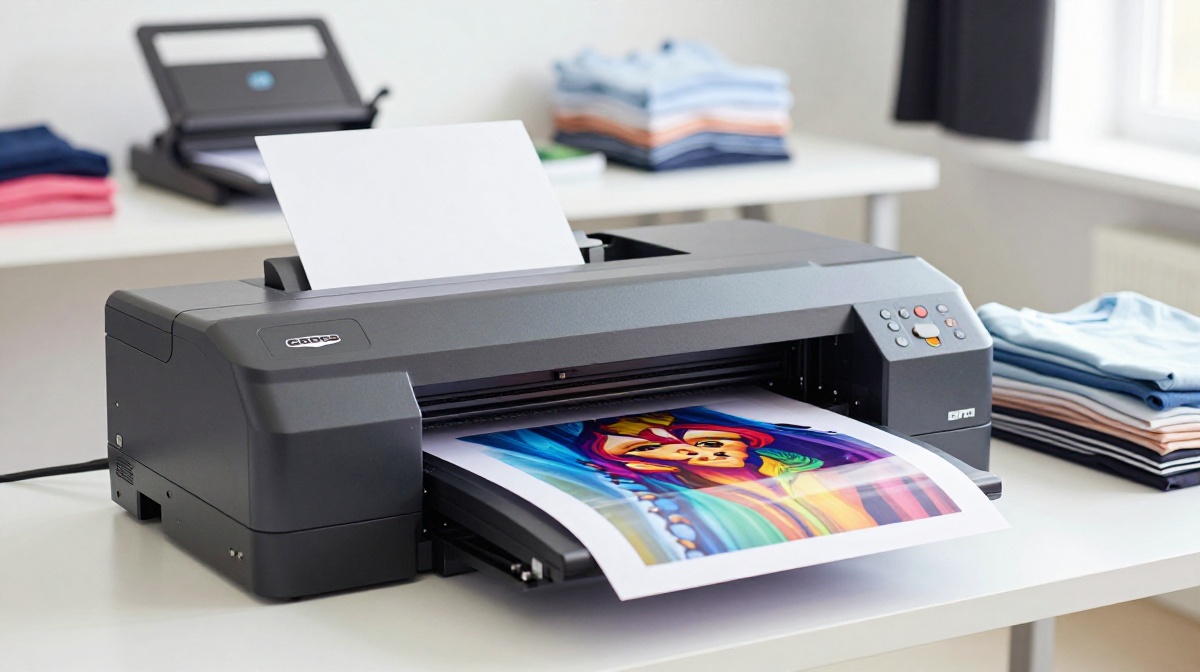
The Ultimate Guide to DTF Printing: Best Printers for Small Business Growth in 2026
The landscape of custom apparel has shifted dramatically over the last few years, and at the heart of this revolution is Direct-to-Film (DTF) technology. For small business owners, entrepreneurs, and side-hustlers, finding the best DTF printer for small business means balancing initial investment with long-term reliability and output quality. Unlike traditional methods that required massive setups or specific fabric types, DTF has emerged as a “superpower,” allowing for vibrant, durable designs on almost any material, including cotton, polyester, leather, and even nylon.
The Future of Lifestyle: 15 Game-Changing
At TheGadgetNet.com, we pride ourselves on being the premier destination for deep dives into the latest tech that empowers creators. Whether you are looking for the latest in consumer electronics or industrial-grade tools that can be run from a home office, our mission is to provide the clarity you need to make informed purchasing decisions. As the DTF market continues to boom—projected to reach a value of USD 667 million by 2025—we are here to help you navigate the hardware that will define your business’s success.
Why DTF Printing is the Strategic Edge for Entrepreneurs
For decades, small print shops were caught between two difficult choices: screen printing, which has high setup costs and requires massive space, or Direct-to-Garment (DTG), which is notoriously picky about fabrics and requires tedious pre-treatment.
DTF printing bridges this gap perfectly. It allows you to print a design onto a special film, apply an adhesive powder, and then heat-press that design onto a garment. The result is a high-quality transfer that doesn’t require pre-treating the fabric, saving you time and reducing the “bottleneck” in your production workflow. This flexibility allows a small business to pivot from printing cotton tees to polyester performance hoodies or canvas bags in the same afternoon.
Top 7 DTF Printers for Small Business in 2026
Drawing from expert testing and real-world business applications, here are the top-ranked DTF printers currently leading the market.
1. The Professional Choice: DXZ A3 UV DTF Printer
Ranked as a top-tier solution by industry pros with over 11 years of experience, this machine is an all-in-one powerhouse. What sets it apart is its UV DTF capability, meaning it isn’t limited to fabrics; it can also print and laminate transfers for hard surfaces like glass and metal.
2. Best for High Volume: Lancelot M1630 Pro
This model is frequently cited as the “Best Bang for Your Buck” for those moving beyond the hobbyist stage. It utilizes the XP600 printhead, known for its balance of speed and precision, and is engineered to handle the grind of a full-time production schedule.
3. The Scalable All-Rounder: Cobra DTF Model X
For businesses focused on growth, the Cobra DTF Model X is a standout. It features automated white ink circulation and filtration, a critical feature that slashes maintenance time by half. It can comfortably handle 100 to 200+ prints per day, making it the ideal machine for a shop scaling up its orders.
4. The Desktop Craft Specialist: HTVRONT D2
The HTVRONT D2 is a popular entry point for “craft-preneurs.” It is compact enough to fit in a home office but powerful enough to handle real-world wholesale orders. While it may lack some of the automated bells and whistles of industrial machines, it is a proven workhorse for those starting on platforms like Etsy.
5. Reliable Mid-Range: Procolored K13-Lite
Often bundled with a smokeless oven, this printer is designed for the budget-conscious professional who still needs a high-quality output. It provides a “one-click” automated experience that is very beginner-friendly.
6. The Industrial Powerhouse: Prestige R2 Pro
When efficiency is the priority, the Prestige R2 Pro (often paired with a Miro 13 Max powder shaker) is a true powerhouse. In real-world tests, this setup has been used to print hundreds of transfers and press over 100 shirts in a single session without faltering.
7. The Budget Entry: Carbcolords A4
If you are just testing the waters with a very limited budget, the Carbcolords A4 is often the cheapest viable option. While it is slower and requires more manual maintenance, it allows you to start producing professional-grade transfers for a fraction of the cost of larger units.
Crucial Features to Consider Before Buying
Picking a printer is more than just looking at the price tag. You are hiring a “production partner,” and the wrong choice can lead to constant headaches.
Print Quality and DPI
Your brand’s reputation depends on the vibrancy and sharpness of your prints. Professional results require a printer capable of at least 1440 DPI (dots per inch). Anything lower risks pixelation, especially on detailed artwork or small text.
White Ink Management Systems
This is perhaps the most important technical feature. White ink contains titanium dioxide, which is heavy and settles quickly. If it settles, it clogs the printhead—the most expensive part to replace. Look for printers with automated circulation or agitation systems that keep the pigment suspended.
Production Speed vs. Realistic Output
Do not trust the “draft mode” speeds listed on spec sheets. Instead, ask how many shirt-sized transfers the machine can produce in an 8-hour shift, factoring in maintenance and software processing time. A startup may only need 50 prints a day, but a growing business should look for a machine that can handle 100-300 daily.
Maintenance: The “Honest Truth” of DTF
Consistent maintenance is the only way to keep a DTF printer operational. It is not optional. Even the most advanced machines require about 15-20 minutes of daily care.
- Daily: Run nozzle checks, perform a basic head cleaning, and agitate your white ink.
- Weekly: Thoroughly clean the capping station, wiper blade, and the area around the printhead.
- Quarterly: Replace ink filters and pads roughly every three months to ensure consistent flow.
Failure to maintain these routines, especially shaking the white ink, will lead to thin prints or catastrophic clogs.
The Financials: Calculating Your ROI
A DTF printer is an investment, and you must understand your cost-per-print to set a profitable pricing strategy.
A Real-World Example:
- Startup Cost: A full setup (printer, press, supplies) costs roughly $6,000.
- Cost-Per-Print: Between ink, film, and powder, a standard 10×12 inch transfer costs about $1.50 to make.
- Profitability: If you sell a custom shirt for $25 and the blank shirt costs $3.50, your net profit per shirt is $20.00.
- Break-Even Point: At this rate, you only need to sell 300 shirts to pay off your entire $6,000 investment.
Beyond the math, the ROI includes intangible benefits like total quality control, faster turnaround times (offering same-day service), and the creative freedom to take on complex, multi-color jobs that were previously too expensive to outsource.
The Future of DTF: AI and Sustainability
The technology is evolving rapidly. We are now seeing the integration of AI-powered software that automatically adjusts ink levels for perfect color matching, reducing waste and trial-and-error time. There is also a growing push for eco-friendly production, with manufacturers developing biodegradable inks and powders to appeal to environmentally conscious consumers.
Furthermore, hybrid systems are emerging that combine DTF with DTG or UV printing, allowing one machine to handle both apparel and hard promotional items. By investing in a quality machine now from a trusted brand, you are building a foundation that can adapt to these innovations.
Conclusion
Direct-to-Film printing is no longer just a trend; it is a foundational technology for the modern custom apparel business. Whether you start with a budget-friendly desktop unit like the Carbcolords A4 or invest in an industrial-grade Prestige R2 Pro, the key to success lies in understanding your volume needs, committing to a strict maintenance schedule, and accurately calculating your margins.
At TheGadgetNet.com, we are committed to keeping you at the cutting edge of these developments. The world of digital printing moves fast, and with the right equipment, your small business can scale, innovate, and thrive in 2026 and beyond. Good luck with your venture, and remember that the right tools are the engine of your creativity.

