
Top 10 Gadgets Under $50 You Must Buy
The Truth Behind Viral Tech: An In-Depth Review of 16 Instagram Gadgets
In the modern digital landscape, Instagram has become a primary hub for innovative, often futuristic-looking gadgets that promise to solve everyday problems with a single click. But how many of these “game-changing” products actually live up to their cinematic advertisements? To find out, a team spent ten weeks trolling Instagram ads, purchasing every compelling gadget they encountered—a haul that included 16 distinct products and a flagship investment of $25,000 on a single high-tech printer. This review breaks down each of those items to determine which are truly revolutionary and which are merely “AliExpress aesthetic” wrapped in “Hermes” packaging.
The Crown Jewel: The $25,000 UV Texture Printer
The most ambitious purchase in this experiment was a $25,000 machine from New Things Lab, designed to print three-dimensional textures onto almost any surface. The core appeal of this device is its ability to replicate complex finishes, such as marble or stone, with physical depth that can actually be felt.
During testing, the printer successfully applied a natural stone finish to a smartphone and even replicated the folds of a fabric hoodie and the texture of brickwork in a photo. The technology utilizes a specialized ink that hardens instantly upon exposure to UV light, allowing it to print on materials as varied as plastic and metal. While the machine is undeniably expensive and perhaps niche for a typical household, the quality of the results—including the ability to print “unlimited” metal posters or custom 3D finishes—was described as “mind-blowing”.
Home Lighting and Acoustics: The Glowite Halo Lux
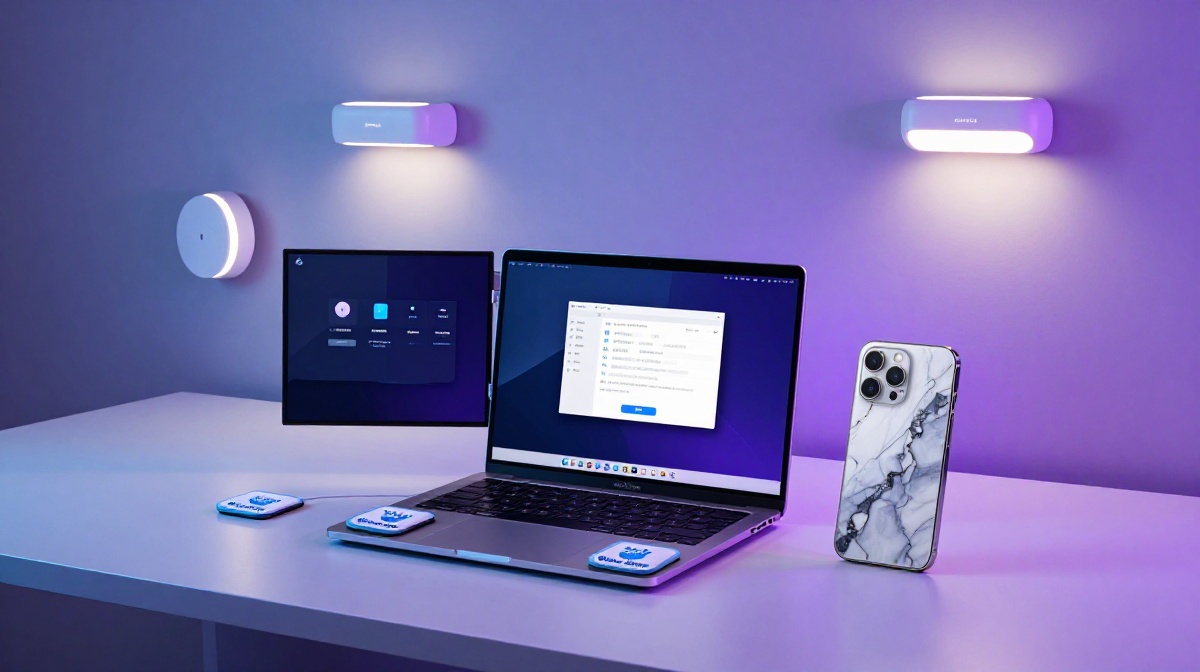
Among the 16 products tested, the Glowite Halo Lux lamps emerged as the standout winner. At $50 per bulb, these wireless, magnetic lights are designed for a “toolless experience”. Users can simply peel and stick a magnetic mount to a wall, allowing the light to snap into place securely without the need for screws or wiring.
The design is highly functional, featuring one diffused end for soft lighting and one non-diffused end for sharper focus. The interface is equally intuitive: a simple tap toggles the light, while holding the button adjusts brightness and color temperature. Furthermore, the system includes responsive hand and motion sensors, allowing for touchless control. With a 10,400 mAh battery that can last up to a month and easy USBC charging, these lamps were praised for being exactly “what it says on the tin”.
In addition to lighting, the experiment looked at Audio Silk panels, which cost $240 for a set of eight. These ultra-thin, sleek panels are designed to reduce echo and audio reflections in rooms with hard surfaces like concrete or plaster. In a real-world test within a hallway, the panels provided a roughly 40% improvement in acoustic clarity, making them a “triple win” by reducing noise entering, leaving, and reflecting within the room.
Wearable Tech and Daily Accessories
The world of wearable accessories provided a mix of high-quality alternatives and disappointing gimmicks.
- The Magnetic Watch Band: This band, which features individual magnetic segments, was noted for its incredible strength and “delightful” tactile feel. Despite a brand name that appeared to be a typo, the product was seen as a legitimate, high-quality upgrade over expensive first-party watch bands.
- Water Bears: These are $15 cleaning cloths that stick to the back of a phone or laptop. While they clean screens effectively without sprays, they have a significant caveat: they easily pick up lint and “rubbish” from pockets, which can then be transferred back to the screen. However, their stickiness and cleanliness can be restored with water.
- Manual Tinting Sunglasses: These glasses were one of the experiment’s biggest failures. They feature a manual dial to adjust the tint of the lenses, but the mechanism was described as heavy, clunky, and “freaking stupid”. The lenses must be adjusted individually, and the tactile experience did not match the satisfying sound advertised in the videos.
Innovative Lifestyle Solutions: Laundry and Wellness
Several products aimed to improve home maintenance and personal health.
- Laundry Shoe Bags: These mesh bags are specifically designed to protect both sneakers and the washing machine during a cleaning cycle. They feature over a thousand internal bristles to scrub the shoes and secure zippers to prevent rattling. Tests showed that while they didn’t remove 100% of deep stains, they achieved a “97% cleaned” result and kept the interior of the bags pristine.
- Shakti Premium Acupressure Mat: Despite looking like a “sadistic torture method” due to its thousands of sharp plastic spikes, this mat was found to be surprisingly therapeutic. By spreading the user’s weight across the spikes, it provides a “grounding” sensation that improves blood flow and leaves the user feeling “limbered up” and alert after 15 minutes of use.
- Breeze Spray (by Kiss): This $100 probiotic mouth spray claims to kill 99.9% of bad-breath bacteria and provide 12 hours of freshness compared to the 2 hours offered by gum. The mango-flavored spray was described as “delicious” and effective, with the user’s spouse confirming that their breath simply “smelled like nothing” four hours later.
The “Weird” Tech: Robots, Toys, and Massagers
Instagram ads often feature products that defy traditional categories.
- The “Alien” Neck Massager: This device, which looks like a “little alien doing a Naruto run,” features human-like “fingers” that knead the neck and shoulders. While it looks freakish—even featuring “fingernails”—the massage quality was described as “hard and firm,” providing a sensation similar to a professional massage.
- Patrol Bot: This is a mobile security camera that resembles a hybrid between a Roomba and a toy. It can automatically return to its dock and be controlled via an app to “patrol” a home. While it sounds cute (like Mario) and is not particularly intimidating to intruders, its live video quality was sharp, and it successfully navigated carpets.
- Oddball: A “toy” category product, this is a ball that makes music when bounced. It connects to an app that allows users to layer sounds and create beats. While well-made, it was deemed strictly a toy rather than a professional musical tool.
High-End Office and Entertainment Gadgets
For productivity and social gaming, the experiment tested:
- The Poker Provoke Machine: This device shuffles and deals cards for up to 10 players using individual remotes. While it struggles with a “perfect shuffle” (often just alternating cards), its ability to deal cards accurately and even “burn” cards according to Texas Hold’em rules was impressive.
- Aura Displays Triple Boost: This device adds three 14-inch monitors to a laptop via a single Thunderbolt cable. While it creates an “epic” quad-monitor setup, the 1080p IPS panels do not match the quality of high-end laptop screens like a MacBook, making them better suited for secondary tasks like Slack or to-do lists rather than color-accurate work.
- New Things Lab Wallet/Whiteboard: This $89 product is a “decent whiteboard” but a “bad wallet”. The slots are too tight for cards, and if they aren’t inserted perfectly, they can block the whiteboard from opening or even destroy written notes.
The Controversial: Rebranded Tech and Emotional Marketing
The final category of products highlighted the darker side of social media marketing.
- The E-Ink Photo Frame: This frame uses e-paper technology to display images with almost zero power consumption. However, the resolution and color quality were significantly worse than traditional glossy photo prints, making the high price point difficult to justify.
- The Chattsy Phone: Targeted at seniors, this phone is marketed as a simplified device with a custom software skin and a 24/7 support hotline. Investigation revealed it to be a rebranded, cheap “Uukitel” phone from China that had been significantly upcharged. While the hardware is low-end and the dialer unresponsive, the experiment noted that the 24/7 customer support was “delightful” and the ability for families to remote into the device could be genuinely useful for its specific demographic.
Final Verdict: Are Instagram Ads Worth It?
The results of this $25,000 experiment were more positive than expected, though many products still fell into the “gimmick” category. While items like the Glowite lamps and UV printer proved their worth, others—like the manual sunglasses and rebranded senior phone—showcased how ads can use “aesthetic” packaging to hide mediocre or overpriced hardware. For consumers, the takeaway is clear: while some viral gadgets are genuine “game changers,” many require a healthy dose of skepticism before you hit the “buy” button.

