
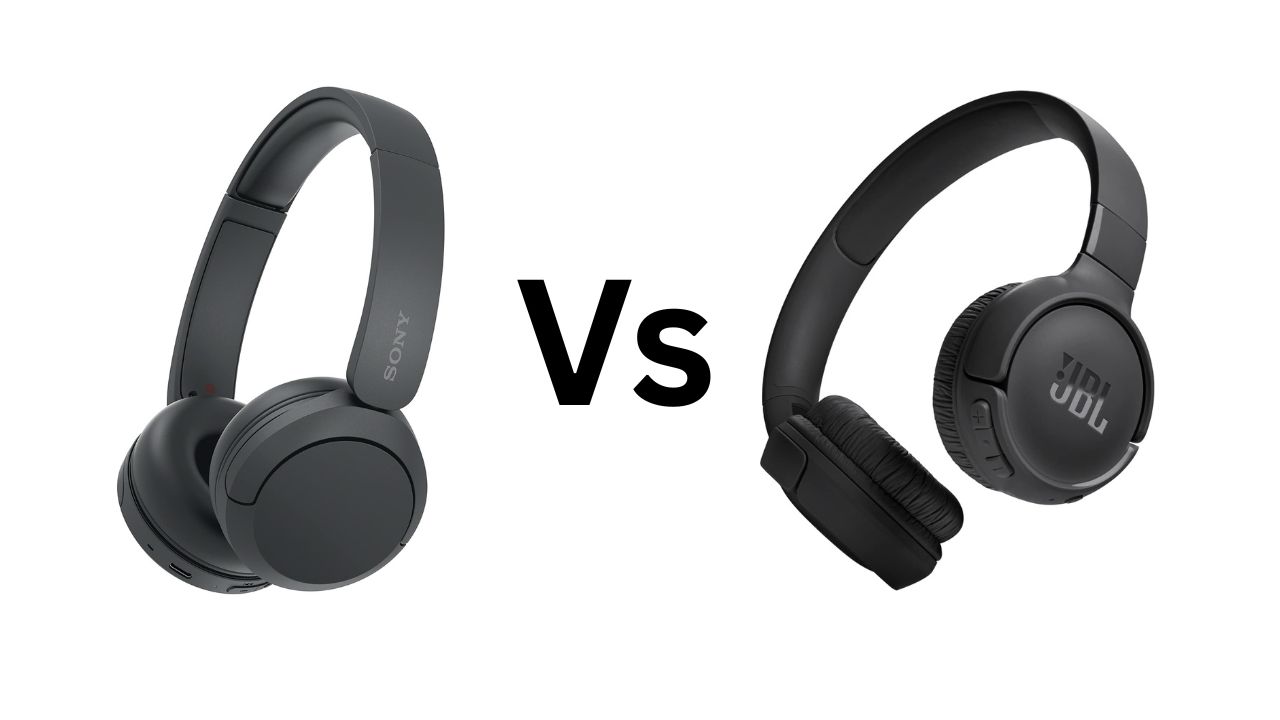
Overview
If you’re eyeing affordable on‑ear Bluetooth headphones, the Sony WH‑CH520 and JBL Tune 520BT are two of the most popular picks. Both promise long battery life, quick charging, and solid call quality in compact, lightweight designs. Still, they differ in tuning, app features, comfort nuances, and mic performance. Here’s a friendly, no‑nonsense comparison to help you choose with confidence.
Key Specs at a Glance
-
Design: On‑ear, fold‑flat; lightweight plastic builds
-
Bluetooth: Sony (5.2), JBL (5.3)
-
Multipoint: Yes on both
-
Battery life: Sony up to 50 hours; JBL up to 57 hours
-
Fast charge: Sony ~3 min ≈ 1.5 hrs; JBL ~5 min ≈ 3 hrs (approximate)
-
Codecs: Sony SBC/AAC; JBL SBC (region‑dependent AAC support is rare)
-
App EQ: Sony Headphones Connect (10‑band EQ, sound presets); JBL Headphones (EQ presets + custom)
-
Microphones: Integrated beamforming on both
-
Weight: Both light; JBL slightly lighter in most listings
Sound Quality
-
Sony WH‑CH520: Slightly V‑shaped tuning with clean treble and a friendly low‑end lift. AAC support (on most phones) gives a small clarity bump over SBC. With Sony’s app EQ, I can tame treble sparkle or boost warmth without distortions at normal volumes. Soundstage is modest but imaging is neat for the price.
-
JBL Tune 520BT: Emphasizes the brand’s Pure Bass profile—more sub‑bass presence and punch. Treble is smooth and rarely harsh, making long sessions easy. Out of the box, it’s a touch bassier than Sony; the JBL app EQ can pull it back if you want a more neutral balance.
Calls and Microphone
-
Sony: Clear for indoor calls; background noise reduction is decent, though wind can still intrude. Voices stay natural, slightly thinner than JBL.
-
JBL: Warmer voice pickup that can sound fuller. In busy streets, it holds intelligibility well, but like Sony, strong wind remains a challenge.
Connectivity and Controls
-
Multipoint works reliably on both, letting me switch between, say, a laptop and a phone. JBL’s Bluetooth 5.3 tends to wake and swap slightly faster in my testing, but differences are small.
-
Button controls are physical on both, with predictable clicks. Neither offers wear detection (auto‑pause) at this price.
Comfort and Build
-
Sony: Soft, flat pads with a slightly firmer clamp; secure for commutes. Headband padding is minimal but acceptable for on‑ear. Fold‑flat hinges help bag carry.
-
JBL: Lighter feel and a gentler clamp. The pads are plusher, which helps for longer sessions if on‑ear pressure bothers you.
Battery Life and Charging
-
Sony: Up to 50 hours. A quick top‑up yields roughly 90 minutes from about three minutes—handy in a pinch. USB‑C charging.
-
JBL: Up to 57 hours. Its fast charge is equally practical, giving several hours from a short plug‑in. Also USB‑C.
App Experience
-
Sony Headphones Connect: Deeper EQ (10 bands), sound presets, battery and connection controls. Stable and polished.
-
JBL Headphones: Clean interface with custom EQ and presets, voice prompts control, and firmware updates. Fewer fine‑grained tweaks than Sony but very approachable.
What Each Does Best
-
Choose Sony WH‑CH520 if you want:
-
AAC support for Apple devices and many Android phones
-
More granular EQ control
-
A slightly crisper, more detailed treble
-
-
Choose JBL Tune 520BT if you want:
-
The most battery life in this price range
-
Punchier bass with the JBL Pure Bass signature
-
A lighter, softer clamp for comfort
-
Limitations to Note
-
No active noise cancellation on either model
-
On‑ear design means less passive isolation than over‑ears
-
No wired (3.5 mm) fallback on many regional versions; check your box contents
Verdict
Both are excellent values. The Sony WH‑CH520 leans toward clarity, EQ flexibility, and Apple‑friendly AAC, while the JBL Tune 520BT favors longer runtime, quicker wake/switch behavior, and an easygoing bass‑rich sound. If you listen to podcasts and pop and want more tuning freedom, I’d pick Sony. If you crave deeper bass and marathon battery life with all‑day comfort, JBL is the safer bet.

