7.8 C
New York
Saturday, March 28, 2026
Home Blog Page 5

How to Use a Laptop or Computer very fast? Best for Beginners 2025.

0
Person learning how to use a laptop step by step

Learning how to use a laptop can be empowering. Whether you’re a complete beginner or someone transitioning from a desktop or another device, a laptop gives you portability, convenience, and access to the internet, work tools, and entertainment. This article, titled How to Use a Laptop Computer for Beginners, will guide you step by step through the essentials: from unboxing and initial setup to daily operation and basic troubleshooting. The main keyword is how to use a laptop, and we also cover related phrases like how to operate laptophow to work a laptophow to operate a laptop for the first time, and how operate laptop to ensure you have a comprehensive, accessible guide.

Table of contents

  1. Introduction: Why learn how to use a laptop
  2. Getting started: Unboxing and basic hardware overview
  3. First-time setup: Powering on and initial configuration
  4. Operating system basics: Desktop, start menu, and settings
  5. Connecting to the internet and Wi‑Fi
  6. Using the keyboard and touchpad (or external mouse)
  7. Installing and managing software applications
  8. File management: creating, saving, organizing, and backing up
  9. Security and privacy basics
  10. Power management and battery care
  11. Troubleshooting common problems
  12. Tips for productivity and etiquette
  13. Summary and next steps

1. Introduction: Why learn how to use a laptop

Laptops combine the capabilities of a desktop computer with portability. Knowing how to use a laptop helps you communicate, learn, work, bank, shop, and entertain yourself more effectively. This guide focuses on practical, easy-to-follow steps aimed at people who are new to laptops or need a refresher.


2. Getting started: Unboxing and basic hardware overview

When you unbox a new laptop, take a moment to identify the main components and accessories:

  • Laptop body (screen and keyboard): The screen faces you; the keyboard and touchpad are on the base.
  • Power adapter and cord: Used for charging and sometimes required while performing initial setup.
  • Battery: Often built-in; some models have removable batteries.
  • Ports: Look for USB-A, USB-C, HDMI, headphone jack, SD card slot, and Ethernet (on some models).
  • Webcam and microphone: Typically at the top center of the screen.
  • Speakers: Usually along the bottom or sides of the keyboard area.
  • Status lights: Power and battery indicators, Wi‑Fi, caps lock, etc.

Handle the laptop carefully. Remove protective films, plug in the power adapter, and place the laptop on a flat, stable surface.


3. First-time setup: Powering on and initial configuration

How you power on and configure your laptop for the first time depends on the brand and operating system (Windows, macOS, Chrome OS, or Linux). General steps:

  1. Plug in the power adapter to ensure the battery has charge during setup.
  2. Open the lid: some laptops power on automatically; others need you to press the power button (usually above the keyboard or on the side).
  3. Follow the on-screen setup wizard:
    • Choose your language, region, and keyboard layout.
    • Connect to a Wi‑Fi network (you’ll need the Wi‑Fi name and password).
    • Create or sign in with an account (Microsoft account for Windows, Apple ID for macOS, Google account for Chromebooks).
    • Set a user name and password or PIN.
    • Adjust privacy settings (location, diagnostics, personalized ads).
    • Set up recovery options and backup if prompted.

After initial setup, the operating system may download and install updates. It’s normal for this to take time.


4. Operating system basics: Desktop, start menu, and settings

Understanding the OS is central to learning how to operate a laptop.

  • Windows:
    • Desktop: Main screen with wallpaper and icons.
    • Taskbar: Usually at the bottom; contains the Start button, pinned apps, system tray, and clock.
    • Start menu: Access apps, settings, power options, and search.
    • Settings app: Modify system, network, personalization, accounts, and privacy.
  • macOS:
    • Desktop: Screen with the Dock typically at the bottom (or side) for frequently used apps.
    • Menu bar: Top of the screen shows system menus and status icons (Wi‑Fi, battery).
    • System Preferences (System Settings in newer macOS): Configure hardware, accounts, and privacy.
  • Chrome OS (Chromebooks):
    • Shelf: Bottom bar with app icons and system tray.
    • App Launcher: Access installed web apps and Google services.
    • Settings: Manage Wi‑Fi, accounts, and device settings.

Common actions:

  • Open an app by clicking its icon.
  • Close, minimize, or maximize windows using window controls.
  • Use search (Start menu search, Spotlight on macOS, or system search on Chromebooks) to quickly find files and apps.

5. Connecting to the internet and Wi‑Fi

Internet access is often essential:

  • Turn on Wi‑Fi via the system tray or settings.
  • Select your Wi‑Fi network from the list and enter the password.
  • If using Ethernet, plug the cable into the Ethernet port (or use an adapter for USB-C).
  • For hotspots: enable hotspot on your phone and connect with the laptop’s Wi‑Fi using the hotspot name and password.

Troubleshooting tips:

  • If connection fails, restart the laptop and router.
  • Confirm the Wi‑Fi password is correct.
  • Move closer to the router for a stronger signal.

6. Using the keyboard and touchpad (or external mouse)

Keyboard and pointing device basics for daily operation:

  • Keyboard:
    • Standard layout includes letters, numbers, function keys (F1–F12), and modifier keys (Shift, Ctrl, Alt, Command/Windows).
    • Use Enter to confirm commands, Backspace to delete characters, and Arrow keys to navigate.
    • Shortcuts: Ctrl+C/Cmd+C (copy), Ctrl+V/Cmd+V (paste), Ctrl+S/Cmd+S (save), Ctrl+Z/Cmd+Z (undo).
  • Touchpad:
    • Move the cursor by sliding your finger.
    • Tap to click or use physical buttons if present.
    • Two-finger scrolling simulates a scroll wheel.
    • Right-click with two-finger tap or the bottom-right corner for context menus.
  • External mouse:
    • Plug in USB or pair via Bluetooth.
    • Preferred by many for precision in tasks like spreadsheet work or graphic design.

7. Installing and managing software applications

Knowing how to install programs helps you get things done.

  • Windows:
    • Install software from the Microsoft Store or download a setup (.exe or .msi) from a trusted website and run it.
    • Use Control Panel or Settings > Apps to uninstall or manage apps.
  • macOS:
    • Install apps from the App Store or download a .dmg or .pkg file and follow the installer. Drag apps to the Applications folder as needed.
    • Delete by moving to Trash or use Launchpad to remove App Store apps.
  • Chrome OS:
    • Install web apps or Android apps from the Google Play Store and Chrome Web Store.
    • Chrome OS uses web-based apps, so installs are often quick.

Safety tips:

  • Only download software from official or trusted sources.
  • Watch for bundle offers that include unwanted software.
  • Keep software updated for security and performance.

8. File management: creating, saving, organizing, and backing up

Organizing files makes them easy to find and protect.

  • Creating and saving files:
    • Use apps like Microsoft Office, Google Docs, or built-in editors to create documents.
    • Save frequently (Ctrl+S/Cmd+S) and choose a clear file name.
    • Use folders to organize by category, date, or project.
  • File Explorer (Windows) / Finder (macOS) / Files (Chrome OS):
    • Navigate folders, search for files, copy/move files by drag-and-drop or cut-and-paste.
    • Use Desktop, Documents, Downloads, Pictures, and Videos folders to keep things orderly.
  • Backing up files:
    • Use cloud storage (OneDrive, Google Drive, iCloud, Dropbox) for automatic backups and syncing.
    • External hard drives or USB flash drives can store copies of important data.
    • Regular backups mitigate data loss from hardware failure, theft, or accidental deletion.

9. Security and privacy basics

Protecting your laptop and data is essential.

  • Use a strong password or passphrase and enable a screen lock (PIN, fingerprint, or Face ID where available).
  • Keep the operating system and apps updated to patch security vulnerabilities.
  • Install reputable antivirus or antimalware software if not built in (Windows Defender is built into modern Windows, macOS has built-in protections, and Chromebooks are sandboxed).
  • Enable firewall and use secure Wi‑Fi networks (avoid unknown public Wi‑Fi for sensitive tasks).
  • Beware of phishing: do not open suspicious links or attachments in email.
  • Use encryption (FileVault on macOS, BitLocker on Windows Pro) for sensitive data.
  • Manage privacy settings, such as location, microphone, and camera access, and review app permissions.

10. Power management and battery care

Proper battery and power management extend device life and usability.

  • Charging:
    • Keep the laptop plugged in during initial setup, but modern Li-ion batteries do not require full cycles.
    • Avoid extreme heat; charge in a cool environment.
  • Settings:
    • Use power-saving modes to extend battery life (reduce screen brightness, shorten sleep timers).
    • Close unused apps and background processes that drain power.
  • Long-term care:
    • If storing a laptop for a long period, keep the battery at around 40–60% charge and store it in a cool, dry place.

11. Troubleshooting common problems

Basic troubleshooting steps often resolve common issues:

  • Laptop won’t power on:
    • Ensure the power adapter is connected and the battery isn’t dead.
    • Try a different power outlet or adapter.
    • Hold the power button for 10–15 seconds to force a shutdown, then try again.
  • Won’t connect to Wi‑Fi:
    • Restart the laptop and router.
    • Ensure you have the correct Wi‑Fi password.
    • Forget the network and reconnect.
  • Slow performance:
    • Close unused programs and browser tabs.
    • Check for software updates and malware.
    • Free up disk space or consider adding more RAM or switching to an SSD if hardware is upgradable.
  • Overheating:
    • Ensure vents are not blocked.
    • Use on a hard surface rather than a soft surface (beds/pillows block airflow).
    • Clean vents periodically and consider a cooling pad for heavy use.

When in doubt, consult official support resources from the laptop manufacturer or the operating system provider. Back up important data before attempting major repairs or resets.


12. Tips for productivity and etiquette

Make the most of your laptop while showing good digital manners.

  • Keyboard shortcuts save time (Alt+Tab or Cmd+Tab to switch apps, Ctrl+F/Cmd+F to find text).
  • Organize your desktop and dock to keep frequently used apps accessible without clutter.
  • Use cloud services for collaborative work (Google Docs, Microsoft 365).
  • Practice good webcam etiquette: mute your microphone when not speaking, choose a tidy background, and ensure good lighting for video calls.
  • Respect privacy in public spaces: use headphones for audio and be mindful of screen visibility to others.

13. Summary and next steps

Learning how to use a laptop involves familiarizing yourself with hardware, performing the first-time setup, understanding the operating system, connecting to the internet, using input devices, installing and managing apps, organizing and backing up files, securing the device, and knowing basic troubleshooting. Start by practicing simple tasks: open a web browser, send an email, create a document, and save it to the cloud. As you grow comfortable, explore more advanced topics like multitasking, customizing system settings, and using productivity software.

also read this review article

ArvoElio M50

MacBook Pro 

do you want to know about ai? visit here
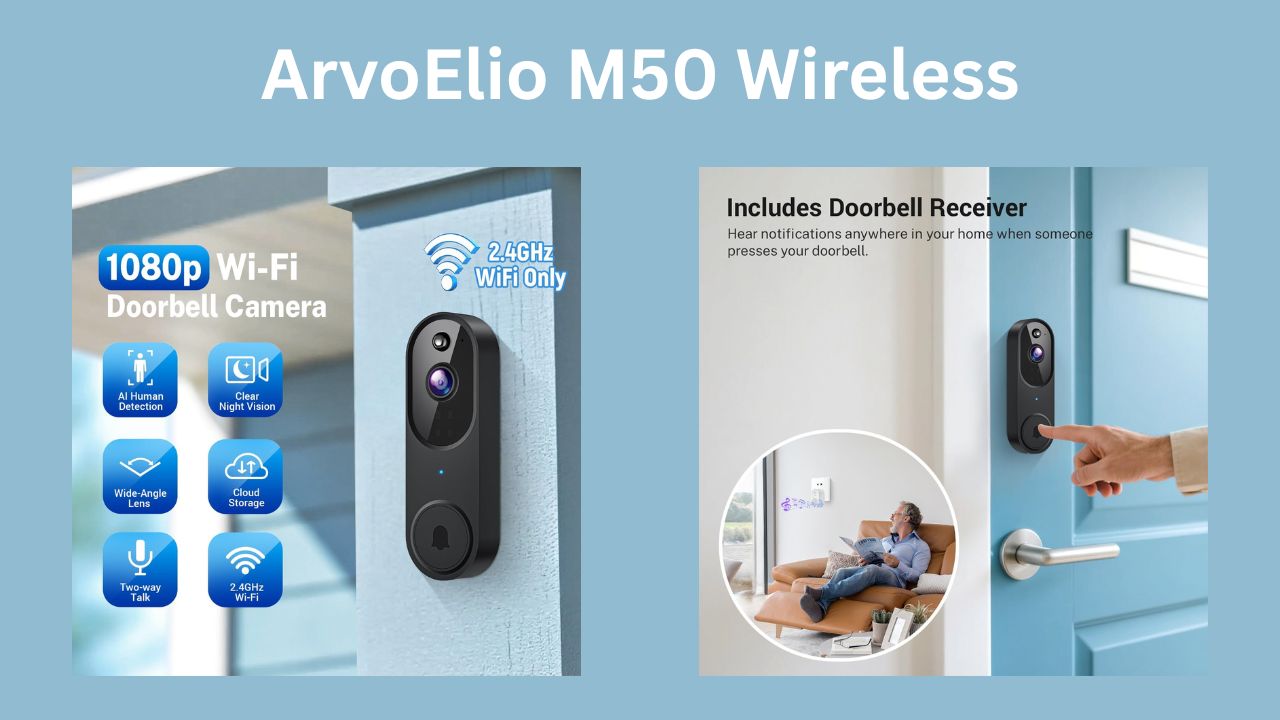
Review: ArvoElio M50. Best Wireless Wi‑Fi Video Doorbell Camera

2
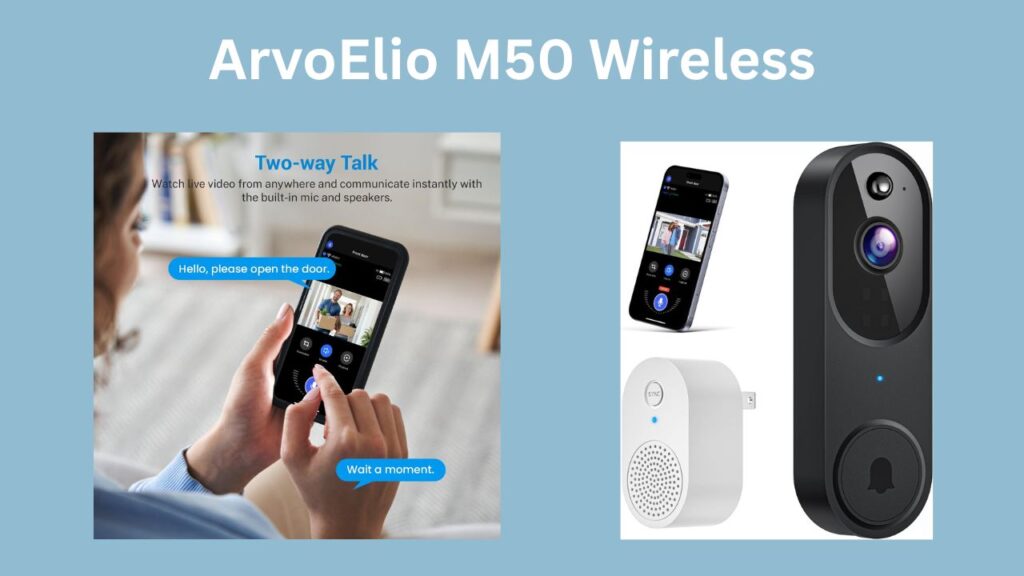
ArvoElio M50 wireless Wi-Fi video doorbell camera with HD lens and button, mounted outside a home entrance.

Introduction

The ArvoElio M50 is a battery‑powered, wireless Wi‑Fi video doorbell designed for outdoor security. Targeted at homeowners and renters seeking a relatively affordable way to monitor entryways, the M50 emphasizes ease of installation, core smart features, and durability. In this long, informational review I’ll cover design and build, key features (including AI motion detection and two‑way audio), setup and connectivity, performance (day/night), storage options, battery life and maintenance, pros and cons, typical use cases, and current pricing trends on Amazon—plus why many U.S. buyers find devices like this attractive.


amazon

Quick Product Snapshot

  • Brand: ArvoElio
  • Model: M50
  • Recommended Use: Outdoor Security
  • Connectivity: Wireless, 2.4GHz Wi‑Fi only
  • Power: Battery powered
  • Special Feature: Two‑way audio
  • Key Capabilities: AI motion detection, two‑way audio, night vision, weather resistance, cloud storage (sold separately)

Design and Build

The ArvoElio M50 adopts the familiar vertical doorbell form factor with a camera lens at the top, a central button for visitors, and an integrated microphone and speaker for two‑way communication. The housing is weather‑resistant, which means it’s built to repel rain, snow, and dust—suitable for year‑round outdoor mounting. The battery‑powered design removes the need for complex wiring, making installation accessible for renters and homeowners who prefer a DIY approach.

  • Materials: Robust plastic with weather sealing
  • Mounting: Surface mount with angled brackets typically included
  • Aesthetics: Neutral and unobtrusive; blends with most doorframes

Key Features Explained

Smart (AI) Motion Detection

The M50 advertises smart motion detection. This typically means the camera uses on‑device or cloud‑assisted algorithms to identify movement and send push notifications. Many implementations reduce false alerts by distinguishing human shapes or larger moving objects from harmless motion (like swaying branches or small animals). The result is more relevant notifications and fewer interruptions.

  • Benefits: Faster, more accurate alerts; fewer false alarms
  • Limitations: Effectiveness depends on firmware and sensitivity settings
ArvoElio M50 wireless Wi-Fi video doorbell camera with HD lens and button, mounted outside a home entrance.

Two‑Way Audio

Two‑way audio allows you to speak with visitors in real time using the built‑in microphone and speaker. This is useful for greeting guests, instructing delivery personnel, or checking on pets when you’re away.

  • Use cases: Talk to delivery drivers, deter intruders, comfort family members

Clear Night Vision

The M50 provides enhanced night vision so you can see clearly even in low light or complete darkness. Infrared LEDs or other low‑light imaging components allow the camera to produce usable monochrome images at night.

  • Performance: Expect clear black‑and‑white footage at typical doorstep distances; performance on very long ranges or in total darkness will vary with sensor quality

2.4GHz Wi‑Fi Only

This camera connects exclusively to 2.4GHz Wi‑Fi networks. While that limits compatibility with 5GHz networks, 2.4GHz typically offers longer range and better wall penetration—useful for outdoor devices.

  • Note: Ensure your home network has an active 2.4GHz SSID and reasonable signal strength where the doorbell will be mounted

Cloud Storage (Sold Separately)

Cloud storage keeps video footage secure and accessible from anywhere. ArvoElio offers cloud backup plans, but remember these plans are an additional cost.

  • Pros: Remote access, secure offsite archive, easy sharing
  • Cons: Ongoing subscription cost; check retention policy and pricing

Weather Resistance

Built to handle outdoor elements, the M50’s weather resistance rating (check specific IP rating with seller) helps protect internal electronics from rain, dust, and moderate snow.

  • Practical tip: Position under a small overhang for extended longevity, even if weather‑resistant

ArvoElio M50 wireless Wi-Fi video doorbell camera with HD lens and button, mounted outside a home entrance.
ArvoElio M50 wireless Wi-Fi video doorbell camera

Setup and Connectivity

Setup is straightforward: mount the doorbell, power it with the included battery, download the ArvoElio app, and follow pairing steps to connect to your 2.4GHz Wi‑Fi network. The app typically manages motion sensitivity, notification preferences, and two‑way audio sessions.

  • Compatibility: iOS and Android apps commonly supported
  • Troubleshooting: If pairing fails, check that you’re on a 2.4GHz SSID (not combined 2.4/5GHz), and ensure signal strength is adequate at the door location

Performance: Day and Night

  • Daytime video: Expect clear 1080p (or HD) video depending on the camera’s sensor; colors should appear natural at short distances typical of doorbell installations.
  • Night vision: Infrared or enhanced low‑light sensors should render clear grayscale footage of visitors and packages near the door.
  • Motion detection responsiveness: With AI optimization, alerts should be timely and more accurate than basic motion sensors. Placement and sensitivity settings impact performance.

Power and Battery Life

Being battery powered simplifies installation but introduces the need for periodic recharging or battery swaps. Battery life depends on factors such as motion activity, frequency of live view usage, and recording settings.

  • Estimated life: Varies widely—some users report weeks to a few months per charge under moderate usage. Heavy use with frequent motion events or high‑resolution continuous recording will reduce battery longevity.
  • Maintenance: Keep spare batteries or a charging schedule. Some users opt for solar panels or wired power if available to reduce maintenance.

Storage Options and Privacy

The M50 offers cloud storage (sold separately) for secure offsite backups. Check the vendor’s plans for storage duration, clip length, and pricing. Local storage may be possible on certain models via microSD (verify availability for the M50 specifically).

  • Privacy tips: Use strong unique passwords, enable two‑factor authentication if offered, and review cloud provider policies on data encryption and sharing.

Pros and Cons

  • Pros
    • Easy, wire‑free installation
    • AI motion detection reduces false alerts
    • Two‑way audio for real‑time conversation
    • Clear night vision for around‑the‑clock monitoring
    • Weather‑resistant for outdoor use
    • Affordable entry point to smart home security
  • Cons
    • 2.4GHz Wi‑Fi only — may be inconvenient for homes configured for 5GHz
    • Cloud storage requires a paid subscription for long‑term access
    • Battery maintenance required; no hardwired power by default
    • Actual AI accuracy and video quality can vary with firmware and sensor

Typical Users and Why U.S. Consumers Like This

U.S. buyers often favor devices like the ArvoElio M50 for several reasons:

  • DIY friendly: Battery power and wireless connectivity make it simple to install without an electrician.
  • Value‑oriented: Provides many of the features expected in pricier doorbells at a more accessible price point.
  • Security peace of mind: Push notifications, two‑way audio and night vision give homeowners reassurance and quick control when away.
  • Outdoor suitability: Weather resistance is important across many U.S. climates—from rainy Pacific Northwest to snowy Midwest winters.

For renters or homeowners on a budget who want core smart doorbell functions without a large investment, the M50 fits a common need in the U.S. market.


Pricing and Where to Buy (Amazon)

As of the time of this review, the ArvoElio M50 is available on Amazon. Prices on Amazon can fluctuate due to promotions, seller differences, and Amazon Prime deals. Typically, the M50 is positioned in the budget to mid‑range bracket for smart video doorbells.

  • Best practice: To find the best price, check Amazon for:
    • The official ArvoElio product listing (sold by ArvoElio or “Ships from and sold by Amazon” is often preferable)
    • Time‑limited deals (Lightning Deals, seasonal sales)
    • Bundles that include additional batteries or mounts
    • Sellers with high ratings and recent reviews

Because actual prices change frequently, I recommend visiting Amazon and searching “ArvoElio M50 doorbell” to view the current best price, available bundles, and Prime shipping options. Also check the “Used & new” listings and included accessories—sometimes a kit with an extra battery or a subscription trial is the better value.


Final Verdict

The ArvoElio M50 is a pragmatic choice for people seeking an affordable, easy‑to‑install wireless video doorbell with essential smart features: AI‑assisted motion detection, two‑way audio, reliable night vision, and cloud backup options. Its reliance on 2.4GHz Wi‑Fi and battery power are tradeoffs: they simplify installation and extend range but may require occasional battery maintenance and network setup adjustments.

If you want a cost‑effective, weather‑rated doorbell camera that does the job for everyday outdoor security, the M50 is worth considering—especially when you compare prices and deals available on Amazon. Be sure to confirm current pricing, check customer reviews for recent firmware improvements, and consider opting into a cloud plan if you want long‑term video retention.


Buying Checklist

  • Confirm your home has a 2.4GHz Wi‑Fi network available at the door location.
  • Decide whether you’re comfortable with periodic battery charging vs. hardwiring.
  • Compare Amazon listings for best price and seller reputation.
  • Review cloud plan terms if you need long‑term storage.
  • Read recent user reviews for updates on motion detection accuracy and firmware stability.

Blink Video Doorbell Review: A Comprehensive Look for U.S. Consumers

1
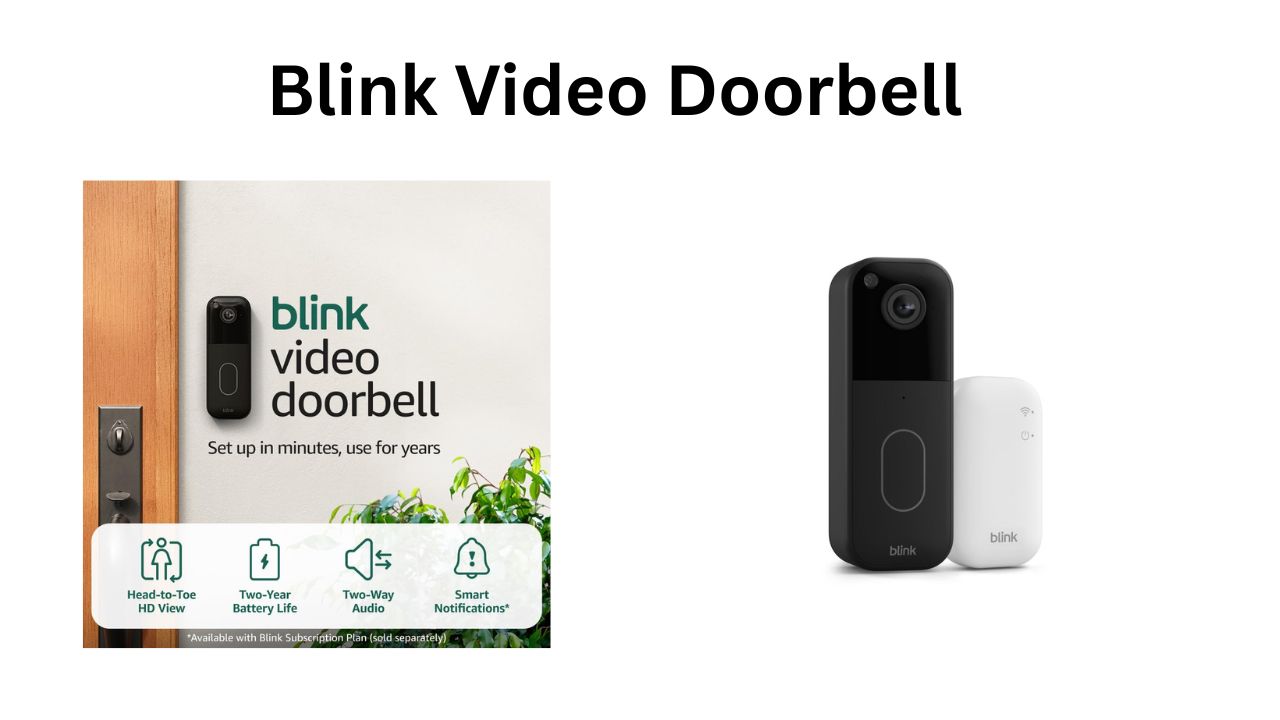
Blink Video Doorbell mounted next to front door, sleek black design, weather-resistant camera lens and button

Introduction

The smart home market has seen rapid growth in recent years, and video doorbells have become one of the most popular ways for U.S. homeowners to increase convenience and enhance home security. Among the many options available, the Blink Video Doorbell stands out for its affordability, ease of use, and integration with Amazon’s ecosystem. This essay provides a detailed, informational review of the Blink Video Doorbell—covering design, features, installation, performance, privacy considerations, and how it compares with competitors—while also discussing pricing and why many U.S. consumers find it appealing.

Product Overview

The Blink Video Doorbell is produced by Blink, a company owned by Amazon that focuses on wireless and battery-powered home security cameras. The product aims to deliver a balance of essential functionality—video capture, motion detection, two-way audio, and cloud or local storage—while keeping the cost profile lower than many premium video doorbells.

Key features typically include:

  • HD video (usually 1080p) with night vision.
  • Motion detection with configurable zones and sensitivity.
  • Two-way audio to speak with visitors.
  • Battery-powered operation (with optional wired setup in some models).
  • Integration with the Blink app and Amazon Alexa.
  • Cloud storage via Blink subscription and limited local storage options with the Blink Sync Module 2.

Design and Hardware

The Blink Video Doorbell presents a compact and unobtrusive design suitable for a variety of home exteriors. The unit is typically lightweight and constructed mainly from plastic, which helps keep costs down and reduces stress on mounting surfaces. The weather-resistant casing is designed for outdoor use, and the lens and infrared LEDs for night vision are positioned to provide a reasonably wide field of view.

Battery-powered operation is a major selling point, allowing installation without cutting into existing wiring. The trade-off is that battery life can vary substantially depending on usage patterns—frequent motion events and many live view sessions will drain batteries faster. Blink generally advertises long battery life under typical use, but real-world performance depends on individual household activity.

Installation and Setup

One of the strongest advantages of the Blink Video Doorbell is its straightforward installation process. Typical installation steps include:

  • Mounting the bracket to the door frame or wall (with screws and anchors provided).
  • Attaching the video doorbell to the mount and inserting batteries.
  • Downloading and opening the Blink app.
  • Following in-app prompts to connect the doorbell to Wi‑Fi and add it to the user’s Blink account.

For U.S. consumers who prefer not to hardwire, the battery-only setup is appealing for renters or those who want a tool-free installation. For those who want continuous power or to connect the doorbell to an existing chime, Blink supports an optional wired connection on some models.

The Blink app itself is generally intuitive. It walks users through device onboarding, offers device settings for motion detection and schedules, and enables integration with Alexa so users can view the doorbell feed on Echo Show devices or control it with voice commands.

Video and Audio Performance

Video quality with Blink’s 1080p sensor is adequate for everyday use, allowing users to identify visitors and capture license plates at reasonable distances when lighting conditions are favorable. Night vision generally performs well in close to medium range; however, like other budget-friendly cameras, image clarity can diminish at greater distances or in complex lighting scenarios (e.g., direct backlighting).

Motion detection works reliably for basic use cases, though some users report occasional false positives from moving foliage or passing cars when the doorbell’s detection zones or sensitivity aren’t optimized. Fortunately, the Blink app allows users to tweak sensitivity and set activity schedules to reduce nuisance alerts.

Two-way audio provides clear enough communication for most doorstep interactions. Audio lag is generally minimal on a good Wi‑Fi connection, but in environments with weak network signals or heavy network traffic, users may notice delays or occasional audio clipping.

Storage, Subscriptions, and Privacy

Storage and how video is retained are important considerations when choosing a video doorbell. Blink offers cloud storage plans through a relatively low-cost subscription for video clip storage and retrieval. The Blink Subscription Plan stores motion clips in the cloud for a configurable retention period. For users preferring local storage, the Blink Sync Module 2 adds a USB port for local video storage on a USB drive—though this requires purchasing additional Blink hardware.

Subscription considerations:

  • Blink’s subscription tends to be priced competitively versus some rival services, which makes ongoing costs more manageable.
  • Some basic functionality (like short-term local clip storage or limited trial periods) may be available without a subscription, but ongoing access to historical clips typically requires signing up for a plan.

Privacy considerations include data handling by Blink/Amazon and how recorded video is accessed. Blink devices transmit footage to Blink servers for cloud storage unless local storage is used. The company offers standard privacy controls and encryption, but consumers should be comfortable with the idea of cloud-managed footage tied to an Amazon-owned ecosystem.

Integration and Smart Home Compatibility

A major strength of the Blink Video Doorbell is smooth integration with Amazon Alexa. U.S. users in particular often favor Alexa-compatible devices; with Blink doorbells, you can:

  • View live feeds on Echo Show and Fire TV devices.
  • Receive announcements from Alexa-enabled devices when a visitor rings the doorbell.
  • Use voice commands to show the camera feed on supported displays.

Blink’s compatibility with other smart home ecosystems (e.g., Google Assistant, Apple HomeKit) is limited, and this can be a downside for users invested in non-Amazon ecosystems. For households already centered around Amazon and Alexa, Blink’s integration is a compelling advantage.

Reliability and Real-World Usage

Many U.S. users appreciate Blink’s plug-and-play simplicity, long battery life under typical usage, and the overall value proposition. The device is well-suited to:

  • Renters or homeowners who want an easy, low-commitment installation.
  • Second homes or vacation properties where weather-resistant, battery-powered cameras are desirable.
  • Budget-conscious consumers who prioritize essential features over premium extras.

Common real-world caveats:

  • Battery drain accelerates with frequent activity; heavy usage may require recharging or replacing batteries more often than advertised.
  • Wi‑Fi coverage at the installation point is crucial—poor signal strength degrades live view responsiveness and increases missed events.
  • Some advanced features found in higher-end doorbells—such as higher-resolution video, advanced person detection, or bundled local storage—may be absent or less sophisticated.

Pricing and Availability (Including Amazon)

One of Blink’s most appealing attributes is its price point. Blink Video Doorbells are typically positioned in the lower to mid-price range for video doorbells. Because Blink is part of the Amazon family, the product is commonly sold on Amazon, where pricing can fluctuate due to promotions, seasonal sales, and Amazon-exclusive discounts. In the U.S., Blink devices frequently appear in Amazon Lightning Deals, Prime Day offers, Black Friday discounts, and other temporary sales, making them particularly attractive during promotional periods.

While exact prices change, U.S. consumers can generally expect the Blink Video Doorbell to be less expensive than many premium models from competitors. For buyers seeking the best price:

  • Check Amazon regularly, especially during large sales events (Prime Day, Black Friday/Cyber Monday).
  • Compare prices of new vs. refurbished units offered on Amazon’s storefront—refurbished units often carry significant savings with acceptable warranty terms.
  • Look for bundled deals that include the Sync Module or additional Blink cameras for a package discount.

Because price varies over time, I recommend checking the Blink Video Doorbell product page on Amazon for the current best price and any limited-time promotions. Amazon’s product listings also show customer reviews and Q&A, which can be useful when evaluating recent firmware updates or user experiences that affect real-world performance.

Why U.S. Consumers Like Blink

Several factors explain the popularity of Blink Video Doorbells among U.S. shoppers:

  • Affordability: The doorbell’s competitive price point makes it accessible to a broad segment of the market seeking home security without a high upfront investment.
  • Simplicity: Easy installation and a straightforward app onboarding experience reduce barriers for users who are less technically inclined.
  • Battery operation: The ability to operate without wiring appeals to renters and homeowners who want a low-intrusion setup.
  • Amazon/Alexa integration: Seamless compatibility with Alexa devices and the Amazon ecosystem is particularly valuable in the U.S., where Alexa has broad adoption.
  • Brand trust and availability: Being part of Amazon gives Blink widespread availability on Amazon.com and reliable customer support channels, reinforcing purchase confidence.

Comparison with Competitors

When compared to competitors like Ring, Google Nest Doorbell, and Arlo, Blink typically wins on price and battery life convenience, but may lag in advanced AI-driven features and higher-resolution imaging offered by top-tier models. For example:

  • Ring offers a wide feature set and ecosystem breadth, but pricing and subscription terms can be higher.
  • Google Nest Doorbell often provides more advanced person, package, and face recognition capabilities (depending on subscription) and deep Google Home integration.
  • Arlo models frequently deliver high-end imaging and premium features, but at a higher cost.

For many U.S. consumers, Blink hits a sweet spot between cost, functionality, and ease of use.

Pros and Cons — Quick Summary

  • Pros:
    • Affordable and competitively priced.
    • Easy, mostly tool-free installation.
    • Battery-powered option for flexible placement.
    • Good Alexa integration and availability on Amazon.
    • Decent video quality for everyday monitoring.
  • Cons:
    • Fewer advanced features than premium competitors.
    • Potential for accelerated battery drain under heavy usage.
    • Cloud storage requires subscription for full feature access.
    • Limited support outside the Amazon/Alexa ecosystem.

Conclusion

The Blink Video Doorbell is a sensible choice for U.S. consumers who want an affordable, easy-to-install, and Amazon-integrated video doorbell. It provides the essential features most homeowners and renters need—solid 1080p video, night vision, motion detection, and two-way audio—without the high price tag of premium models. Its smooth integration with Alexa and frequent Amazon promotions make it particularly attractive in the U.S. market.

For buyers who require cutting-edge analytics, maximum image fidelity, or cross-platform smart home support (e.g., Apple HomeKit), higher-end doorbells from other brands may be a better fit. But for budget-conscious shoppers and Amazon-centric households, Blink offers a compelling mix of value, convenience, and reliability.

AI Smart Glasses: Revolutionizing the Way You See

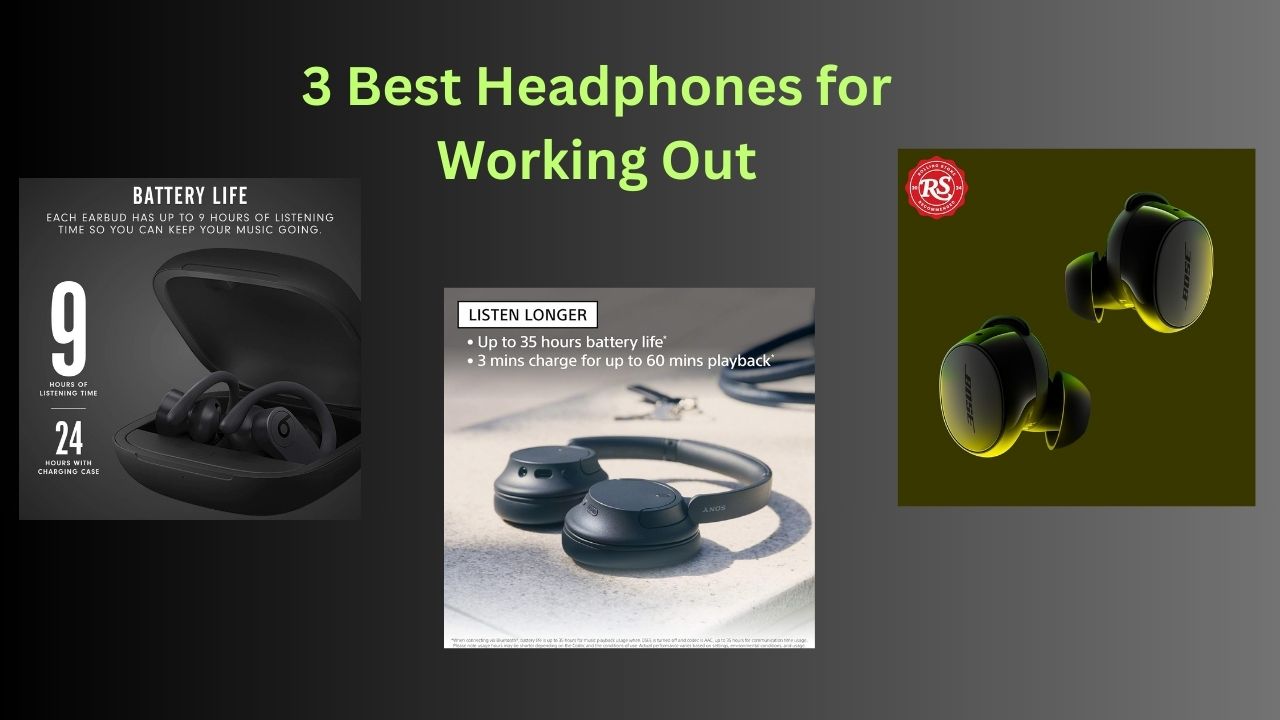
3 Best Headphones for Working Out “Detailed Guide 2025

Beats Studio3 Wireless Noise Cancelling Headphones Review

MacBook Pro 16‑inch Review (2025) — In‑Depth Analysis

1
Apple MacBook Pro 16-inch laptop with Retina display, powerful performance, and sleek aluminum design.

1. Introduction: Why the MacBook Pro 16‑inch Stands Out

The MacBook Pro 16‑inch continues to be Apple’s flagship laptop offering, aimed squarely at professional users who need high performance, a large and color‑accurate display, and long battery life in a portable package. Apple designed the 16‑inch model to bridge the gap between desktop replacement power and mobile convenience, integrating the company’s custom silicon, premium build materials, and macOS optimizations.

  • What makes the MacBook Pro 16‑inch Apple’s flagship laptop?
    The combination of the largest available macOS laptop display, highest‑tier chips (M3 Pro and M3 Max variants in the 2025 lineup), expanded thermal capacity, and a focus on pro workflows (video editing, 3D rendering, software development) positions the 16‑inch model as Apple’s showcase device. It offers more GPU cores, more unified memory, larger battery, and better sustained performance than the smaller models.
  • Who should consider buying the MacBook Pro 16‑inch?
    Professionals and creators who need raw compute (multi‑core CPU and high‑core GPU workloads), large color‑accurate screens (photo/video editors, colorists, motion designers), and long battery life. Also useful for developers compiling large codebases and for audio engineers who want many simultaneous tracks. Casual users and buyers prioritizing ultra‑light portability should generally look to smaller models.
Apple MacBook Pro 16-inch laptop with Retina display, powerful performance, and sleek aluminum design.
Buy on amazon

2. Design and Build Quality

Apple continues its consistent design language: aluminum unibody, slim bezels, and precise machining.

  • How premium is the MacBook Pro 16‑inch design?
    Very premium. The chassis uses precision‑milled aluminum, a refined hinge, and a glass trackpad. The finish, fit and finish, and tactile experience match Apple’s high standards. The keyboard, speaker grilles, and thermal vents are integrated cleanly. The design balances aesthetics and thermals well.
  • Is the 16‑inch size too big for portability?
    It depends on the user’s priorities. The 16‑inch is larger than 13–14‑inch models, so it’s bulkier in smaller backpacks and tighter workspaces. For users who travel frequently by air and value ultra‑light carry, the 14‑inch or a MacBook Air may be better. For those who prioritize screen real estate and power while remaining reasonably portable, the 16‑inch hits a strong balance.
  • How heavy is it compared to other laptops?
    The 16‑inch weighs more than the 14‑inch MacBook Pro and most thin ultrabooks, though Apple keeps it surprisingly light for the class. Compared to large Windows laptops (17‑inch desktop replacements or gaming rigs), the 16‑inch is still competitive and usually lighter. Expect a noticeable difference when switching from a 13‑inch laptop, but many professionals accept the modest weight increase for the benefits it brings.

3. Display Quality

Apple’s 16‑inch panels have been headline features. In 2025 the 16‑inch Liquid Retina XDR remains a flagship display.

  • How good is the 16‑inch Liquid Retina XDR display?
    Excellent. It delivers high peak brightness for HDR content, deep blacks via local dimming, wide P3 color gamut, and excellent color accuracy out of the box. Contrast and dynamic range are strong for HDR video and photo work. For reference, professionals will value the consistent calibration, P3 coverage, and high brightness for reviewing HDR timelines.
  • Does ProMotion (120Hz) make a difference on a larger screen?
    Yes. ProMotion improves perceived smoothness for scrolling, UI animations, and compatible applications. For creative work, a variable refresh rate can make timeline scrubbing and interactions feel more responsive. The benefit is less about raw productivity numbers and more about comfort and fluidity during long editing or design sessions.
  • Is the 16‑inch display the best for video editors and designers?
    It’s among the best laptop displays available. For color‑critical work, the 16‑inch is often preferred over smaller laptops due to its larger canvas and XDR capabilities. However, some professionals still prefer external reference monitors for final grading and client review because desktop color‑grading monitors can offer higher certified color accuracy, larger gamut coverage, and hardware calibration workflows.

4. Performance and Hardware

The 2025 16‑inch MacBook Pro equipped with M3 Pro or M3 Max represents Apple’s most powerful mobile silicon offerings.

  • How powerful is the MacBook Pro 16‑inch with M3 Pro and M3 Max?
    Extremely powerful for a laptop. The M3 Pro provides strong multi‑core CPU performance and solid GPU throughput for typical professional tasks. The M3 Max pushes this further with substantially more GPU cores, higher memory bandwidth, and support for larger unified memory configurations. For many workloads, the 16‑inch M3 Max approaches or matches the performance of entry‑level desktop workstations, particularly in optimized apps that leverage Apple silicon and Metal acceleration.
  • Can it handle 4K/8K video editing, 3D rendering, and coding?
    Yes. The M3 Max model is particularly well‑suited for heavy 4K and even 8K editing, complex timelines with many layers, and real‑time color grading in Final Cut Pro and other optimized apps. 3D rendering workflows benefit from the high GPU core counts and memory bandwidth, though extremely large scene renders may still find benefit from higher‑end desktop GPUs or network rendering. For coding, the machine compiles large projects quickly and can handle virtualization, container workloads, and local servers well.
  • Is the MacBook Pro 16‑inch overkill for regular users?
    For typical web browsing, office apps, streaming, and light photo editing, yes—the power of M3 Pro/Max is more than necessary. Regular users will gain little practical benefit from the top configurations and can save money with smaller MacBooks or MacBook Air.

5. Battery Life and Charging

Battery life is a major strength of Apple silicon and the larger 16‑inch chassis allows for a larger battery.

  • How long does the battery last on the MacBook Pro 16‑inch?
    Real‑world battery life varies by configuration and workload. For light tasks (web browsing, document editing, video playback), you can expect long runtimes—often exceeding a full workday and sometimes approaching 15+ hours in ideal conditions. Under heavy sustained loads (rendering, encoding), battery life drops accordingly, but sustained performance on battery tends to be good compared to Intel‑based predecessors.
  • Does it support fast charging with MagSafe?
    Yes. The modern MacBook Pro 16‑inch supports MagSafe charging and Apple has offered higher‑wattage power adapters which enable relatively fast charging. MagSafe ensures a secure magnetic connection and allows charging while still providing USB‑C/Thunderbolt ports for accessories.
  • Is the battery performance better than the 14‑inch model?
    Generally yes, because the 16‑inch has a larger battery capacity. Real‑world performance depends on the chip and configuration; a heavily specced M3 Max with many GPU cores may consume more power under load than a lower‑spec 14‑inch, but for typical mixed usage the 16‑inch often yields longer runtimes due to its larger battery.

6. Keyboard, Trackpad, and Ports

Apple’s input devices and I/O have stabilized around a pro‑oriented set.

  • Is the typing experience comfortable on the 16‑inch?
    Yes. The full‑size keyboard layout is comfortable for long typing sessions; key travel and stability are refined compared to older butterfly mechanisms. The larger deck provides slightly more spacing and palm rest area than smaller models.
  • Does it have enough ports for professionals?
    Apple has returned to a more pro‑friendly port selection: multiple Thunderbolt/USB‑C ports, an HDMI port, an SD card slot, and MagSafe charging in recent iterations. This selection meets the needs of many photographers (SD card), videographers (HDMI), and creative professionals without relying exclusively on dongles.
  • Is MagSafe charging more convenient than USB‑C?
    For most users, yes. MagSafe’s magnetic connection reduces the risk of accidental drops when a cable is tripped, and leaves Thunderbolt ports free for peripherals. It’s a convenience and safety improvement; however, USB‑C remains ubiquitous for cross‑platform peripherals and power delivery.

7. Audio and Camera Quality

Audio and camera improvements have been consistent across MacBook Pro generations.

  • How good are the speakers on the MacBook Pro 16‑inch?
    Very good. The 16‑inch offers a wide stereo image, strong bass for a laptop, and high peak loudness without distortion. Dolby Atmos support and spatial audio features improve the immersive experience for multimedia creators and consumers.
  • Does the larger body improve sound quality?
    In general, yes. The larger chassis allows for bigger speaker enclosures and better resonance control, which improves low‑end response and stereo separation compared to smaller laptops.
  • Is the 1080p FaceTime HD camera sharp enough for professionals?
    A 1080p camera is adequate for most video conferencing needs and provides respectable clarity. For high‑end content creation or broadcast‑quality streams, professionals will often use external cameras. The built‑in camera is more than sufficient for client calls, interviews, and remote meetings.

8. macOS Experience

macOS is tightly integrated with Apple silicon and optimized for the hardware.

  • How does macOS run on the MacBook Pro 16‑inch?
    Smoothly and efficiently. macOS benefits from the unified memory architecture of Apple silicon, fast SSDs, and hardware accelerators. Apps optimized for Apple silicon (Final Cut Pro, Logic Pro, Xcode) run exceptionally well. System responsiveness, wake times, and battery management are strengths of the platform.
  • Does the larger display enhance multitasking?
    Yes. The 16‑inch provides more screen real estate for split‑view workflows, multiple windows, and complex timelines. Developers, designers, and editors can view timelines, asset browsers, and preview windows simultaneously with less need for external displays.
  • Is macOS better than Windows for productivity and creativity?
    “Better” depends on the user and workflow. macOS offers a cohesive ecosystem, optimized creative apps, and excellent integration with other Apple devices. Many creatives prefer macOS for software like Final Cut Pro and Logic Pro. Windows still excels for broader hardware choices, gaming, and certain engineering or specialized software that is Windows‑only. For those whose primary apps are macOS native or have Apple‑optimized versions, macOS often provides a smoother experience.
Apple MacBook Pro 16-inch laptop with Retina display, powerful performance, and sleek aluminum design.
https://amzn.to/46puSkI

9. Pricing and Value for Money

Pricing varies by region and configuration; the 16‑inch is a premium product.

  • How much does the MacBook Pro 16‑inch cost in 2025?
    Exact pricing changes by configuration and region. Historically, the base 16‑inch MacBook Pro starts at a premium price point, and adding higher tier M3 Pro/Max chips, increased unified memory, and larger SSDs significantly raises the total. Buyers should compare configurations carefully against their real workload needs. (Note: for the latest prices and best deals, check authorized Apple resellers and major retailers like Amazon.)
  • Is the base model good enough, or should you upgrade?
    The base model is attractive for many professionals but may be limiting for heavy GPU or memory‑intensive tasks. Upgrading unified memory and GPU cores benefits video editors, 3D artists, and developers working on large datasets. If budgets allow and workloads demand, upgrading CPU/GPU and memory provides tangible returns in performance and longevity.
  • Is the 16‑inch worth it compared to the 14‑inch?
    If you need the larger screen, longer battery, and higher sustained performance, yes. The 14‑inch is more portable and often offers similar core architecture at lower price points, making it a better fit for many. The decision comes down to screen size preference, thermal headroom, and whether the added performance and battery life justify the premium.

10. Pros and Cons

Pros ✅

  • Stunning 16‑inch XDR display: Excellent brightness, contrast, and color accuracy.
  • Excellent speakers and audio quality: Wide stereo image and good low end for a laptop.
  • M3 Max offers desktop‑class performance: Great for professional workloads.
  • Long battery life: Especially for light to moderate tasks.

Cons ❌

  • Expensive: High cost for top configurations.
  • Heavier and less portable: Less convenient for ultra‑light travelers.
  • Overpowered for casual users: Many buyers won’t use the full potential.

11. Best Alternatives to MacBook Pro 16‑inch

  • Dell XPS 17 — Windows alternative with a large 17‑inch display, powerful Intel/AMD CPU options, and NVIDIA GPUs; strong for those who need Windows workflows.
  • Razer Blade 16 — A high‑performance Windows laptop aimed at gaming and creator markets with powerful discrete GPUs and compact design.
  • ASUS ROG Zephyrus Duo — Innovative dual‑screen laptops for creators and power users who want extra screen real estate in a single chassis.
  • Is the MacBook Pro 16‑inch still the best for creators in 2025?
    For creators deeply invested in Apple’s ecosystem and whose software is optimized for Apple silicon (Final Cut Pro, Logic Pro, many Adobe apps with native Apple silicon builds), the 16‑inch MacBook Pro remains among the top choices. For creators who rely on Windows‑only tools or need specific NVIDIA GPU features, a high‑end Windows laptop may be more appropriate.

12. Final Verdict

  • Who should buy the MacBook Pro 16‑inch?
    Professionals who need sustained high performance, a large color‑accurate display, and long battery life: video editors, motion designers, 3D artists, audio engineers, and developers with heavy workloads. Also those who prefer macOS and the Apple ecosystem.
  • Is it the ultimate laptop for professionals?
    It is one of the most complete and polished laptops for professional content creators and power users in 2025. It balances performance, battery life, display quality, and build quality better than most competitors for macOS‑centric workflows.
  • Is it future‑proof for the next 5 years?
    For many professionals, yes—especially if you opt for a higher‑memory M3 Max configuration. Apple silicon’s performance and efficiency, combined with higher unified memory and SSD capacity, should extend the useful life. However, absolute future‑proofing depends on evolving software requirements and the possibility of new hardware transitions; heavy users who need absolute top performance years from now may still consider periodic upgrades.

MacBook Pro 14-inch Review

2
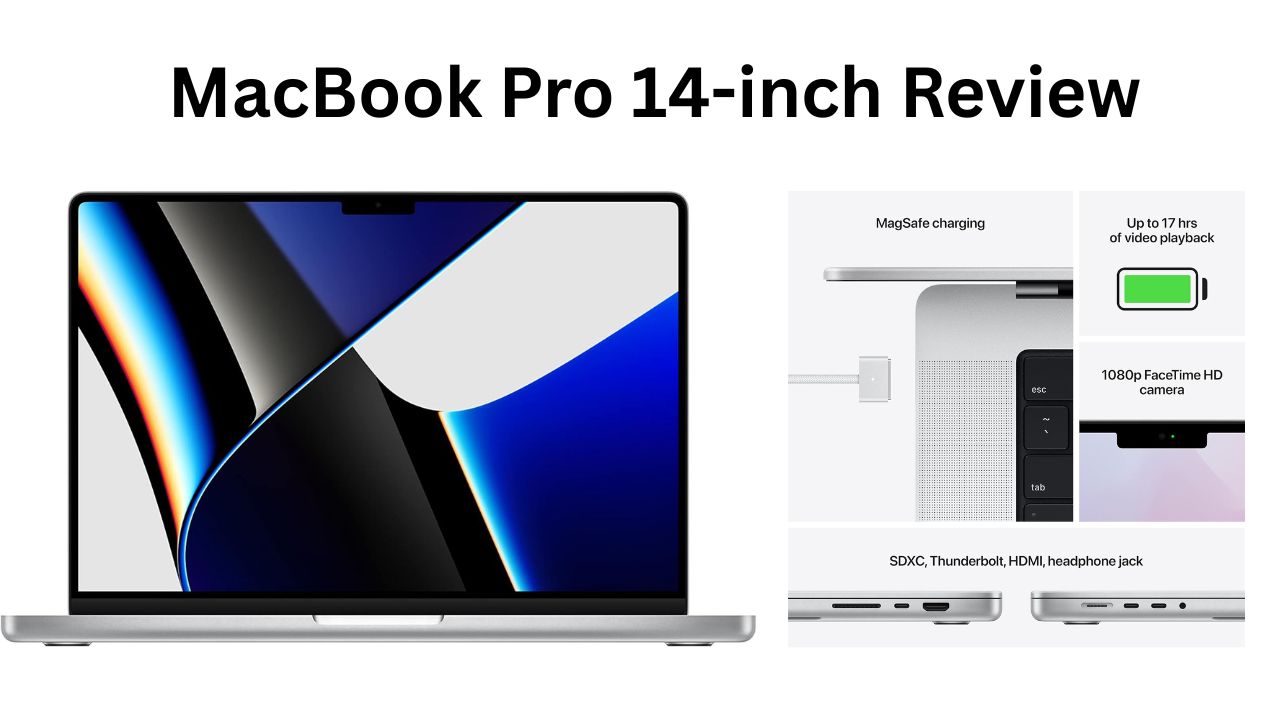
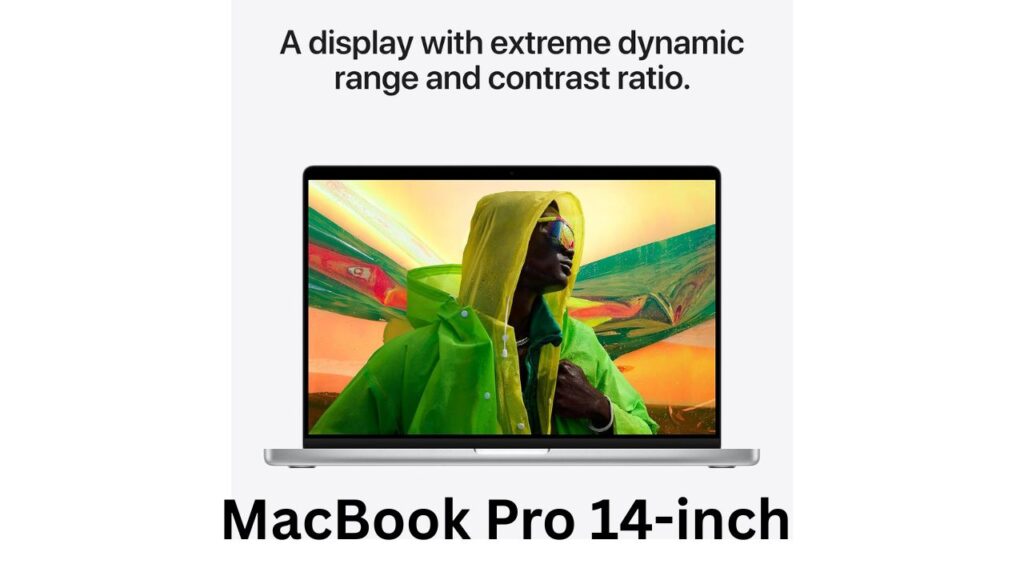
Apple MacBook Pro 14-inch with Liquid Retina XDR display and sleek aluminum design

Introduction: Why Choose the MacBook Pro 14-inch?

The MacBook Pro 14-inch occupies a unique position in Apple’s laptop lineup: it’s positioned as a high-performance, portable workhorse that sits between the ultraportable MacBook Air line and the larger, slightly more powerful 16-inch MacBook Pro. For buyers who want serious performance for creative or professional work but still value a compact footprint, the 14-inch model often represents the best compromise.

  • Who should consider it? Students with demanding workloads, professionals (developers, designers, video editors), and creators (photographers, musicians, content creators) who need sustained performance and a high-quality display but prefer something more portable than the 16-inch model.
  • What makes it different from other MacBooks? The 14-inch model combines Apple’s higher-tier silicon (M-series Pro/Max chips), a mini-LED Liquid Retina XDR display with ProMotion, a broad port selection including MagSafe, and sustained performance through an active cooling system — features that set it apart from the fanless MacBook Air and entry-level MacBook Pros.

1. Design and Build Quality

  • How premium is the design? The MacBook Pro 14-inch continues Apple’s tradition of premium aluminum unibody construction. The build feels robust and refined: tight tolerances, matte display bezels, and a hinge that balances screen motion smoothly. The industrial design emphasizes durability and minimalism.
  • Is the 14-inch size comfortable for daily use? Yes. The 14-inch footprint hits a sweet spot: it provides more screen real estate than 13.3-inch laptops while remaining compact enough for daily commuting and café work. The added vertical screen space—thanks to slimmer bezels and support for taller resolutions—makes productivity tasks more comfortable.
  • How heavy and portable is it? Typically, the 14-inch Pro weighs between roughly 3.5 to 3.7 pounds (1.6–1.7 kg) depending on configuration. That’s slightly heavier than ultraportables but still very portable for a performance laptop. The size and weight make it practical for travel or daily carry without feeling burdensome.

2. Display Quality

  • Does it have the best display for content creators? It’s among the best laptop displays available. The 14-inch Liquid Retina XDR is tailored to professional workflows where color accuracy, high dynamic range, and brightness matter.
  • How good is the Liquid Retina XDR display? The mini-LED panel delivers excellent peak brightness for HDR content, deep blacks, excellent contrast, and wide DCI-P3 color coverage. This combination benefits photo and video editors, and anyone working with HDR media.
  • Is the 120Hz ProMotion feature worth it? For general use, ProMotion (adaptive refresh rate up to 120Hz) makes scrolling, window movement, and UI animations feel exceptionally fluid. For creative work like drawing with a stylus (on side devices or using supported apps) and general system responsiveness, it’s a tangible quality-of-life improvement. For pure battery savings, the adaptive nature also helps—refresh rate drops when static content is displayed.

3. Performance and Hardware

  • Which chip is better: M3 Pro vs. M3 Max in the 14-inch MacBook Pro?
    • M3 Pro: Excellent balance of performance and efficiency. Ideal for most professionals: software development, moderate to heavy photo/video editing, multi-track music production, and multitasking.
    • M3 Max: Significantly more GPU cores, memory bandwidth, and higher unified memory configurations. Best for those running heavy GPU tasks: high-res video color grading, 3D rendering, complex simulation, or large-scale machine learning workloads.
    • Choice depends on workload: choose M3 Pro for strong all-around performance and better price/efficiency; choose M3 Max if you routinely hit GPU or memory bottlenecks.
  • How well does it handle video editing, coding, or music production? Very well. The M-series chips offer fast video encoding/decoding, multiple real-time streams in Final Cut Pro or Premiere (performance varies by codec), lightning-fast compile times for code projects, and low-latency audio processing for large track counts and plugin chains. Thermal headroom in the 14-inch allows sustained loads longer than fanless laptops.
  • Can it replace a desktop PC? For many professionals, yes. The 14-inch Pro can replace a desktop for software development, photo/video editing, and audio production—especially combined with external displays and peripherals. Power users who need maximum GPU/compute or who require internal expandability (e.g., multi-drive RAID, PCIe cards) might still prefer a desktop workstation.
https://amzn.to/41Z7SYu

4. Battery Life and Charging

  • How long does the battery last in real use? Real-world battery life varies by configuration and workload. Light tasks (web browsing, document editing) often yield 10+ hours; heavier tasks (video export, sustained compilation) will drain the battery more rapidly, often in a few hours. Apple’s M-series efficiency typically yields better endurance than comparable Intel-based pros.
  • Is fast charging available? Yes. Apple supports fast charging on supported configurations when purchased with the appropriate higher-wattage power adapter (e.g., 67W, 96W, or higher depending on the chip and options). MagSafe charging usually supports faster top-ups than some low-watt USB-C adapters.
  • Is the battery good enough for travel or work on the go? For many users, yes. The combination of efficient silicon and a large battery makes it a reliable travel companion. Heavy creative workloads will consume battery faster, so for extended sessions away from power you may want to bring the charger.

5. Keyboard, Trackpad, and Ports

  • How comfortable is the typing experience? Apple’s Magic Keyboard on the Pro models is widely regarded as comfortable, with good key travel and stability. The larger design of the 14-inch chassis yields a full-size layout with function keys (or Touch ID and function row depending on model/year).
  • Does it have enough ports for professionals? The 14-inch Pro includes a more generous port selection than the MacBook Air: typically MagSafe charging, multiple Thunderbolt/USB-C ports, HDMI, and an SD card slot. This reduces the need for dongles and is highly appreciated by photographers and videographers. Port selection is generally sufficient for most professionals.
  • Is MagSafe charging better than USB-C? MagSafe offers a dedicated charging connection that frees up USB-C ports and includes a magnetic safety feature to prevent the laptop from being pulled off surfaces by the cable. It’s convenient and practical; USB-C charging remains versatile for external hubs and power delivery.

6. Audio and Camera Quality

  • How good are the speakers? MacBook Pro 14-inch typically features a high-fidelity six-speaker system with force-cancelling woofers and wide dynamic range. Speakers are among the best in laptops, delivering clear mids, strong bass presence for a laptop, and good spatial audio support—useful for video editing and media consumption.
  • Is the 1080p webcam good enough for video calls? A 1080p FaceTime HD camera is a solid improvement over older 720p options. It provides clear, detailed video for conferencing, and combined with the machine’s processing and image signal pipeline, achieves better dynamic range and color than many laptop webcams. For professional streams or studio-quality content, external cameras still offer superior control and quality.

7. Software Experience (macOS)

  • How does macOS run on the MacBook Pro 14-inch? Exceptionally smoothly. Apple’s control over both hardware and software yields tight optimization: fast wake, efficient power management, and optimized drivers for the silicon. Apps that are updated for Apple silicon often show significant performance and battery-efficiency gains.
  • Does it support iPhone and iPad apps? On Apple silicon, macOS can run iOS and iPadOS apps where developers allow it. However, the experience varies because many apps are touch-first; desktop-focused alternatives or native macOS versions generally provide a better experience.
  • Is it better than Windows laptops for productivity? “Better” depends on workflow. macOS excels in developer environments, creative applications (Final Cut Pro, Logic Pro), and integration across Apple devices (Handoff, AirDrop, Universal Clipboard). Windows machines offer broader software compatibility (certain enterprise or specialized apps), and can be more configurable/upgradable. For many creative professionals and developers invested in the Apple ecosystem, macOS + Apple silicon is the preferred productivity environment.

8. Pricing and Value for Money

  • Is it worth its high price? For users who need its unique blend of performance, display quality, port selection, and battery life, it’s generally worth the premium. The 14-inch Pro is priced as a professional tool; casual users who won’t use the advanced capabilities may find the MacBook Air or lower-spec laptops to be better value.
  • Should you buy the base model or upgrade? For many users, the base M-series Pro model (with modest RAM and SSD) will be sufficient. Consider upgrading memory and storage if your workflows require:
    • Large video projects (higher SSD and more RAM)
    • Heavy multitasking or VMs (more RAM)
    • Long-term future-proofing (higher unified memory) Upgrading the CPU/GPU to M3 Max should be reserved for users with consistent, GPU-bound workloads.
  • Is it a good investment compared to the 16-inch model? The 16-inch offers a larger display and potentially higher thermal headroom for sustained heavy loads—beneficial for top-end configurations. If portability is critical, the 14-inch is the better pick. For maximum performance and screen real estate, choose the 16-inch; for a more portable pro machine, choose the 14-inch.

9. Pros and Cons

  • Pros
    • Excellent performance-per-watt thanks to Apple silicon (M3 Pro/Max)
    • Outstanding mini-LED Liquid Retina XDR display with ProMotion
    • Solid battery life for its class
    • Premium build and design
    • Great port selection including MagSafe and SD slot
    • Very good speakers and improved webcam
    • macOS optimization and ecosystem benefits
  • Cons
    • High starting price relative to mainstream laptops
    • Limited to Apple ecosystem and macOS app compatibility (some specialized Windows apps may need workarounds)
    • Some users may prefer the larger 16-inch for extreme workloads or bigger screen space
    • Upgrades can be expensive (RAM/SSD are non-user-upgradable and costly at purchase)
    • Under extremely sustained heavy loads, thermal throttling is possible—though less so than thinner fanless designs

10. Comparison with Alternatives

  • MacBook Pro 14-inch vs. MacBook Air M2
    • Choose MacBook Air M2 if: you prioritize thinness, weight, day-to-day battery life, and budget; your workloads are light (web, office apps, light photo editing).
    • Choose MacBook Pro 14-inch if: you need sustained performance, superior display, more ports, and better thermal management for creative or professional tasks.
  • MacBook Pro 14-inch vs. Windows laptops (Dell XPS, Razer Blade, ASUS ZenBook)
    • Dell XPS: Comparable in premium build and display quality; XPS offers Windows flexibility, often easier upgrade paths, and diverse port options. The MacBook Pro generally excels in battery efficiency and optimization with macOS and Apple silicon.
    • Razer Blade: Often targets gaming and GPU-heavy tasks; Razer typically offers discrete GPUs and Windows gaming ecosystem advantages. MacBook Pro beats Razer for battery life, noise levels, and macOS-optimized creative apps.
    • ASUS ZenBook: Typically more value-driven with a variety of configurations. ZenBooks can be strong choices for Windows users who want a balance of price and performance. MacBook Pro provides stronger integration with Apple services and a more cohesive hardware/software experience.

11. Final Verdict

  • Who should buy the MacBook Pro 14-inch?
    • Creators and professionals who need a portable machine with serious performance: video editors, photographers, developers, and music producers who value the Liquid Retina XDR display, robust I/O, and high sustained performance.
    • Power users who travel frequently and want a balance between portability and workstation-level performance.
  • Is it future-proof for the next 5 years?
    • Largely yes. Apple’s M-series silicon and macOS updates generally provide strong longevity and performance across several years. If you choose sufficient RAM and storage at purchase, the 14-inch Pro should remain capable and relevant for typical professional workloads for 4–6 years or more. However, as workloads evolve (e.g., heavier AI/ML tasks), top-end configurations (more RAM, M3 Max-level GPU) will age more gracefully.

12. Closing Notes on Buying and Price

  • Because I can’t fetch live internet prices here, check major retailers like Amazon, Apple’s online store, and authorized resellers for current deals and availability. Amazon often lists multiple sellers and configurations; search for discounts on prior-generation models or certified refurbished units if you’re price-sensitive.
  • When deciding configuration, prioritize enough unified memory and SSD capacity for your expected workloads—these are not user-upgradeable later.

AI Smart Glasses: Revolutionizing the Way You See

3
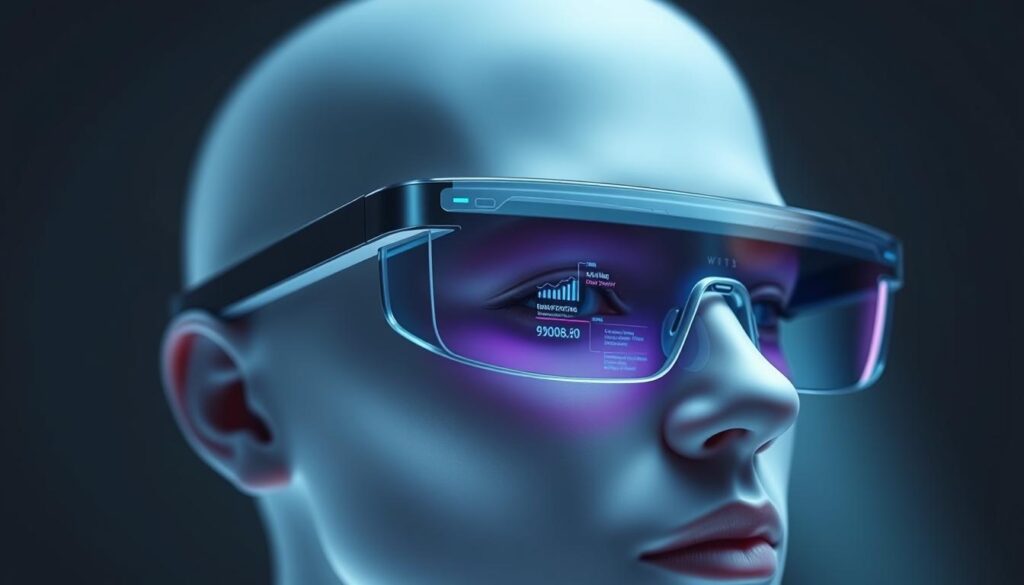
AI Smart Glasses with built-in camera, voice assistant, and augmented reality display in a sleek modern frame.

Imagine a world where your vision is not just corrected, but augmented with information and insights. This is what AI Smart Glasses promise. They mix AI technology with better vision.

These are not just smart eyewear. They are a big step forward in how we see and interact with the world. With AI, they make our experience more informed and fun.

Key Takeaways

  • AI Smart Glasses combine AI technology with vision correction.
  • They offer an augmented view of the world, making things better.
  • Smart eyewear is evolving beyond just fixing your eyesight.
  • These glasses are changing how we do daily things.
  • The AI technology makes our experience more interactive.

What Are AI Smart Glasses?

AI smart glasses are new eyewear that use artificial intelligence. They make our daily lives better in many ways. They mix wearable tech with AI’s power.

Definition and Purpose

AI smart glasses let you use your hands less. They give you easy access to info and let you capture moments. They also let you interact with your world in new ways.

They have AI technology inside. This tech helps them work well in different lights. They can even check your eye health and show info on the lenses.

The main goal of these smart glasses is to make your life better. They give you real-time data and insights. They are easy to use, whether for fun or work.

Key Features of AI Smart Glasses

AI smart glasses have cool features. Here are some:

  • Real-Time Vision Enhancement: They make your vision better. They can translate or recognize objects right away.
  • Health Monitoring: These glasses watch your health. They track your heart rate and blood pressure.
  • Augmented Reality Integration: They show digital info on the real world. This makes for a fun and learning experience.
  • Hands-Free Control: You can control them with your voice or gestures. This makes them very handy.

These features and more make AI smart glasses very useful. They can be used in many situations, from daily life to specific jobs.

How AI Technology Enhances Smart Glasses

AI-powered smart glasses change how we get info. They give us real-time data and cool AR experiences. This is thanks to AI’s advanced tech, making smart glasses more than just cool gadgets.

AI technology in smart glasses opens up new uses. It makes these devices key for daily life and work. AI tech makes smart glasses more interactive and fun to use.

Real-Time Data Processing

AI in smart glasses is great for quick data handling. This means users get info fast, which is super useful for things like finding the way or checking health.

For example, real-time data processing helps smart glasses show live traffic info. This helps people avoid traffic jams. It’s a big help for those who need to get places fast.

FeatureDescriptionBenefit
Real-Time NavigationProvides live traffic updates and directionsEfficient commuting
Health MonitoringTracks vital signs and health metricsImproved health management
Instant NotificationsDelivers real-time alerts and messagesEnhanced connectivity

Augmented Reality Integration

AI also brings augmented reality (AR) to smart glasses. AR adds digital info to the real world. This makes using smart glasses more fun and interactive.

For instance, AR glasses can show info about what’s around you. Like directions, cool spots, or even menus at restaurants. This is all thanks to AI algorithms that quickly process visual data.

As AI tech gets better, smart glasses will get even cooler. They’ll offer new ways to see and interact with our world. With AI, smart glasses are changing how we live and work.

Benefits of Using AI Smart Glasses

AI smart glasses are more than just cool gadgets. They make our lives easier and help us stay healthy.

Hands-Free Convenience

AI-powered glasses let you do things without touching your phone. You can look up info, snap photos, or change songs. This is great for people who are always moving or have trouble using their hands.

  • Easy access to information
  • Hands-free control over music and calls
  • Ability to capture photos or videos without holding a device

Enhanced Navigation and Directions

Tech glasses with AI help you find your way. They use GPS and maps to guide you. This means you’re less likely to get lost.

Google’s smart glasses are a good example. They give you directions step by step.

Health Monitoring Capabilities

AI-powered glasses can track your health. They watch your heart rate and how active you are. This gives you important health info.

“The integration of health monitoring features into wearable technology like smart glasses represents a significant step forward in preventive healthcare.”

These health features are super helpful for people with ongoing health issues. They let you keep an eye on your health all the time. This can help catch problems early.

Popular Brands and Models of AI Smart Glasses

AI technology is getting better, and smart glasses are too. Many brands now offer AI smart glasses with cool features. Let’s look at some popular ones.

Google Glass Enterprise Edition

Google Glass Enterprise Edition is well-known. It’s made for work, with hands-free operation and real-time data processing. It also has augmented reality integration. Companies use it to work better and faster.

Vuzix Blade

Vuzix Blade is another top choice. It has a see-through display for work and fun. It’s great for many jobs because of its advanced navigation and communication.

Snap Spectacles

Snap Spectacles are for fun, not just work. They have a built-in camera and Wi-Fi. You can share photos and videos easily. They’re a fun way to use AI smart glasses.

These are just a few examples of AI smart glasses out there. As tech gets better, we’ll see even more cool stuff.

AI Smart Glasses in Different Industries

AI smart glasses are changing many industries. They make work better and faster. These smart glasses are making a big difference in many fields.

Healthcare and Medical Applications

In healthcare, AI smart glasses help a lot. They help doctors during surgery and care for patients. Doctors can see important data and images without touching anything.

These glasses also let doctors look at patient records easily. This makes care better and faster.

Education and Training Tools

AI smart glasses are also changing education. They make learning fun and interactive. Students can try virtual labs and simulations.

These glasses help students learn better. Teachers can see how students are doing and adjust their lessons.

Retail and E-Commerce Innovations

In retail, AI smart glasses improve shopping. They let customers try on clothes virtually. This makes shopping better and cuts down on returns.

Staff can also use these glasses to know what customers want. This makes service better and more personal.

The Impact of AI Smart Glasses on Daily Life

AI smart glasses are more than just a gadget. They open up a new way to interact. They change how we talk and watch media.

Redefining Communication

AI smart glasses are changing how we talk to each other. They let us send messages, make calls, and share moments without touching a phone. This is great when using a phone is hard or not safe.

For example, while working out or driving, smart eyeglasses keep us connected without getting in the way. They also offer real-time translation and AR directions, making talking and navigating easier.

FeatureDescriptionBenefit
Hands-Free CallsMake and receive calls without handling a deviceConvenience and safety
Message ResponsesRespond to messages with voice commandsQuick and efficient communication
AR DirectionsNavigate with AR overlays on real-world viewsEnhanced navigation experience

Changing the Way We Consume Media

AR glasses change how we watch media by adding digital info to the real world. This tech is used in many ways, like interactive learning and fun games.

Watching a movie or playing a game with AR glasses feels like being part of the story. Learning becomes more fun with 3D models and live data.

AI smart glasses greatly change how we watch media, making it more fun and real. As they get better, we’ll see even more cool uses in the future.

Challenges and Considerations for AI Smart Glasses

AI smart glasses are new and exciting. But, they also bring challenges that we need to think about. It’s important for makers and users to understand these issues.

Privacy and Security Concerns

One big problem with AI smart glasses is privacy and security. They can take lots of personal info, like pictures and where you are. We must keep this info safe from bad people.

Companies need to use strong security like encryption. Users should also know how to keep their info safe. This means being careful and using privacy settings right.

The Importance of User Acceptance

Getting people to like AI smart glasses is also key. These devices need to be easy to use and make life better. They should fit well into our daily lives.

Teaching people about what AI smart glasses can do helps. If users know how to use them, they’ll be more open to trying them out.

Future Trends in AI Smart Glasses Technology

AI smart glasses are changing how we see the world. They will keep getting better, adding new features to our lives.

Advances in Battery Life and Performance

Battery life is a big challenge for AI smart glasses. But, new battery tech will make them last longer. You won’t need to recharge them as often.

Also, they will get better at doing things. Like showing cool augmented reality and analyzing data fast. This will help in many fields, like health and school.

Evolving User Interfaces

How we use AI smart glasses is key. Soon, we’ll use voice commands and gesture controls more. This will make using them easier and hands-free.

Eye-tracking tech will also improve. This means controlling your glasses with just your eyes. AI smart glasses will soon be a big part of our lives.

How to Choose the Right AI Smart Glasses

Choosing AI smart glasses means looking at a few key things. You want to find the ones that fit you best. With so many choices, knowing what matters most to you is key.

Factors to Consider

When picking AI smart glasses, think about a few things. These include:

  • Display Quality: Find glasses with clear, bright screens.
  • Battery Life: Pick glasses that last all day, based on how you use them.
  • Compatibility: Make sure they work with your devices and platforms.
  • Comfort: Choose glasses that feel good to wear, even for a long time.

A tech expert says, “The comfort and design of AI smart glasses are as important as their tech.” Comfort really matters for your experience.

Future-Proofing Your Purchase

Thinking about the future of your AI smart glasses is smart. Look at:

  1. Devices that get regular updates.
  2. The company’s plans for new features and tech.
  3. If you can upgrade the hardware later.

Buying AI smart glasses is about today and tomorrow’s tech. Pick a brand that keeps innovating. This way, your glasses will stay cool for years.

By thinking about these points and looking to the future, you can pick the best AI smart glasses for you.

User Testimonials and Feedback

User testimonials give us real insights into AI smart glasses. They show how these devices help people in their daily lives. This helps us understand their full power.

Real Experiences with AI Smart Glasses

Many people say AI smart glasses make them more productive. For example, a logistics worker gets updates on packages. This makes their job easier.

Hands-free operation is a big plus. Users like being able to do things without touching a device. This is very helpful.

What Experts Are Saying

AI and wearable tech experts love AI smart glasses. A top tech analyst says, “AI smart glasses will change how we get information. It will be easier and more natural.”

“The use of AI in smart glasses is a big step forward. It makes the experience more real and interactive.”

— Tech Industry Expert

Users and experts agree on AI smart glasses’ power. They think these glasses will change many industries. Here’s a quick summary:

AspectUser FeedbackExpert Opinion
ProductivityImproved efficiency in daily tasksPotential for significant productivity gains
UsabilityAppreciation for hands-free operationSees a future with more intuitive interfaces
InnovationExcited about new features and applicationsPredicts revolutionary changes in various industries

Conclusion: The Future of Vision with AI Smart Glasses

AI Smart Glasses are a big step forward in how we see things. They use advanced AI to change how we look at the world. These glasses are not just cool gadgets but tools that are changing how we see things.

These glasses have many uses, from health to school and shopping. As they get better, we’ll see even more cool things they can do. They can show us important info right when we need it, making our lives easier.

Looking ahead, AI Smart Glasses will be very important. They will change how we use technology every day. They will help us see and interact with the world in new ways.

FAQ

What are AI smart glasses and how do they work?

AI smart glasses are wearable devices. They use cameras, sensors, and displays. They give real-time info and help.

What are the key features of AI smart glasses?

Key features include real-time vision and health monitoring. They also have augmented reality and hands-free use.

How do AI smart glasses enhance daily life?

They make life easier with hands-free use and better navigation. They also help with health and work better in many fields.

What are some popular brands and models of AI smart glasses?

Brands like Google Glass and Vuzix Blade are popular. They have many features for work and fun.

What are the privacy and security concerns associated with AI smart glasses?

Concerns include data safety and surveillance. It’s important to protect personal info and handle data securely.

How do I choose the right AI smart glasses for my needs?

Look at features, compatibility, and future updates. Think about what you need and compare different models.

What are the future trends in AI smart glasses technology?

Expect better battery life and performance. Displays and AI will get even better, and they’ll be used in more places.

Can AI smart glasses be used in different industries?

Yes, they’re used in healthcare, education, and retail. They help with training, patient care, and managing stock.

How do AI smart glasses impact daily communication and media consumption?

They change how we talk and watch media. They offer new ways to interact and connect, like augmented reality and voice commands.

Other reviews …

Apple MacBook Air M1 vs M2 — A Detailed Comparison

Beats Studio3 Wireless Noise Cancelling Headphones Review

3 Best Headphones for Working Out “Detailed Guide 2025”

Apple MacBook Air M1 vs M2 — A Detailed Comparison

3
Apple M1 vs M2 chip comparison chart highlighting performance, speed, efficiency, and GPU improvements

Introduction

The Apple MacBook Air has long been one of the most popular thin-and-light laptops, prized for its combination of portability, battery life, and performance. With Apple’s transition to its own silicon, the MacBook Air line gained substantial improvements. Two prominent models in recent years are the MacBook Air with the M1 chip and the more recent MacBook Air with the M2 chip. This article examines both in detail, focusing on performance, design, battery life, display, portability, and value—especially for students and remote workers. Where relevant, we’ll touch on pricing and shopping considerations (including typical online marketplaces such as Amazon), but note that exact prices fluctuate frequently.

Keywords emphasized throughout: Apple MacBook Air.

Overview of the two models

  • Apple MacBook Air (M1): Introduced in late 2020, the M1 MacBook Air marked Apple’s first use of its in-house M1 System-on-Chip (SoC) in Macs. It replaced Intel CPUs and brought major gains in performance and efficiency. The M1 Air is fanless, ultra-slim, and known for its excellent battery life and strong performance for everyday tasks.
  • Apple MacBook Air (M2): Announced in 2022, the M2 MacBook Air updates the design, improves the SoC, and brings enhancements in display, camera, and overall capabilities. The M2 is built on a newer generation of Apple silicon, offering higher CPU and GPU performance in many workloads, and supports faster memory and higher memory capacity.

Design and build

  • Form factor
    • M1 Air: Retains the classic tapered wedge design that had defined the Air line for years. Extremely thin at the front and slightly thicker at the hinge.
    • M2 Air: Introduces a flatter, more uniform chassis with a sleeker profile that aligns more closely with the MacBook Pro aesthetic. Slightly thinner overall at its thinnest points and generally regarded as more modern-looking.
  • Ports
    • Both models include two Thunderbolt / USB 4 ports and a 3.5 mm headphone jack. The M2 model later introduced a MagSafe charging option on some configurations (reintroducing a dedicated magnetic charging connection separate from the Thunderbolt ports), which can be a convenience and safety feature.
  • Weight
    • Both are light and extremely portable, with the M2 model being comparable in weight while bringing a slightly more compact footprint due to the design changes.

Display

  • M1 Air
    • 13.3-inch Retina display with True Tone technology, supporting bright and color-accurate visuals adequate for photo editing, streaming, and general productivity.
  • M2 Air
    • Slightly different display configuration: while still about 13.6 inches on most configurations, it has slimmer bezels and higher peak brightness in some cases. The M2 display supports a larger viewing area and can feel more modern and immersive.
  • Colors and resolution
    • Both displays are high-quality IPS/Retina panels with excellent pixel density. The M2 model typically has a slight edge in brightness and screen-to-body ratio, which benefits media consumption and outdoor visibility.

Performance and hardware

  • CPU and GPU
    • M1: 8-core CPU (4 performance cores, 4 efficiency cores), integrated GPU up to 8 cores depending on configuration. Excellent single-threaded and multi-threaded performance for everyday tasks, coding, media editing, and light creative workloads.
    • M2: Improved CPU architecture and a higher ceiling for GPU cores (up to 10-core GPU in higher-end M2 configurations). The M2 delivers faster performance across the board—especially in GPU-bound tasks, and some multi-threaded workloads—while still being highly power-efficient.
  • Unified Memory (RAM)
    • M1: Official configurations typically offer 8 GB or 16 GB of unified RAM. Performance is excellent given the efficiency of Apple silicon, but heavier workloads (large datasets, large virtualization images, heavy multitasking with many browser tabs and apps) can benefit from 16 GB.
    • M2: Supports higher memory bandwidth and offers configurations up to 24 GB of unified RAM, which can make a noticeable difference for users doing more intensive multitasking, pro apps, or memory-heavy tasks.
  • Storage
    • Both models offer SSD storage options with fast read/write speeds. The M2 sometimes ships with slightly faster SSDs in equivalent capacities, but both provide excellent responsiveness compared to typical Windows ultrabooks in their class.
  • Thermals and sustained performance
    • Both Air models are fanless, which means they operate silently. The M2 benefits from architectural improvements that allow it to sustain better performance at low power, but under prolonged heavy loads both can show some thermal throttling compared to active-cooled MacBook Pros. For most student and remote work demands this is a non-issue.

Battery life

  • Apple silicon brought a step change in energy efficiency. The M1 MacBook Air is particularly notable for its all-day battery life—often delivering 12+ hours of mixed use and even longer in lighter usage scenarios such as video playback or web browsing with optimized settings.
  • The M2 MacBook Air continues this trend with comparable battery life, though exact numbers vary with display brightness, workload, and use of the slightly brighter display. In practical terms, both provide excellent all-day battery life for students and remote workers.

Camera, audio, and other features

  • Webcam
    • M1: 720p FaceTime camera (in the original M1 MacBook Air), although Apple used improved image processing via the neural engine to enhance clarity.
    • M2: Upgraded to a 1080p FaceTime HD camera on many configurations, offering improved video quality for video calls and online classes.
  • Speakers and microphones
    • The M2 generally offers slight improvements in speaker output and microphone quality. Both models have good speakers for a thin laptop and decent microphones for calls, but the M2 yields a somewhat better conferencing experience.
  • Keyboard and trackpad
    • Both use Apple’s Magic Keyboard and have large Force Touch trackpads. Typing and trackpad experiences are excellent on both.

Software and ecosystem

  • Both machines run macOS (versions compatible with M1 and M2) and benefit from Apple’s ecosystem: continuity features like Handoff, iPhone integration, AirDrop, iCloud syncing, and more. Apple’s Rosetta 2 allows x86 apps to run smoothly on Apple silicon, and increasingly most major apps are available in native ARM builds.

Benefits for students

  • Portability and battery life: Apple MacBook Air models are excellent for carrying across campus, attending back-to-back classes, and working long study sessions without recharging.
  • Performance for everyday tasks: For writing essays, web research, managing spreadsheets, video streaming, note-taking apps, and even lightweight coding or app development, both M1 and M2 easily handle student workflows.
  • Long battery life and quiet operation: Fanless design equals silent operation in libraries and lecture halls.
  • App ecosystem: Access to productivity suites (Microsoft Office, Google Workspace via browser), academic apps, coding environments (Xcode runs on Apple silicon), and note-taking tools.
  • Longevity and resale value: Apple devices often receive long-term software support and retain decent resale value—an important factor for students planning to keep a laptop for several years.
  • Camera and communication: Improved webcam (M2) and excellent microphones help with online classes and group video calls.

Which should a student buy?

  • If budget is a primary constraint, the M1 MacBook Air offers stellar value: exceptional performance for most student tasks and often available at discounted prices as it’s a prior-generation model.
  • If you want slightly better performance, more RAM capacity (up to 24 GB), a better webcam, and a refreshed design, the M2 is the better choice—if it fits your budget.

Benefits for remote work / working at a distance

  • Video conferencing and collaboration: Both MacBook Air models support modern collaboration tools (Zoom, Teams, Slack, Meet). The M2’s 1080p camera and slightly improved audio hardware make meetings look and sound better.
  • Portability for hybrid work: Lightweight with long battery life, making it easy to move between home office, coworking spaces, and travel.
  • Productivity: The M2 provides extra headroom for multi-app workflows, browser-heavy sessions, and light creative tasks. Both run code, office software, and cloud-based tools smoothly.
  • Security and ecosystem: macOS offers integrated security features, Touch ID for convenient secure login (present on both), and strong integration with iPhone/Apple Watch unlocking and authentication.
  • Remote development: Both are capable for many development workflows—remote SSH, containerized development (with caveats), IDE usage, and building many apps—though heavy virtualization may benefit from more RAM (M2 with 16–24 GB recommended in that case).

Price and value (shopping considerations, Amazon)

  • Exact pricing changes rapidly due to promotions, supply, configuration (RAM, storage), and regional factors. Historically:
    • The M1 MacBook Air often appears at lower price points than the M2, especially after the M2 launch. It is a compelling value choice for budget-conscious buyers.
    • The M2 MacBook Air generally commands a premium for the newer design, improved camera, slightly better performance, and higher memory ceiling.
  • Shopping tips:
    • Compare configurations: Upgrading RAM and storage can dramatically affect price. For students and remote workers, aim for at least 256–512 GB SSD and 8–16 GB RAM depending on workload.
    • Refurbished and certified pre-owned units: Apple’s refurbished store and reputable retailers (including Amazon’s Renewed program) can offer like-new devices at reduced prices with warranties.
    • Seasonal sales: Back-to-school, Black Friday, Prime Day (on Amazon) and other seasonal sales can reduce prices significantly.
    • Amazon: It often lists both new and renewed models from various sellers. Check seller ratings, warranty coverage, and return policies closely. Look for bundles that include adapters, sleeves, or additional warranty if needed.
  • Final note on price: Since I can’t fetch live internet prices, check current listings on Amazon, Apple Store, and other trusted retailers to find the best current deal for your region and required configuration.

Which one should you choose?

  • Choose the Apple MacBook Air M1 if:
    • You want the best value/performance balance and can find it at a discount.
    • Your tasks are general productivity, web browsing, media, light photo/video editing, and coding at small-to-medium scale.
    • You prioritize getting a solid workhorse laptop at a lower price.
  • Choose the Apple MacBook Air M2 if:
    • You want the latest design, slightly better performance (especially GPU), and a 1080p webcam.
    • You need more memory headroom (up to 24 GB) for heavier multitasking or larger datasets.
    • You prefer the aesthetic and minor feature upgrades, and the price difference fits your budget.

Practical scenarios

  • Student using laptop for essays, research, streaming lectures, note-taking, and occasional light photo editing:
    • M1: More than adequate. Great battery life and price.
    • M2: Offers nicer display and camera, useful if you often attend video calls.
  • Remote worker who needs long conference calls, many collaborative apps, and frequent travel:
    • M2: Slight edge from its camera and possibly better experience in video calls and multitasking.
    • M1: Still excellent for most remote work scenarios if you can find a strong deal.
  • Creative student or light video editor who occasionally works with Premiere Pro, Final Cut, or other creative apps:
    • M2: Better GPU performance and more memory options help with rendering and multitasking.
    • M1: Capable for smaller projects and learning environments; performance might be slower on heavy timelines.

Pros and cons summary

  • M1 MacBook Air
    • Pros: Excellent performance for price, long battery life, silent operation, very capable for most users.
    • Cons: Older design, lower max RAM (16 GB), older webcam (720p) on earlier units.
  • M2 MacBook Air
    • Pros: Updated design, better display, improved webcam, higher memory ceiling, slightly better CPU/GPU performance.
    • Cons: Higher price, still fanless so sustained performance for heavy loads is limited compared to active-cooled MacBook Pros.

Conclusion

Both the Apple MacBook Air M1 and M2 are outstanding laptops in their respective contexts. For many students and remote workers, the M1 model represents tremendous value—delivering performance and battery life that exceed many expectations for the price. The M2 model refines the formula with a refreshed design, improved camera, and higher memory options that are attractive to those seeking marginally better performance, a better display, and future-proofing.

When deciding, consider your workload (how much RAM and GPU performance you realistically need), your budget, and whether features like an improved webcam or MagSafe matter to you. For pricing, check current listings on Amazon (including new and renewed options), Apple’s own store (including student discounts where available), and other reputable retailers to find the best deal.

Apple MacBook Air M1 — Detailed Review best for U.S. Buyers

Apple MacBook Air M2 — Comprehensive Review for U.S. Buyers

How to Use a Laptop Computer for Beginners: A Step-by-Step Guide

Apple MacBook Air M2 — Comprehensive Review for U.S. Buyers

1
Apple MacBook Air M2 laptop with ultra-thin lightweight design and Liquid Retina display.

Introduction

The Apple MacBook Air M2 arrived amid high expectations as the successor to the much-loved M1 MacBook Air. It promised a refreshed design, improved performance, better display, and longer battery life, while retaining the Air’s hallmark portability. This article provides a detailed, informational review tailored to readers in the United States, covering design, display, performance, battery, ports and connectivity, software, value, and purchasing considerations — including availability on Amazon as of typical retail conditions.

Summary — Quick Verdict

  • Who it’s for: Students, professionals, and general users who want a thin, light laptop with excellent battery life, very good performance for everyday tasks and creative work, and premium build quality.
  • Best for: Web browsing, office productivity, light-to-moderate photo and video editing, software development, and media consumption.
  • Not ideal for: Heavy sustained high-end workstation tasks (e.g., long multi-stream 3D rendering or very large multi-camera video projects) where a MacBook Pro with active cooling is preferable.

Design and Build

  • Form factor: The MacBook Air M2 introduced a redesigned chassis compared to the wedge-shaped M1 Air. It adopts a flatter, more squared-off silhouette similar to recent MacBook Pro models, giving it a modern aesthetic.
  • Materials and finish: Aluminum unibody construction provides a premium feel and solid rigidity while keeping weight low — typically around 2.7 pounds (1.24 kg), making it highly portable for commuting, travel, and daily carry.
  • Colors: Apple expanded color options beyond Silver and Space Gray to include Starlight and Midnight — attractive choices for users seeking personalization.
  • Keyboard and trackpad: The Magic Keyboard retains comfortable scissor-switch mechanics and a full-height function key row (depending on configuration). The Force Touch trackpad remains large and precise, excellent for gestures and multi-touch navigation.
  • Speakers and webcam: Stereo speakers with wide soundstage and support for spatial audio deliver strong media playback for an ultraportable. The camera is 1080p on M2, an improvement over the M1’s 720p webcam, which benefits video calls and conferencing.

Display

  • Size and resolution: The MacBook Air M2 typically ships with a 13.6-inch Liquid Retina display, offering a sharp, color-accurate viewing experience suitable for most productivity and creative tasks.
  • Brightness and color: It supports a high brightness level and P3 wide color gamut, making photos, videos, and graphics look vibrant and accurate. The display’s thin bezels help achieve a modern look and slightly larger usable screen area.
  • ProMotion and HDR: Unlike higher-end MacBook Pro models, ProMotion (120Hz adaptive refresh) is not standard on the Air; the display is excellent for most uses but lacks some of the advanced features found on more expensive laptops.

Performance

  • M2 chip overview: The Apple Silicon M2 is a second-generation ARM-based SoC built by Apple to succeed the M1. It brings improvements in CPU and GPU performance efficiency and additional media engine features.
  • CPU: For everyday tasks — web browsing, email, office apps, coding, and light development workloads — the M2 provides snappy responsiveness and near-instantaneous wake. It handles multitasking very well.
  • GPU: The integrated GPU in M2 is more capable than M1’s, benefiting casual gaming, photo editing, and lighter video editing timelines. It’s suitable for 4K video playback and moderate GPU-accelerated workloads.
  • Neural Engine and media engine: Improved Neural Engine accelerates machine learning tasks. The upgraded media engine offers faster encoding/decoding for select codecs, which speeds up video workflows, particularly with ProRes and H.264/H.265 tasks.
  • Thermals and sustained performance: The Air is fanless, which keeps it silent but can throttle for sustained heavy workloads. For bursty tasks or daily workflows, users will see excellent performance; for prolonged heavy loads, MacBook Pro models with active cooling will maintain higher sustained clocks.
  • Memory and storage: Configurable unified memory (typically 8GB to 24GB) and fast NVMe SSD options (starting at 256GB or 512GB depending on SKU) deliver responsive performance. For serious multi‑taskers, selecting 16GB or 24GB of unified memory is recommended.

Battery Life

  • Real-world use: The M2 MacBook Air offers long battery life typical of Apple Silicon MacBooks — often all-day usage for mixed tasks (web, docs, media). You can expect 10–18 hours depending on workload and brightness.
  • Charging: Fast charging options exist with higher-wattage adapters in some configurations. Battery efficiency benefits from the M2’s power-optimized architecture, though the brighter display and higher performance may slightly change longevity versus M1 Air depending on usage.

Ports and Connectivity

  • USB-C / Thunderbolt: The MacBook Air M2 typically includes two Thunderbolt/USB 4 ports for charging and external peripherals, plus a MagSafe charging option on some models, restoring a convenient dedicated power connector.
  • Headphone jack: A 3.5 mm headphone jack with advanced support (e.g., high-impedance headphones) remains included.
  • Adapters and hubs: Due to limited ports, many users rely on docks or hubs for HDMI, Ethernet, SD cards, and multiple USB-A devices.

macOS and Ecosystem

  • Operating system: macOS (Ventura or later, depending on purchase timing) brings features like Continuity, Universal Control, Handoff, AirDrop, and deep integration with iPhone and iPad. These ecosystem features are particularly valuable for users with other Apple devices.
  • App compatibility: The M2 runs native ARM apps and supports Rosetta 2 for Intel-based macOS apps with very good performance. Many major apps are optimized for Apple Silicon.
  • Security and privacy: Apple’s hardware-software integration includes secure boot, encryption, and regular macOS updates, safeguarding user data.

Comparison with Alternatives

  • MacBook Air M1: The M2 improves performance, display, webcam, and design. For budget-conscious buyers, the M1 Air still offers excellent value and near-comparable battery life for many users.
  • MacBook Pro (13”, 14”, 16”): Pro models offer active cooling for sustained heavy workloads, brighter displays, more ports (on larger Pros), and higher-end configurations. Choose a Pro if you need continuous maximum performance.
  • Windows ultraportables: Many Windows laptops offer similar portability and price ranges; however, macOS integration, Apple Silicon performance-per-watt, and ecosystem benefits remain differentiators.

Price and Value

  • MSRP and street prices: The M2 MacBook Air launched at a premium over the M1 entry price, reflecting its design refresh and upgraded internals. Apple’s educational discounts, seasonal sales, and retailer deals (including Amazon) can reduce effective cost for many buyers.
  • Configurations to consider:
    • Base model (entry-level memory and storage): Best for basic users and students.
    • Mid-tier (16GB RAM, 512GB SSD): Recommended for most professionals and content creators who multitask or edit photos/videos.
    • Top-tier (24GB RAM, 1TB+ SSD): For power users who need extended memory and storage.

Availability on Amazon (U.S. Buyers)

  • Typical availability: The Apple MacBook Air M2 is commonly sold through multiple channels in the United States, including Apple’s official store, authorized resellers, and major online retailers such as Amazon. Amazon often lists brand-new units fulfilled by Amazon, third-party sellers, and certified refurbished options.
  • Buying tips on Amazon:
    • Verify seller and fulfillment: Prefer “Ships from and sold by Amazon.com” or Apple-authorized resellers to reduce risk of unauthorized products.
    • Check model details: Ensure the listing specifies the M2 chip, RAM, storage capacity, and color you want. Model descriptors and Apple part numbers help confirm you’re buying the correct SKU.
    • Look for Amazon’s return policy and warranty: New Apple products sold by Amazon typically include Apple’s standard warranty, and Amazon’s return policy often provides a safety net for early returns.
    • Watch for deals: Amazon Prime Day, Black Friday, Back-to-School, and other sales events frequently offer discounts; also monitor certified refurbished Apple products via Amazon Renewed for savings.
  • Note: This review cannot check live inventory. For current pricing and stock, search Amazon.com for “Apple MacBook Air M2” and filter by New, Renewed, or by seller. Always read recent reviews and confirm shipping/return terms before purchasing.

Pros and Cons — At a Glance

  • Pros:
    • Attractive, modern design and premium build
    • Excellent battery life for most users
    • Strong day-to-day performance and capable GPU for creative tasks
    • Improved 1080p webcam and high-quality speakers
    • Seamless macOS ecosystem integration
  • Cons:
    • Fanless design may throttle under sustained heavy loads
    • Limited ports; you may need adapters or docks
    • Higher starting price than previous generation (M1)
    • No Pro-level display features like ProMotion

Who Should Buy the MacBook Air M2?

  • Students and educators who value portability, battery life, and reliability.
  • Remote professionals relying on video conferencing and productivity apps.
  • Creative hobbyists (photo editing, light video editing, graphic work).
  • Users invested in the Apple ecosystem seeking seamless device integration.

Final Recommendations

  • Choose at least 16GB of unified memory if you plan to keep the machine for several years or do heavier multitasking and creative apps.
  • Select a storage tier that reflects your long-term needs; external SSDs work well but internal SSD is fastest and most convenient.
  • If you’re primarily doing long-duration, processor- or GPU-intensive workloads (e.g., professional-grade video render farms, large dataset processing, or heavy 3D tasks), consider a MacBook Pro with active cooling.
  • When buying in the U.S., compare Apple’s online store, authorized resellers, and Amazon to find the best combination of price, warranty, and delivery. Look for verified sellers and recent customer reviews on Amazon listings.

Conclusion

The Apple MacBook Air M2 represents a meaningful refinement over its predecessor, bringing a refreshed design, better webcam, stronger performance for the majority of users, and superb battery life. It continues to be an excellent choice for a wide spectrum of buyers in the United States — from students and professionals to casual creators — while Amazon is a common and convenient channel to purchase new or renewed units. Match your configuration choices (memory, storage) to your intended workloads, and you’ll likely find the MacBook Air M2 a dependable, stylish, and high-performing ultraportable.

Apple MacBook Air M1 — Detailed Review best for U.S. Buyers

1
Apple MacBook Air M1

Introduction

The Apple MacBook Air M1 arrived in late 2020 as a significant leap forward for Apple’s consumer laptop line. The MacBook Air has long been a popular choice for students, professionals, and casual users who want a lightweight, reliable machine. What made the M1 model particularly noteworthy was Apple’s transition from Intel processors to its own Apple Silicon, the M1 system-on-a-chip (SoC). This review provides an in-depth analysis of the MacBook Air M1’s design, performance, battery life, display, connectivity, software experience, value proposition, and buying considerations for customers in the United States. Where relevant, I note availability on major retail channels, including Amazon.

Overview and Key Features

  • Processor: Apple M1 SoC (8-core CPU configuration in most models; some base configurations have 7-core GPU options)
  • Graphics: Integrated GPU (7-core or 8-core depending on configuration)
  • Memory: 8GB or 16GB unified memory
  • Storage: SSD options commonly start at 256GB and go up to 2TB
  • Display: 13.3-inch Retina display (2560 x 1600)
  • Battery Life: Apple-claimed up to 15–18 hours depending on tasks (wireless web, video playback)
  • Weight: Approximately 2.8 pounds (1.29 kg)
  • Ports: Two Thunderbolt / USB 4 ports and a 3.5mm headphone jack
  • Operating System: macOS (initially Big Sur, upgradable to later macOS releases)
  • Availability: Widely sold in the U.S. through Apple Store, authorized retailers, and major online marketplaces—Amazon typically lists the MacBook Air M1 (new and refurbished models).

Design and Build Quality

The MacBook Air M1 retains the slim, wedge-shaped aluminum unibody design that the Air line is known for. The build feels premium and robust while remaining lightweight and portable—an ideal balance for users who travel or commute. The hinge mechanism is solid and the keyboard uses Apple’s Magic Keyboard layout (scissor-switch mechanism), which is comfortable for extended typing sessions. Trackpad responsiveness is excellent, courtesy of Apple’s Force Touch trackpad.

Color options usually include Space Gray, Silver, and Gold. The minimalist aesthetic remains a selling point for many buyers who prefer a sleek, professional look.

Display

The 13.3-inch Retina display is sharp and bright, with a resolution of 2560 x 1600. Color accuracy and contrast are strong for productivity, streaming, and light photo editing. While not as color-critical as the MacBook Pro line, the Air’s display is more than sufficient for most users. The glossy finish and relatively narrow bezels contribute to an immersive visual experience. The True Tone feature automatically adjusts white balance to match ambient lighting, which many users find pleasant for long usage sessions.

Performance

This is the defining strength of the MacBook Air M1.

  • CPU Performance: The M1’s 8-core CPU delivers substantial single-threaded and multi-threaded improvements over previous Intel-based MacBook Air models. Everyday tasks—web browsing, document editing, spreadsheets, media consumption—are handled with ease and responsiveness.
  • GPU Performance: The integrated GPU (7- or 8-core, depending on configuration) provides significantly better graphics performance than earlier integrated Intel GPUs, enabling smooth video playback, light-to-moderate photo and video editing, and even casual to mid-level gaming at acceptable settings.
  • Unified Memory Architecture: The shared memory pool for CPU and GPU reduces latency and improves performance for memory-bound tasks. For most users, 8GB is adequate; power users, developers running VMs, or heavy multimedia editors will benefit from 16GB.
  • Thermal Behavior: Notably, the MacBook Air M1 is fanless. This delivers silent operation but can lead to sustained-load thermal throttling under prolonged heavy workloads. For typical day-to-day use and moderate professional tasks, the passive cooling design remains efficient and quiet.

Real-world outcomes: launching apps is fast, multitasking is smooth, and battery-efficient background tasks minimally impact responsiveness. For developers compiling code, the M1 shows significant gains over previous Air models and competes well with many mainstream laptops.

Battery Life

One of the most impressive aspects of the MacBook Air M1 is battery life. Apple’s efficient M1 chip and macOS optimizations lead to excellent endurance. Typical users can expect a full day of mixed productivity—email, web browsing, streaming, and document work—without needing to recharge. For video playback or web browsing, many reports and tests indicate 12–18 hours depending on brightness and workload. This makes the MacBook Air M1 a strong option for travelers, students, and anyone who values long unplugged use.

Audio and Webcam

  • Speakers: The built-in stereo speakers produce clear sound with decent bass for a thin laptop. They’re quite usable for media consumption and video calls.
  • Microphones: The MacBook Air M1 includes a quality three-microphone array that offers good voice clarity for conferencing.
  • Webcam: The 720p FaceTime HD camera is serviceable but not exceptional by modern standards. While image processing on the M1 improves perceived sharpness and dynamic range, those needing superior webcam quality may consider external USB webcams for professional streaming or high-quality video calls.

Connectivity and Ports

The MacBook Air M1 includes:

  • Two Thunderbolt / USB 4 ports capable of charging, data transfer, video output, and supporting external storage and displays (with adapter/cable).
  • One 3.5mm headphone jack.

The limited port selection reflects Apple’s minimalistic approach and means many users will rely on USB-C hubs or docks to connect legacy peripherals, multiple displays, or Ethernet. Wi‑Fi 6 and Bluetooth 5.0 support provide modern wireless connectivity for faster wireless networking and reliable peripheral connections.

Software Experience

The MacBook Air M1 launched with macOS Big Sur and has since supported subsequent macOS updates. Apple’s control over hardware and software integration yields a smooth and optimized user experience:

  • Apps built for Apple Silicon (native M1 apps) run notably faster and more efficiently.
  • Rosetta 2 provides a powerful translation layer for Intel-based macOS apps—often with minimal performance penalty and sometimes near-native speeds.
  • The macOS ecosystem offers continuity features with iPhone and iPad (Handoff, Universal Clipboard, AirDrop), and integration with iCloud makes syncing straightforward.

Users tied to Windows-only applications should evaluate compatibility or consider virtualization solutions; the M1 architecture introduced limitations for running Windows natively, though virtualization (ARM-based Windows under software like Parallels, where supported) is a possible route.

Who Should Buy the MacBook Air M1?

  • Students: Lightweight, long battery life, and solid performance for study, research, and media consumption.
  • Professionals on the go: For office work, email, presentations, and general productivity, the MacBook Air M1 is a great choice.
  • Content creators (entry-to-mid level): Photo editing and light video editing work well; heavier 4K video workflows may push limits given passive cooling and unified memory constraints.
  • Everyday users: Anyone seeking a reliable, fast, and quiet laptop for daily tasks.

Limitations and Considerations

  • Port selection: Only two Thunderbolt ports may require dongles or a hub for a fuller setup.
  • No active cooling: While great for silent operation, heavy sustained loads can cause throttling compared to MacBook Pro models with active cooling.
  • Webcam resolution: 720p is adequate for many, but not ideal for users demanding higher webcam fidelity.
  • Memory and storage upgrades: The unified memory and SSD are soldered and not user-upgradable—buying the right configuration up front is important.
  • Windows compatibility: Running Windows on M1 is different from Intel Macs; native Boot Camp is not available for x86 Windows, so compatibility for legacy Windows workflows needs consideration.

Value and Pricing (U.S. market)

At launch, the MacBook Air M1 undercut many competitors by offering a compelling combination of performance, battery life, and price. While Apple’s prices can change and promotional deals vary, the M1 Air is often positioned as a mid-range laptop that delivers above its cost in terms of real-world performance gains.

For U.S. buyers, check:

  • Apple Store for guaranteed new units and AppleCare options.
  • Authorized retailers (Best Buy, B&H) for occasional discounts or education pricing.
  • Amazon often lists the Apple MacBook Air M1—both new and certified refurbished models. When shopping on Amazon, verify the seller (Apple or authorized reseller), warranty details, and return policy. Prices can fluctuate; watch for seasonal sales (Back to School, Black Friday, Prime Day) and Apple education discounts if eligible.

Buying Tips for U.S. Customers on Amazon

  • Confirm whether the listing is sold by Amazon or an authorized Apple reseller. Some third-party sellers may offer open-box or refurbished units—verify condition and warranty.
  • Check warranty and AppleCare eligibility. New machines purchased from third-party sellers should still be eligible for AppleCare, but always confirm with Apple using the serial number after purchase.
  • Review return policies and shipping details—Amazon’s return protection is often easier than third-party marketplaces.
  • Compare configurations: For general usage, 8GB RAM and 256GB storage tend to be fine. If you expect heavy multitasking, video editing, or large local file libraries, upgrade to 16GB or 512GB+ storage.
  • Refurbished units from Apple’s Certified Refurbished store (on Apple’s site or authorized outlets) provide a balance between savings and warranty-backed reliability.

Final Verdict

The Apple MacBook Air M1 represents one of the most compelling value propositions Apple has offered in its laptop lineup. Its introduction marked a turning point in performance-per-watt for mainstream laptops, delivering snappy responsiveness, long battery life, and quiet operation in a thin and light package. For most U.S. consumers—students, professionals, and everyday users—the MacBook Air M1 is an excellent choice that balances capability, portability, and price.

If you require the absolute best sustained performance for heavy pro workloads (long video renders, large-scale compilations, or intensive 3D tasks), a MacBook Pro with active cooling and higher-end M1 Pro/Max chips (or later Apple Silicon) may be a better fit. Otherwise, for portability, battery life, and everyday performance, the MacBook Air M1 is hard to beat.

Availability note: The Apple MacBook Air M1 is commonly available in the U.S. through Apple, major retailers, and online marketplaces such as Amazon. When buying on Amazon, check seller reputation, warranty coverage, and return policies to ensure a secure purchase.

Quick Specs Summary

  • Model: Apple MacBook Air M1
  • Display: 13.3-inch Retina (2560 x 1600)
  • CPU: Apple M1 (8-core)
  • GPU: Integrated (7-core or 8-core variations)
  • RAM: 8GB / 16GB unified
  • Storage: 256GB–2TB SSD
  • Ports: 2× Thunderbolt / USB 4, 3.5mm headphone jack
  • Weight: ~2.8 lbs
  • OS: macOS (upgradeable)

3 Best Headphones for Working Out “Detailed Guide 2025”

0
Top 3 best headphones for working out with sweat resistance

Discover the best headphones for working out with sweat resistance, secure fit, and powerful sound. Perfect for gym, running, and intense training sessions.

Choosing the right headphones for working out is about more than sound quality. Durability, fit, sweat and water resistance, battery life, and safety (ambient awareness) all matter. This long, informational article evaluates three top headphone choices for people in the United States searching for “headphones for working out.” Each selection emphasizes features that matter during exercise, and I note that these models are commonly available on Amazon in the U.S.; however, availability and pricing change, so check Amazon for the latest listings and deals.

Contents

  • Introduction: What makes great headphones for working out
  • How I selected the top 3
  • Top pick: True wireless earbuds for most people
  • Best for intense training and running: Sport-focused earphones
  • Best over-ear option for gym use (noise isolation + comfort)
  • Buying tips and features checklist
  • Safety considerations while exercising
  • Quick comparison table (features summary)
  • Final recommendations

Introduction: What makes great headphones for working out

When you’re exercising, headphones must do more than play music. The ideal “headphones for working out” balance these factors:

  • Secure fit: They shouldn’t fall out during vigorous movement (running, jumping, HIIT).
  • Sweat and water resistance: A minimum of IPX4 (splash-resistant) is good; IPX7 is better for heavy sweat or rain.
  • Comfort: Lightweight and ergonomic design, with tips or hooks that keep them stable.
  • Battery life: Long enough for your workouts plus transport time; charging case for earbuds extends total runtime.
  • Durability: Robust build quality and reliable connectivity.
  • Sound quality: Punchy bass for motivation, clear mids/highs for clarity.
  • Controls and connectivity: Reliable Bluetooth pairing, onboard controls or touch controls that work while moving.
  • Safety features: Ambient or transparency mode to hear traffic or instructions when running outdoors.

This article focuses on three headphone options that excel in these areas and are popular choices among fitness enthusiasts in the U.S.

How I selected the top 3

Because the user asked for an article oriented toward the U.S. and available on Amazon, I prioritized models that:

  • Are widely sold and reviewed in the U.S. market (commonly found on Amazon).
  • Offer proven sweat/water resistance and secure fit.
  • Represent different formats (true wireless earbuds, sport earphones with hooks, and over-ear headphones) so readers can choose based on preference.
  • Provide a balance of value, durability, and performance.

Note: I cannot perform a live web search in this session. The models below are widely recognized and have historically been popular choices on major retailers including Amazon. Please verify current availability, colors, and pricing on Amazon before purchase.


Top Pick — Best True Wireless Earbuds for Most Workouts

Bose Sport Earbuds (or similar Bose sport-focused true wireless models)

  • Why choose them: Bose is known for comfortable, secure-fitting earbuds with well-balanced sound tailored for active use. The Bose Sport Earbuds are engineered specifically for exercise: they have a secure ear-tip design that stays in place during movement, an IPX4 sweat- and weather-resistant rating, and the signature Bose sound profile (clear vocals with satisfying bass).
  • Fit and comfort: Stabilizing eartips designed for workouts; comfortable for long sessions and commuting.
  • Durability: Sweat- and weather-resistant materials; robust build.
  • Battery life: Typically around 5–6 hours per charge with a compact charging case providing additional charges for a total of 15+ hours depending on the model.
  • Controls and features: Physical touch controls or on-ear buttons (depending on model), straightforward Bluetooth pairing, and access to voice assistants on compatible phones.
  • Why they’re great for workouts: Secure fit during dynamic movement, reliable sound that motivates without excessive isolation (good for indoor gyms), and a brand reputation for comfort.
  • Available on Amazon (U.S.): Historically available through official Bose store listings and Amazon third-party sellers.

Who they’re best for: Gym-goers who prefer wireless freedom, strong sound, and a comfortable fit for a wide range of exercises.


Best for Intense Training and Running — Sport-Focused Earphones

Powerbeats Pro (or Powerbeats Pro-style ear-hook true wireless)

  • Why choose them: Designed by Beats (Apple-owned) with a focus on sports: ear-hook design provides a very secure fit that’s particularly good for running and high-intensity training. They combine strong bass-forward sound that many users find motivating with an IPX4 sweat and water resistance. Integration with Apple devices is seamless (if you use iPhone/Apple Watch), but they work well with Android too.
  • Fit and comfort: Ear-hooks latch over the ear for exceptional stability during jumps, sprints, or weightlifting.
  • Durability: Built to withstand sweat and hard workouts; case is robust.
  • Battery life: Typically strong single-charge battery life (around 9 hours for Powerbeats Pro), plus a charging case that extends total playtime considerably.
  • Controls and features: Physical buttons on each bud make operation easier during sweaty sessions; fast pairing (especially with Apple H1 chip models) and good Bluetooth stability.
  • Why they’re great for workouts: Unmatched physical stability for high-impact activity, long battery life for extended outdoor sessions, and impactful sound that helps sustain workout intensity.
  • Available on Amazon (U.S.): Frequently sold via Apple/Beats official storefronts and Amazon sellers.

Who they’re best for: Runners, outdoor athletes, and anyone who needs a rock-solid fit during very vigorous workouts.


Best Over-Ear Option for Gym Use — Isolation + Comfort

Sony WH-CH710N / Sony WH-XB900N or other sport-friendly Sony over-ear models

  • Why choose them: While many athletes prefer earbuds, some gym users favor over-ear headphones for superior noise isolation, richer sound, and extended comfort. Sony makes many models that balance portable comfort with long battery life and sweat-resistance suitable for gym environments (note: over-ear models typically have varying IP ratings; confirm specifics before heavy sweat or outdoor use).
  • Fit and comfort: Padded ear cups that are comfortable for long sessions; clamping force should be moderate so they remain comfortable during movement.
  • Durability: Many Sony headphones have good build quality and are designed to handle daily use.
  • Battery life: Over-ear models often deliver long battery life—20+ hours on a single charge for noise-cancelling models.
  • Controls and features: Active noise cancellation (ANC) for focused gym sessions, ambient mode for safe outdoor awareness, onboard controls, and multipoint Bluetooth on some models.
  • Why they’re great for workouts: Excellent soundstage and bass, long battery life for long sessions, and ANC helps focus during weightlifting or cardio in noisy gyms.
  • Available on Amazon (U.S.): Sony models are widely sold through Amazon with frequent bundle options.

Who they’re best for: People who workout indoors at the gym and prefer noise-isolating headphones for focus, or those who value sound quality and comfort over ultra-light portability.


Buying Tips and Features Checklist

Before you buy “headphones for working out,” consider this checklist to match a model to your needs:

  • Form factor: Earbuds (true wireless) vs. ear-hook sport earbuds vs. over-ear.
  • IP rating: IPX4 (splash resistant) is minimum; IPX7 or IP68 is better for heavy sweat or exposure to rain.
  • Fit system: Interchangeable tips, winged stabilizers, ear hooks—try to find what fits your ear shape best.
  • Battery life: Consider workout length plus travel time; earbuds with a charging case extend portability.
  • Controls: Physical buttons are often easier to use during exercise than touch controls, which can misread sweat.
  • Latency: If you use workouts with video or live classes, low latency helps keep audio sync correct.
  • Sound profile: Bass-heavy profiles might motivate high-intensity workouts, while neutral profiles suit variety and clarity.
  • Transparency/ambient mode: Important if you run outside and need to hear traffic and announcements.
  • Warranty and replacement tips: Check manufacturer warranties and Amazon return policies—sweat exposure can lead to issues, so support matters.

Safety Considerations While Exercising

  • Traffic awareness: When running or cycling outdoors, use transparency or ambient modes, or lower volume to remain aware of surroundings.
  • Volume: Keep volume at safe levels to avoid long-term hearing damage—many experts recommend the 60/60 rule: no more than 60% volume for no more than 60 minutes at a time.
  • Fit: If earbuds cause pain or require frequent adjustment, they’re not safe—adjust or change models.
  • Hygiene: Clean ear tips and ear hooks regularly to prevent skin irritation and buildup from sweat.
  • Device security: If your exercise is security-sensitive (e.g., workouts in crowded or unfamiliar places), consider single-ear use so you can monitor surroundings.

Quick Comparison (Summary)

  • Bose Sport Earbuds
    • Form factor: True wireless earbuds
    • Strengths: Comfort, balanced sound, secure fit
    • IP rating: Typically IPX4
    • Best for: Gym workouts and mixed activities
  • Powerbeats Pro (or ear-hook true wireless)
    • Form factor: Ear-hook true wireless
    • Strengths: Ear-hook stability, long battery life, booming sound
    • IP rating: Typically IPX4
    • Best for: Runners and high-intensity training
  • Sony over-ear sport-friendly models (WH series)
    • Form factor: Over-ear
    • Strengths: ANC, comfort, rich sound, long battery life
    • IP rating: Varies—verify model specifics
    • Best for: Indoor gym users who prefer noise isolation and long sessions

Final Recommendations

  • If you want the best overall combination of comfort, sound, and workout focus: consider the Bose Sport Earbuds.
  • If you run a lot or do high-impact cardio and need the most secure fit and battery life: consider Powerbeats Pro or similar ear-hook sport earbuds.
  • If you prefer noise-isolating comfort for indoor gym sessions: consider a Sony over-ear model with robust battery life and optional ambient modes.

Check Amazon listings for current prices, color options, and availability in the United States.

Check it out….

Beats Studio3 Wireless Noise Cancelling Headphones Review

Soundcore Life Q30 Review: Affordable Hybrid ANC Headphones

JBL Tune 510BT — Compact Bluetooth Headphones Review