
Introduction
The smart home market has seen rapid growth in recent years, and video doorbells have become one of the most popular ways for U.S. homeowners to increase convenience and enhance home security. Among the many options available, the Blink Video Doorbell stands out for its affordability, ease of use, and integration with Amazon’s ecosystem. This essay provides a detailed, informational review of the Blink Video Doorbell—covering design, features, installation, performance, privacy considerations, and how it compares with competitors—while also discussing pricing and why many U.S. consumers find it appealing.
Product Overview
The Blink Video Doorbell is produced by Blink, a company owned by Amazon that focuses on wireless and battery-powered home security cameras. The product aims to deliver a balance of essential functionality—video capture, motion detection, two-way audio, and cloud or local storage—while keeping the cost profile lower than many premium video doorbells.
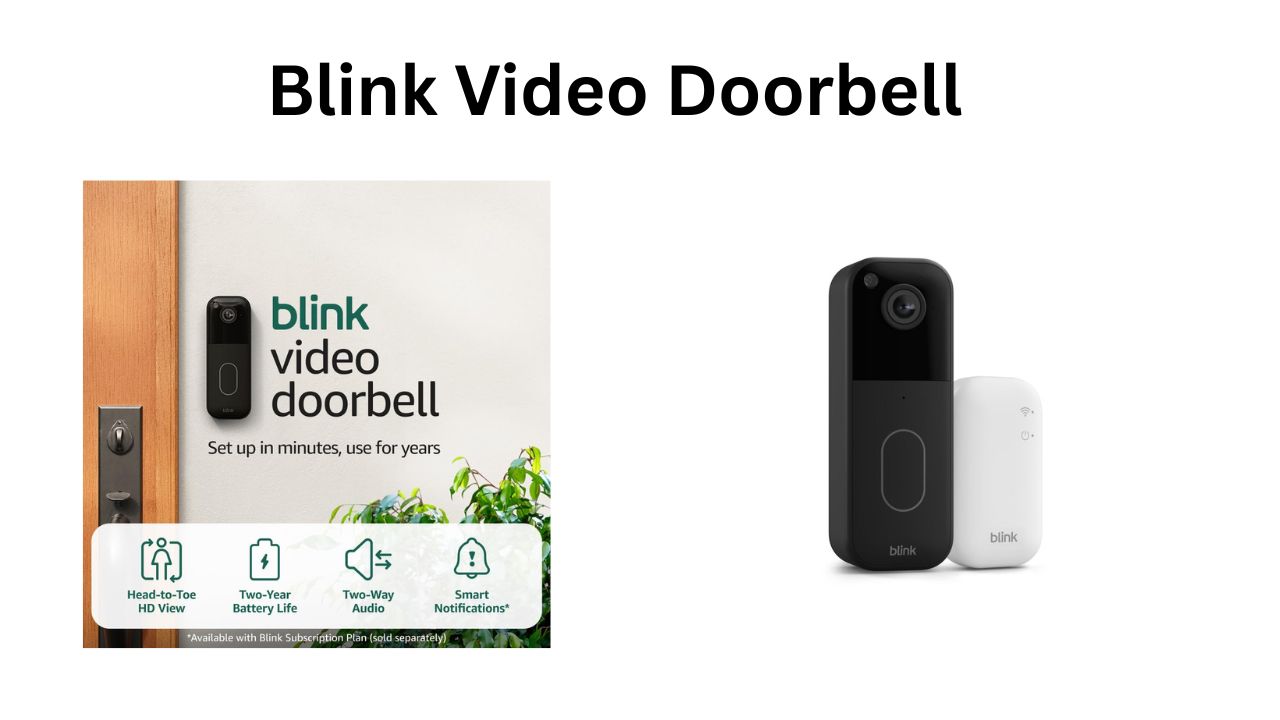
Key features typically include:
- HD video (usually 1080p) with night vision.
- Motion detection with configurable zones and sensitivity.
- Two-way audio to speak with visitors.
- Battery-powered operation (with optional wired setup in some models).
- Integration with the Blink app and Amazon Alexa.
- Cloud storage via Blink subscription and limited local storage options with the Blink Sync Module 2.

Design and Hardware
The Blink Video Doorbell presents a compact and unobtrusive design suitable for a variety of home exteriors. The unit is typically lightweight and constructed mainly from plastic, which helps keep costs down and reduces stress on mounting surfaces. The weather-resistant casing is designed for outdoor use, and the lens and infrared LEDs for night vision are positioned to provide a reasonably wide field of view.
Battery-powered operation is a major selling point, allowing installation without cutting into existing wiring. The trade-off is that battery life can vary substantially depending on usage patterns—frequent motion events and many live view sessions will drain batteries faster. Blink generally advertises long battery life under typical use, but real-world performance depends on individual household activity.
Installation and Setup
One of the strongest advantages of the Blink Video Doorbell is its straightforward installation process. Typical installation steps include:
- Mounting the bracket to the door frame or wall (with screws and anchors provided).
- Attaching the video doorbell to the mount and inserting batteries.
- Downloading and opening the Blink app.
- Following in-app prompts to connect the doorbell to Wi‑Fi and add it to the user’s Blink account.
For U.S. consumers who prefer not to hardwire, the battery-only setup is appealing for renters or those who want a tool-free installation. For those who want continuous power or to connect the doorbell to an existing chime, Blink supports an optional wired connection on some models.
The Blink app itself is generally intuitive. It walks users through device onboarding, offers device settings for motion detection and schedules, and enables integration with Alexa so users can view the doorbell feed on Echo Show devices or control it with voice commands.
Video and Audio Performance
Video quality with Blink’s 1080p sensor is adequate for everyday use, allowing users to identify visitors and capture license plates at reasonable distances when lighting conditions are favorable. Night vision generally performs well in close to medium range; however, like other budget-friendly cameras, image clarity can diminish at greater distances or in complex lighting scenarios (e.g., direct backlighting).
Motion detection works reliably for basic use cases, though some users report occasional false positives from moving foliage or passing cars when the doorbell’s detection zones or sensitivity aren’t optimized. Fortunately, the Blink app allows users to tweak sensitivity and set activity schedules to reduce nuisance alerts.
Two-way audio provides clear enough communication for most doorstep interactions. Audio lag is generally minimal on a good Wi‑Fi connection, but in environments with weak network signals or heavy network traffic, users may notice delays or occasional audio clipping.
Storage, Subscriptions, and Privacy
Storage and how video is retained are important considerations when choosing a video doorbell. Blink offers cloud storage plans through a relatively low-cost subscription for video clip storage and retrieval. The Blink Subscription Plan stores motion clips in the cloud for a configurable retention period. For users preferring local storage, the Blink Sync Module 2 adds a USB port for local video storage on a USB drive—though this requires purchasing additional Blink hardware.
Subscription considerations:
- Blink’s subscription tends to be priced competitively versus some rival services, which makes ongoing costs more manageable.
- Some basic functionality (like short-term local clip storage or limited trial periods) may be available without a subscription, but ongoing access to historical clips typically requires signing up for a plan.
Privacy considerations include data handling by Blink/Amazon and how recorded video is accessed. Blink devices transmit footage to Blink servers for cloud storage unless local storage is used. The company offers standard privacy controls and encryption, but consumers should be comfortable with the idea of cloud-managed footage tied to an Amazon-owned ecosystem.
Integration and Smart Home Compatibility
A major strength of the Blink Video Doorbell is smooth integration with Amazon Alexa. U.S. users in particular often favor Alexa-compatible devices; with Blink doorbells, you can:
- View live feeds on Echo Show and Fire TV devices.
- Receive announcements from Alexa-enabled devices when a visitor rings the doorbell.
- Use voice commands to show the camera feed on supported displays.
Blink’s compatibility with other smart home ecosystems (e.g., Google Assistant, Apple HomeKit) is limited, and this can be a downside for users invested in non-Amazon ecosystems. For households already centered around Amazon and Alexa, Blink’s integration is a compelling advantage.
Reliability and Real-World Usage
Many U.S. users appreciate Blink’s plug-and-play simplicity, long battery life under typical usage, and the overall value proposition. The device is well-suited to:
- Renters or homeowners who want an easy, low-commitment installation.
- Second homes or vacation properties where weather-resistant, battery-powered cameras are desirable.
- Budget-conscious consumers who prioritize essential features over premium extras.
Common real-world caveats:
- Battery drain accelerates with frequent activity; heavy usage may require recharging or replacing batteries more often than advertised.
- Wi‑Fi coverage at the installation point is crucial—poor signal strength degrades live view responsiveness and increases missed events.
- Some advanced features found in higher-end doorbells—such as higher-resolution video, advanced person detection, or bundled local storage—may be absent or less sophisticated.
Pricing and Availability (Including Amazon)
One of Blink’s most appealing attributes is its price point. Blink Video Doorbells are typically positioned in the lower to mid-price range for video doorbells. Because Blink is part of the Amazon family, the product is commonly sold on Amazon, where pricing can fluctuate due to promotions, seasonal sales, and Amazon-exclusive discounts. In the U.S., Blink devices frequently appear in Amazon Lightning Deals, Prime Day offers, Black Friday discounts, and other temporary sales, making them particularly attractive during promotional periods.
While exact prices change, U.S. consumers can generally expect the Blink Video Doorbell to be less expensive than many premium models from competitors. For buyers seeking the best price:
- Check Amazon regularly, especially during large sales events (Prime Day, Black Friday/Cyber Monday).
- Compare prices of new vs. refurbished units offered on Amazon’s storefront—refurbished units often carry significant savings with acceptable warranty terms.
- Look for bundled deals that include the Sync Module or additional Blink cameras for a package discount.
Because price varies over time, I recommend checking the Blink Video Doorbell product page on Amazon for the current best price and any limited-time promotions. Amazon’s product listings also show customer reviews and Q&A, which can be useful when evaluating recent firmware updates or user experiences that affect real-world performance.
Why U.S. Consumers Like Blink
Several factors explain the popularity of Blink Video Doorbells among U.S. shoppers:
- Affordability: The doorbell’s competitive price point makes it accessible to a broad segment of the market seeking home security without a high upfront investment.
- Simplicity: Easy installation and a straightforward app onboarding experience reduce barriers for users who are less technically inclined.
- Battery operation: The ability to operate without wiring appeals to renters and homeowners who want a low-intrusion setup.
- Amazon/Alexa integration: Seamless compatibility with Alexa devices and the Amazon ecosystem is particularly valuable in the U.S., where Alexa has broad adoption.
- Brand trust and availability: Being part of Amazon gives Blink widespread availability on Amazon.com and reliable customer support channels, reinforcing purchase confidence.
Comparison with Competitors
When compared to competitors like Ring, Google Nest Doorbell, and Arlo, Blink typically wins on price and battery life convenience, but may lag in advanced AI-driven features and higher-resolution imaging offered by top-tier models. For example:
- Ring offers a wide feature set and ecosystem breadth, but pricing and subscription terms can be higher.
- Google Nest Doorbell often provides more advanced person, package, and face recognition capabilities (depending on subscription) and deep Google Home integration.
- Arlo models frequently deliver high-end imaging and premium features, but at a higher cost.
For many U.S. consumers, Blink hits a sweet spot between cost, functionality, and ease of use.
Pros and Cons — Quick Summary
- Pros:
- Affordable and competitively priced.
- Easy, mostly tool-free installation.
- Battery-powered option for flexible placement.
- Good Alexa integration and availability on Amazon.
- Decent video quality for everyday monitoring.
- Cons:
- Fewer advanced features than premium competitors.
- Potential for accelerated battery drain under heavy usage.
- Cloud storage requires subscription for full feature access.
- Limited support outside the Amazon/Alexa ecosystem.
Conclusion
The Blink Video Doorbell is a sensible choice for U.S. consumers who want an affordable, easy-to-install, and Amazon-integrated video doorbell. It provides the essential features most homeowners and renters need—solid 1080p video, night vision, motion detection, and two-way audio—without the high price tag of premium models. Its smooth integration with Alexa and frequent Amazon promotions make it particularly attractive in the U.S. market.
For buyers who require cutting-edge analytics, maximum image fidelity, or cross-platform smart home support (e.g., Apple HomeKit), higher-end doorbells from other brands may be a better fit. But for budget-conscious shoppers and Amazon-centric households, Blink offers a compelling mix of value, convenience, and reliability.
AI Smart Glasses: Revolutionizing the Way You See


[…] Blink Video Doorbell Review […]