
Instant Pot Review: Can This All-in-One Multicooker Really Replace Your Entire Kitchen?
The kitchen appliance market is saturated with “miracle” gadgets, but few have achieved the cult-like status of the Instant Pot. Marketed as a 7-in-1 tool (or more, depending on the model), it promises to combine the functions of a pressure cooker, slow cooker, rice cooker, steamer, sauté pan, yoghurt maker, and warmer into one plug-and-play unit.
But does it actually deliver on these promises, or is it just a bulky “jack-of-all-trades” that masters none? Drawing on expert chef reviews, home-cook testing, and “beginner-to-pro” guides, we’ve deconstructed the Instant Pot to see if it deserves a permanent spot on your countertop.
Comfee 12-in-1 Electric Pressure Cooker Review
1. First Impressions: The “Magic Box” in Your Kitchen
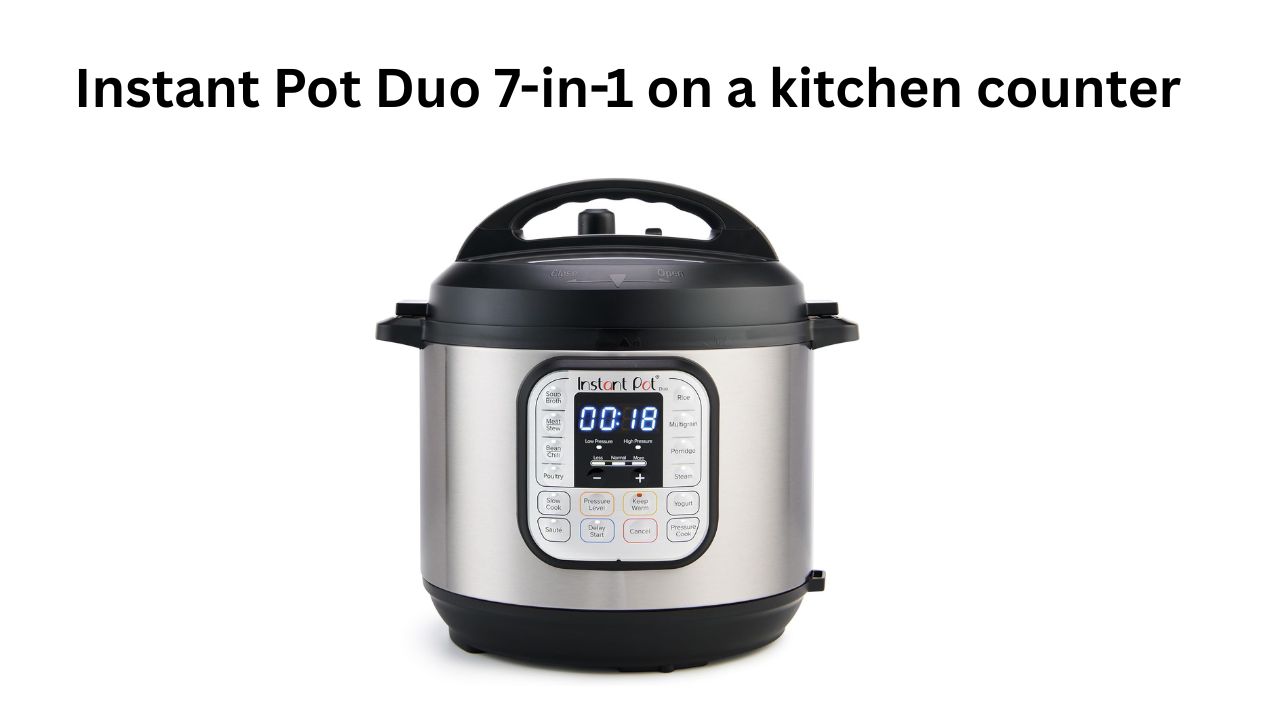
At its core, the Instant Pot is a standalone plugin appliance. It consists of a base housing the heating element, a removable stainless steel inner pot, and a heavy-duty lid with a locking mechanism.
For beginners, the interface can be intimidating. Models like the Duo 7-in-1 or the Luxe 6-in-1 are covered in buttons for specific foods like “Soup,” “Porridge,” or “Poultry”. However, expert users often suggest that you will mostly use the Manual/Pressure Cook and Sauté buttons.
The Setup and Safety Basics
The most critical component is the sealing ring. This silicone ring sits inside the lid and must be perfectly snug around the metal track to allow the pot to pressurize. Without a proper seal, the pot will simply vent steam indefinitely and never begin its countdown.
Safety is a major selling point. While old-fashioned stovetop pressure cookers had a reputation for being dangerous, modern Instant Pots are built with multiple safety sensors. The lid will not open while the unit is under pressure, and the “float pin” (a small silver or red cylinder) provides a visual cue: when it’s up, the pot is pressurized; when it’s down, it’s safe to open.
2. The Power of Pressure: Speed Without Compromise
The “engine” of the Instant Pot is its high-pressure function. By trapping steam, the internal temperature rises significantly higher than boiling point, cooking food in a fraction of the time required by traditional methods.
The Time-Saving Reality
Chef-led experiments show that “slow-cooked” results can be achieved in minutes. For example:
- Tender Lamb: A dish that usually requires two hours of simmering can be completed in just 30 minutes under high pressure.
- Beef Stew: Tough cuts like chuck roast, which typically need three to four hours, can become fork-tender in 25 to 45 minutes.
- Whole Chicken: A 3.5lb chicken can be fully cooked in approximately 28 to 30 minutes.
The Catch: One must account for the “pre-heating” time. The timer does not start until the pot reaches full pressure, which can take anywhere from 5 to 20 minutes depending on the volume of liquid and food inside.
3. Functionality Deep Dive: From Sauté to Steaming
Sauté Mode: The One-Pot Secret
Perhaps the most underrated feature of the Instant Pot is the Sauté function. Unlike traditional slow cookers, which often require you to sear meat in a separate frying pan first, the Instant Pot allows you to brown your meat and aromatics directly in the pot. This builds a “foundation of flavour” through the Maillard reaction and keeps all the “drippings” (fond) in the dish rather than all over your hob.
The “No-Soak” Bean Revolution
One of the most impressive feats discovered in testing is the ability to cook dried beans without overnight soaking. Normally, dried pinto or black beans require a 12-hour soak. In an Instant Pot, they can go from bone-dry to perfectly tender in 45 minutes (or about 21–25 minutes for black beans). This feature alone “shaves quite literally 12 hours” off the preparation time.
Steaming: Not Just for Veggies
While the pot excels at steaming frozen vegetables in as little as one minute, it is also capable of delicate desserts. A Crème Caramel (Flan) can be cooked using the rack to keep the ramekins above the water, resulting in a “soft, wobbly, and perfect” custard in just nine minutes of pressure cooking. Similarly, Bao Buns can be steamed using the “Steam” setting with the vent open to prevent pressurization, yielding “bouncy and fluffy” results.
4. The Weak Link: The Rice Cooker Function
If there is one area where the Instant Pot receives mixed reviews, it is rice. While the “official” recipe for Basmati rice calls for a 1:1.5 ratio and four minutes of pressure, results can be “sticky,” “mushy,” or “overcooked”. Professional chefs noted that you lose the “beautiful fragrance” and individual grain definition that traditional absorption methods provide. For those who are “rice purists,” the Instant Pot may not fully replace a dedicated high-end rice cooker.
5. The Evolution: The Duo Crisp and Air Fryer Combo
The latest innovation in the lineup is the Instant Pot Duo Crisp, which adds an air fryer lid to the traditional pressure cooker base. This solves the “soggy skin” problem often associated with pressure cooking.
In testing, this combo proved to be a powerhouse for rotisserie-style chicken. You can pressure cook the chicken to ensure the interior is juicy and “falling off the bone,” then swap to the air fryer lid at 400°F (200°C) for 10–15 minutes to get “extremely crispy skin”. This “double whammy” technology was also successfully used to make crispy pork bellyand crispy rice cakes.
6. Maintenance and Longevity
The Instant Pot is remarkably easy to clean, with the stainless steel inner pot being dishwasher safe. However, the silicone sealing ring is known to “absorb smells”. If you cook a spicy beef stew, that scent may linger in the ring, potentially affecting the flavour of a delicate dessert like cheesecake or flan.
The Solution: Many users recommend owning two rings—one for savoury dishes and one for sweet ones. Additionally, the lid should be hand-washed with soapy water rather than put in the dishwasher to protect the sensors and valves.
7. The Verdict: Is It Worth the Counter Space?
At a price point of approximately £100 (or $100 USD), the Instant Pot is positioned as a mid-range kitchen investment.
Pros:
- Safety: Far safer and more user-friendly than traditional pressure cookers.
- Versatility: Replaces a slow cooker, steamer, and sauté pan effectively.
- Speed: Reduces multi-hour cooking tasks to under an hour.
- Convenience: The “set it and forget it” nature allows you to walk away once the timer is set.
Cons:
- Rice Quality: Sub-par results for those used to perfectly fluffy Basmati or Jasmine rice.
- Bulk: It is a large appliance that requires significant cupboard or counter space.
- Learning Curve: Understanding the “natural release” vs. “quick release” of pressure is essential to avoid overcooking or burns.
Final Thought
Does it replace your entire kitchen? Not quite. You still need a hob for high-heat searing and a traditional oven for large-scale baking. However, as a multi-functional workhorse, it is unparalleled. It is “the safest and best pressure cooker” many professionals have used. If you are a busy family looking to put “hearty, non-processed meals on the table in less than an hour,” the Instant Pot isn’t just a gadget—it’s a necessity.
Our Rating: 4.5/5 Stars A must-have for meal preppers and busy households, though rice enthusiasts should keep their dedicated cookers.

